Updated 1:53 p.m. ET on Jan. 19
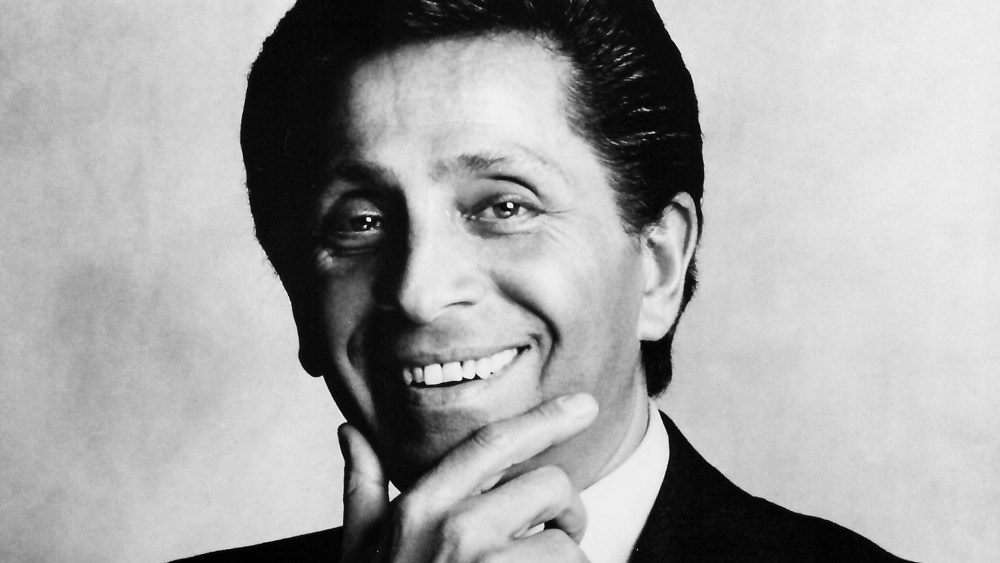
Valentino Garavani died Monday at his Roman residence, surrounded by his loved ones.
The couturier was aged 93.
He will be lying in state at PM23 in Piazza Mignanelli 23 on Wednesday and Thursday from 11 a.m. to 6 p.m.
The funeral will take place on Friday at the Basilica Santa Maria degli Angeli e dei Martiri, in Piazza della Repubblica 8 in Rome at 11 a.m.
Valentino Clemente Ludovico Garavani was born in Voghera, near Milan, on May 11, 1932, named after silent movie actor Rudolph Valentino. In fact, from his namesake he inherited another nickname — “the Sheik” — a reference to the actor’s famous role in the film of the same name.
You May Also Like
Garavani enrolled at the Berlitz School in Milan to learn French, and at the Istituto di Moda Santa Marta to work on his drawing skills. He shocked his bourgeois parents when, at age 17, he said he was going to go and live in Paris. There he studied at the École de la Chambre Syndicale de la Couture Parisienne, where he attended courses taught by a former head seamstress at Dior. In 1952 he started working at the couture house of Jean Dessès, first as an illustrator and then joining the studio. Five years later, he was hired as a designer at Guy Laroche. He stayed on for two years and then decided to venture out on his own. At just 26, Valentino’s first collection bowed on Feb. 28, 1959, in his salons on Via Condotti in Rome. “I would dream about beautiful women, extremely sophisticated, all made up with beautiful jewelry and dresses. I think, from that time on, I decided to be a fashion designer. The movie that did it was ‘Ziegfeld Girl,’” Garavani said of the 1941 American musical drama film starring Judy Garland, Hedy Lamarr and Lana Turner. In July 1962, Valentino was one of the designers showing at the Sala Bianca of Pitti Palace, a platform that contributed to launch the brand internationally.
His partner Giancarlo Giammetti helped build Valentino’s business with a commitment that spanned more than 65 years.
WWD’s legendary publisher John B. Fairchild dubbed Garavani “The Chic,” and the designer certainly embodied the elegance he conveyed in his classy designs, together with Giammetti — both always impeccably coiffed, permanently tanned and stylishly suited, whether on their yacht in the Mediterranean Sea or the slopes of Gstaad, their apartments in New York or London or their homes in Rome.
Giammetti’s business acumen across the decades helped build a global empire leveraging Garavani’s creative vision, starting from a casual meeting in Rome, at the end of July 1960, sharing a table in a bar on Via Veneto — where else? — the heart of la Dolce Vita. “That’s when my life changed,” Garavani has said.
Elizabeth Taylor was one of the women who contributed to Garavani’s success, along with Diana Vreeland and Jackie Kennedy, as well as several high society women who quickly became part of the duo’s circle as well. By 1964, Valentino’s clients ranged from Jacqueline de Ribes in Paris and Marella Agnelli in Rome to Babe Paley in New York and Countess Consuelo Crespi and her sister Gloria Schiff.
Garavani and Giammetti’s passion for art, design and rare objects was infused in their beautiful homes around the world, from Capri to Rome, designed by Renzo Mongiardino, New York, London and Gstaad. In 1995, the Château de Wideville, built in 1580, was purchased and French interior designer Henri Samuel was tasked to decorate it. Located 20 kilometers from Versailles, it used to be the residence of Madame de la Vallière, Louis XIV’s mistress.
Garavani’s life had a cinematic allure — and the movie world was never far. In 2003, he and Giammetti played themselves in “The Devil Wears Prada,” directed by David Frankel. In 2008, it was the turn of Matt Tyrnauer’s “Valentino: The Last Emperor” docufilm.
A long list of actors have received their Oscars dressed in Valentino, from Taylor, Sophia Loren, Jessica Lange, Mercedes Ruehl and Cate Blanchett to Tom Hanks, James Cameron and Steven Spielberg. Perhaps most famously, in 2001 Julia Roberts received the Oscar for Best Actress for “Erin Brockovich” in a 1992 vintage Valentino gown. A poll by British retailer Debenhams voted the design the “third most iconic red carpet dress of all time.” Garavani himself has repeatedly said Roberts wearing the gown was a high point of his career.
Further recognizing his long ties to Hollywood, Garavani received the Gold Keys to the city of Beverly Hills in 1988, one of many accolades and honors he would be bestowed during his life, from Cavaliere di Gran Croce, to Cavaliere del Lavoro and Knight of the Legion of Honor. In 2009 he was inducted into the Rodeo Drive Walk of Style, unveiling the plaque in his honor with Anne Hathaway, who remains a close friend.
In 2017, Garavani was also inducted into the American Academy of Achievement Hall of Fame, becoming the first European fashion designer to receive the honor, which recognizes visionaries and achievers across various fields.
In October, for their enduring impact and influence on fashion across generations Garavani and Giammetti were the recipients of the 2025 WWD John B. Fairchild Honor for Lifetime Achievement.
Taylor had begun to wear Valentino off-screen while filming “Cleopatra” in Rome and became one of Garavani and Giammetti’s best lifelong friends. Together, with her contribution, in 1990 they established the L.I.F.E., a charity to support children affected by AIDS, and Taylor took on its patronage. They would go on to flank the actress in her own work fighting AIDS.
The end of the ‘90s ushered in a new era for the Valentino brand. In 1998, HdP, or Holding di Partecipazioni Industriali, a conglomerate controlled by Fiat, acquired the Valentino company for about $300 million. The investment company had bought GFT and aimed to create an Italian luxury goods group.
The agreement gave the designer and Giammetti minority stakes in HdP and seats on its steering committee and board of directors, both staying on with consultancy contracts. HdP in 2002 sold Valentino to the Marzotto textile company, as part of the latter’s strategy to expand as a luxury goods player. The deal was followed by Marzotto spinning off its fashion assets, including Valentino and Hugo Boss, into a new group called Valentino Fashion Group in 2005. Garavani would exit the fashion scene with a show that remains iconic in fashion history. Over a two-day event ending July 8, 2007, to celebrate the house’s 45th anniversary, a fashion show was held in Rome, with a dinner held at the Temple of Venus. The “45 Years of Style” exhibition opened at the Ara Pacis Museum, followed by a ball at Villa Borghese’s Parco dei Daini for 950 guests, including Giorgio Armani, Gina Lollobrigida, Mick Jagger and Karl Lagerfeld.
And more change would come. Shortly after the show, private equity group Permira acquired the company and on Sept. 4, 2007, Garavani and Giammetti exited the brand.
The brand the duo founded changed hands again following their departure: Permira sold it to its current owner, Qatar-backed Mayhoola, in 2012. Over the years, the lead creative role has been held by Maria Grazia Chiuri and Pierpaolo Piccioli, who the designer hired in 1999 as creative directors of accessories, then Piccioli alone, followed by Alessandro Michele, who was appointed in March 2024.
Most recently, Garavani and Giammetti were focused on their namesake foundation, which has acquired the exclusive use of a historic Roman palazzo at 23 Piazza Mignanelli, fully renovated and renamed PM23. The venue will serve as a hub for the foundation’s cultural activities and events and was inaugurated last May with the exhibition “Horizons | Red,” displaying 50 red dresses with a range of 30 art masterpieces — some belonging to Garavani and Giammetti, who have always been keen collectors.
The foundation was established in 2016 as an entity with a philanthropic mission.
On Sunday, a new exhibition, called “Venus. Valentino Garavani through the eyes of Joana Vasconcelos” was unveiled at PM23, a striking and beautiful conversation between fashion and art as the Portuguese artist reinterpreted the couturier’s creative universe.
“The Valkyrie Venus,” produced by Vasconcelos’ atelier in Lisbon — was enriched by an ambitious and large-scale social project: 756 hours of workshops, more than 200 participants of all ages and 200-plus kilograms of crochet modules created across Rome, from the historic center to the outskirts, and sent to the artist.
Students, patients, detainees and members of nine partner organizations actively took part in the work, empowering the city’s most fragile communities.
This is a developing story.