When John Travolta sauntered onto the big screen in a pearl snap shirt and cowboy hat in the ’80s hit film “Urban Cowboy,” the Western wear industry experienced an immediate surge in demand — one that just as quickly disappeared.
Today, thanks to Taylor Sheridan’s “Yellowstone” and “Landman,” the surging popularity of country music — fueled by artists from other genres embracing the twang — and young customers searching for heritage product, Western is hot again. Luxury fashion brands including Louis Vuitton and Gucci have featured cowboy boots, fringe and denim on the runways, and Ralph Lauren, who has long embraced American heritage, leaned even more heavily into the trend.
But unlike the Travolta years, the Western industry believes today’s cycle is indication of a cultural shift and hence, will have more staying power. While some brands are offering fashion pieces to draw newcomers, most are simply inviting them into the fold to experience what they’ve offered for years.
You May Also Like
“We’ve seen a resurgence happen in the past decade,” said Jenni Broyles, executive vice president of global brands at Kontoor, parent company of Wrangler. “But in 2018, with the debut of ‘Yellowstone,’ it became more of a cultural moment. And in 2023-2024, it reached an inflection point.”
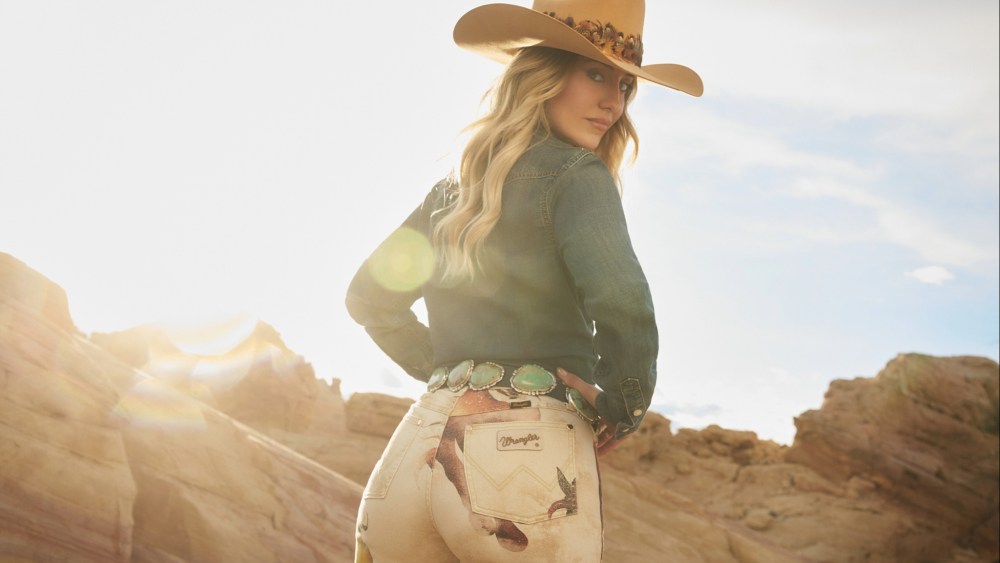
Although Wrangler has been dressing cowboys since 1947, its offering is now ubiquitous globally. “As a brand, we’re leaning into moving Western style from costume to closet staple,” she said. The brand has a line with Lainey Wilson, one of country music’s biggest stars, and its products have been worn by everyone from Bella Hadid to Post Malone, who himself released a popular country album last year.
To tout its heritage as a true Western brand, Broyles said Wrangler is “leaning into storytelling” about its history, augmented by more-contemporary messaging. “Lainey is the face of modern country music and she grew up wearing Wrangler,” she said. But Wrangler has also partnered with the Los Angeles-based streetwear brand Cherry, the Staud womenswear label, as well as Netflix’s popular “Stranger Things” show.

Broyles said the goal is to show that the brand “can sit on a runway as comfortably as it can sit in a saddle. It’s being worn by authentic cowboys and modern fashionistas.” And as far as she’s concerned, “it’s going nowhere. Authenticity and heritage is what consumers are looking for and that gives Western fashion the ability to stay relevant.”
Lourdes Servin, senior director of digital and e-commerce for Lucchese, agreed. “We’ve seen the impact of a broader cultural shift from customers we’re attracting and market demand,” she said. Last year, Lucchese began selling its products to retailers in markets not traditionally known as Western hotspots, such as Atlanta and Charlotte, N.C., proving “the spirit of the West is resonating both metaphorically and literally.”
Lucchese, whose history dates back 142 years, has found that newcomers to the brand tend to gravitate toward its classic silhouettes and finishes such as brown, flat leather cowboy boots. “We call it our gateway drug,” Servin said with a laugh. But once they’ve experienced the brand, they get more adventurous with future purchases, opting for more-expensive skins, inlays and color. “Most people aren’t going to spend $3,000 on their first pair — they’ve got to get their feet wet.”

Servin too believes the current popularity of Western wear has staying power, but knows Lucchese will be fine either way. “We hope the trend brings in as many new people as possible, but if it ended tomorrow, we’ll continue to do what we do.”
Stetson, which celebrated its 160th anniversary last year, is also reaping the benefits of the heritage movement. Chief executive officer Robert Dundon said the brand started to see an uptick as everything opened up after the pandemic, with sales increasing every year.
“There’s been a sustained level of interest and demand led by headwear,” he said. Looking back at other times when Western “crossed over” into the mainstream, Dundon believes this time is different. “Western and Americana in music, fashion and TV are all coming together. Our core is solid and growing but we’re also seeing a movement where young people are mixing Western tropes in a unique way.”
For the most part, Stetson is just staying true to its roots, creating high-quality headwear in the U.S. in iconic styles and leaning into its story of its founder John B. Stetson, who is credited with creating the cowboy hat in the late 1800s. Dundon said the company’s most-premium product remains its bestseller — a $5,600 made-to-order Western hat completely sold out over the holidays — and while it’s primarily known as a felt hat brand, straw models have also performed well in recent seasons.

Stetson is also working to expand its reach to attract more customers. That includes offering boots, collaborating with Bulova on watches, Airstream on a camper, Prime Cuts on beef jerky and it’s also exploring a move into hospitality — all categories Dundon believes “make sense for the Stetson ecosystem.”
He summed it up: “The cycle will change and move on, but I don’t think we’ll see the peaks and valleys of the past. We’ve reached a new plateau.”
Retailers are benefiting from the popularity of Western. Boot Barn, which operates more than 500 stores across the U.S., has long catered to the men and women who “feed, build and protect America,” said Isha Marie, vice president of creative and marketing. “It’s not a focus for us from a business perspective, but culturally we’ve seen an uptick in Western fashion with ‘Yellowstone,’ Lainey Wilson and the crossover artists such as Beyoncé and Post Malone and Pharrell Williams at Louis Vuitton.”

She said she noticed an increase in interest after the pandemic when people began to “crave something tangible,” resulting in an “Americana revival.”
So while Boot Barn’s core customer hasn’t changed, the company has sought to address this new shopper as well. In 2018, it launched a fashion subbrand for women called Wonderwest with looks “based on trends on the runway and the fashion space,” Marie said. The line, which encompasses boots, hats, jewelry and accessories in addition to apparel, continues to grow in popularity, she said.

For men, fashion pieces aren’t quite as overt. “Fashion sounds like an aggressive term for our male consumer,” Marie said. Even so, Boot Barn carries singer Brad Paisley’s Moonshine label, which has more of a rock ‘n’ roll feel, as well as the Cody James line of updated workwear.
Whether core or fashion, these products are popular throughout the U.S., not just in Western states. “It’s become part of the culture,” she said. “We’re not focused on fashion, but fashion continues to build momentum. And it’s not going anywhere anytime soon.”
Lori Fike, chief merchant officer for Cavender’s Boot City, a Texas-based, family-owned chain that operates over 120 stores in 18 states, said: “Western is a lifestyle with deep roots and lasting relevance. What’s different right now is that a much broader audience is discovering it. As a merchant, I’m seeing customers embrace Western because of its authenticity and expressiveness, but in a way that fits everyday life.”
Cavender’s offers a full Western wardrobe of boots, denim, hats and other products so customers new and old can “experience products that resonate and represent the best of the West with craftsmanship, comfort, versatility, and a strong emotional connection to heritage.”
She said the stores are seeing strength across the country from a variety of customers. “What’s consistent everywhere is why people choose Western: they want authenticity, great product, and comfort,” Fike said. “Whether you’re wearing boots to work, to a concert, or every day, the category is strong.” In addition, denim remains consistently popular and the stores are seeing more interest in fringe and retro stripes.
“We present a strong mix of legacy brands, exciting new labels, and our own exclusive lines so we can meet customers wherever they are in their Western journey,” she said.
Cavender’s also believes Western is here to stay. “It is grounded in strong tradition and presented in a contemporary way,” Fike said. “Its growth has been driven by genuine consumer interest, and the products align with authenticity and emotional meaning. Western wear has become part of people’s lives.”
Mark Dunlap, vice president and general manager of M.L. Leddy’s, an institution in Fort Worth for more than a century, said the company’s business remains steady despite the ups and downs of the Western wear cycle. But he did see an uptick after COVID-19.
“People wanted to get out of the house and there was a tremendous desire to do something outdoors,” he said, noting that sales of RVs, second homes and even tractors were all up. “And Western wear became the clothing to wear.”
People flocked to Montana, where “Yellowstone” was based, as well as Texas, the heart of Western wear, to experience the lifestyle themselves. The Stockyards, where Leddy’s is based, expanded significantly and has become the number-one tourist destination in Texas, he said, also helping to boost business.
For Leddy’s, which is considered an upscale Western store, high-end beaver hats and custom boots are what drives sales, Dunlap said.
And while the fashion customer may eventually move on to the next thing, Dunlap believes the trend has longevity. “I don’t know if this will die like ‘Urban Cowboy,’” he said. “I think we’ve got a long run before we see a dropoff.”