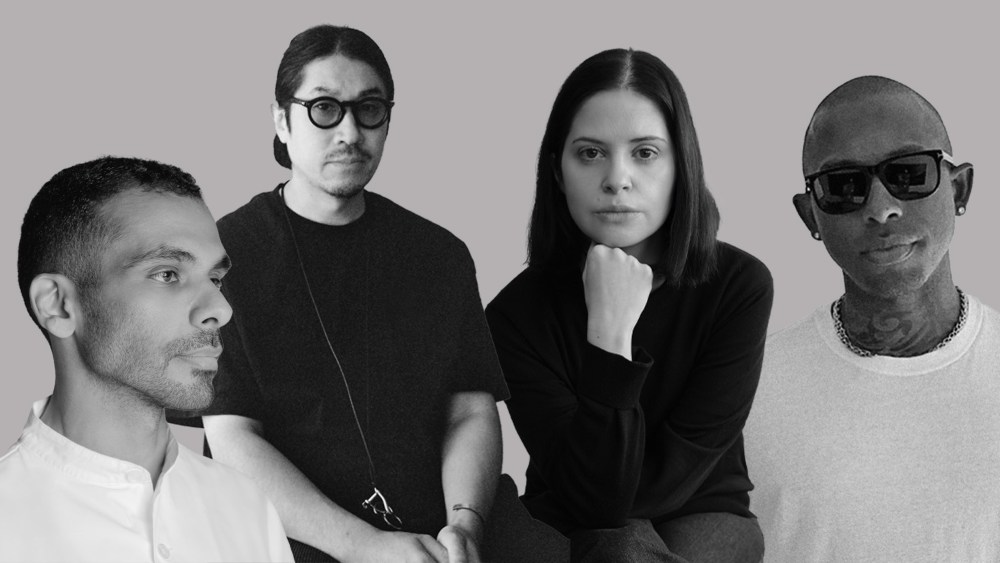
PARIS — As the men’s fall 2026 season lands in the City of Light, Tokyo-based Yoke’s dialogue between art and apparel, the laser-sharp focus on materials and techniques of Spanish designer Sonia Carrasco, LVMH Prize semifinalist KML’s reluctance to brand wearers and Chaz A. Jordan’s “honest luxury” approach for his new brand are among the ideas WWD has its eye on.
Jordan Allen
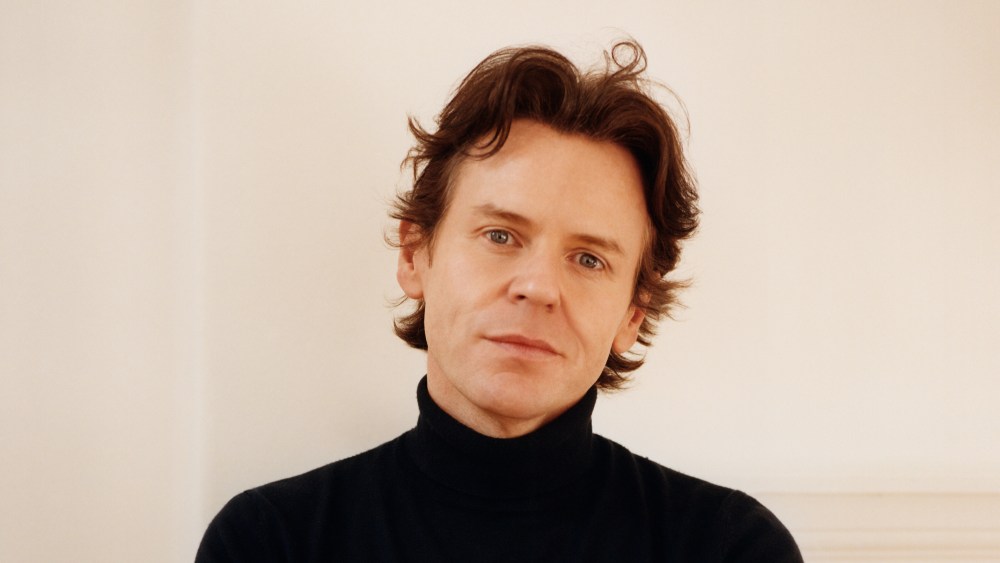
“Are you going to put your name on the brand?”
For Chaz A. Jordan, that was the million-dollar question that Fear of God’s Jerry Lorenzo put to him as he started to kick about the idea of launching a new brand.
For prior efforts, the Los Angeles-based designer “hadn’t felt like he’d earned that,” he told WWD exclusively. “I felt like I still had to essentially prove myself to a degree.”
You May Also Like
But with four labels under his belt, most recently 1989 Studio, plus experiences such as working at RSVP Gallery alongside Don C and the late Virgil Abloh, he knows the end game he wants.
“Get it done. Do it right. Do not compromise at all,” is how he put it.
Plus, calling the new brand Jordan Allen — his last and middle names — is “the only way I can signal to the community and industry that this one is serious — there will no more brands after this,” he said, jokingly saying he was “tired of launching these brands.”

What Jordan is going for is “honest luxury,” an approach he wants to distill in his product but also the customers’ experience in their journey.
In terms of style, it will be “an evergreen brand,” serving the kind of staples he is on the market for himself. “It’s giving you all the things that you would expect from your favorite luxury houses — with a bit more cultural nuance — at prices that are competing with your average contemporary brand, or maybe a little less for core items.”
In this segment, prices will start around $78 for T-shirts and go up to $450 for cargo pants, with zip hoodies and classic denims offered in four fits in the mix.
Meanwhile, limited seasonal pieces such as baby calf leather jeans, a cashmere three-quarter length coat with a molded reverse mock collar or a nylon goose down jacket will range between $400 and $1,500. Graphic T-shirts will be released throughout the year, to the tune of two styles a month. There will also be accessories such as bags. All in all, Jordan said the line would have around 30 stock keeping units altogether.
While he aims for the brand to be democratic in pricing, owing to decade-long relationships with high-end manufacturers, Jordan Allen’s distribution will be tight. In addition to its e-commerce, Jordan will limit wholesale relationships to a cadre of “the people that I know, that have supported me over the years.” — Lily Templeton
KML
“She’s my Donatella, I’m the crazy useless creative,” joked Ahmed Hassan, who makes up the Saudi fashion house KML with his sister Razan Hassan.
The brand, which reached the semifinals in the 2025 LVMH Prize, is underpinned by a singular vision.
“We don’t believe in disposable fashion. We don’t believe in branding people. We sell people canvases, and they style their own way, and they own it,” he said. “It’s the opposite of globalization or Westernization, where everyone tries to copy a particular result or a particular theme, which is quite dangerous, I think.”
That philosophy underpins a line rooted in historical research rather than trend forecasting. Drawing from Saudi Arabia’s diverse regional dress traditions, particularly those of Hijaz, Medina and Mecca, Ahmed wants to challenge the perception of Saudi culture as singular or uniform.

The result is a brand ethos that embraces a melting pot of cultural references from centuries of regional exchange. For example, one-shouldered garments Ahmed first perceived as Saudi also have traditions in Indian and Greek culture, he noted.
“The similarities we see with other people, other cultures and other civilizations are far more interesting than the differences,” he said of a key silhouette.
He also wants to challenge contemporary ideas about gendered dress. What reads as edgy today, such as men in skirts or dresses, is historically grounded. “If you came 50 years ago to Saudi, everyone was wearing skirts,” he said, adding that denim was then controversial.
The Paris presentation, held at the Institut du Monde Arabe, carried personal resonance. Trained as an architect, Ahmed previously worked with Jean Nouvel, who designed the Institut’s landmark building.
“My architectural world and my fashion world are colliding in an interesting way,” said the designer, whose academic study of ergonomics, proportion and movement informs the clothes.
Following a Selfridges pop-up and growing international attention after inclusion in the LVMH Prize semifinals, the brand is ready to grow. An e-commerce relaunch is planned for early February, with prices ranging from 1,500 euros to 3,500 euros. Plans to expand carefully to select department stores are also in the works. — Rhonda Richford
Sonia Carrasco
An Alexander McQueen and Celine alumna who launched her label in 2020, Sonia Carrasco’s endgame is to do her homeland proud.
“I want to be a big house of Spain,” she told WWD in an interview ahead of her first turn on the official Paris men’s schedule. “I’m working on that by offering real quality.”
That’s why she put materials and techniques at the heart of her work from the get-go, rooting the brand in knitwear and tailoring, with the latter being the bedrock of the brand. “They are the most technical and difficult sides of the industry, requiring a lot of precision, perfection, detail and a lot of craft,” explained the designer.
If she were to define her brand in one word, it would be “process,” which she likes to show through exposed seams and structure in her designs. “When you see the process of something, you can understand how it is made and [that] gives it value,” she said.

It’s an approach that has caught the attention of retailers and VIP clients alike. Her designs have been spotted on the likes of Rosalía, Kylie Jenner, Ciara, Heidi Klum, and Julia Fox, to name a few.
The brand is sold in some 40 doors worldwide, with over half of them in Asia. Retailers include Printemps, Ssense, Land Crawford in Chengdu and Hong Kong, Seoul’s Boontheshop and the Dover Street Market outposts in Tokyo’s Ginza and Paris.
Prices start around 180 euros for a jersey T-shirt and 370 euros for tops in tailoring fabrics such as poplin shirts and go up to 1,300 euros for blazers and 1,900 euros for leather garments. Trousers and knits sit in the 400-to-600-euro range.
For fall 2026, Carrasco zeroed in on “the beginning of the textile process,” with the loom as the starting point of this collection she dubbed “Origin.” She’ll be taking her tailoring closer to the body and play with inside-out construction techniques. The collection will also see the introduction of her first shoe designs, a new category for the brand. — L.T.
Yoke
When Norio Terada was thinking of a name for his future label, the word “yoke” struck him as a fitting moniker for his perspective of clothing as a medium of connection between people, ideas and crafts.
Cutting his teeth as a production manager for several Japanese brands, the graduate of Tokyo’s prestigious Bunka Fashion College “spent a lot of the time with the people who actually create the clothing, [such as] the craftspeople, the artisans behind new fabrics and innovations,” he told WWD through a translator. “I wanted to express that one [garment] is made by a series of connections and links between people.”
In 2018, Yoke started as a knitwear wardrobe, with color palettes inspired by artists, owing to Terada’s studies in fine arts before he veered into fashion.
Winning the Tokyo Fashion Prize in 2022 saw the brand land in Paris for the first time, an experience that pushed Terada toward a pattern-driven direction, experimenting with materials, surface treatments and construction techniques.

“[Paris] made me realize that the concept was not really strong enough to appeal to an international audience — customers and buyers,” he said. “That’s when I turned towards stronger, bolder designs inspired by Surrealist artists.”
With the likes of Pierre Soulages, Man Ray or Max Ernst as seasonal muses, Yoke’s evolution saw it grow its global retail footprint to 88 doors, including 30 outside of Japan, thanks to silhouettes demonstrating material ingenuity and legible designs. There have also been sporadic collaborations with figures such as Katharine Hamnett and British visual artist Julian Opie.
The brand also scooped up another gong: the 2026 Fashion Prize of Tokyo, which brings Terada and team to Paris once more.
Prices for the brand start around 150 euros for Terada’s shirts, a signature drop-shoulder relaxed cut zhuzhed up with original prints inspired by the season’s artist, and around 400 euros for trousers. Jackets start around 600 euros while outerwear goes up to 1,800 euros for lush textured coats and leather pieces.
Fall 2026 sees Terada take cues from organic shapes found in the work German-French abstract artist Jean Arp. Among highlights are a handsome trenchcoat with wiring built into the structure to allow on-the-go tweaks to the shape, and a jacket cut from creased fabric, a textile developed in-house and inspired by Arp’s randomly dropped pieces of paper. — L.T.