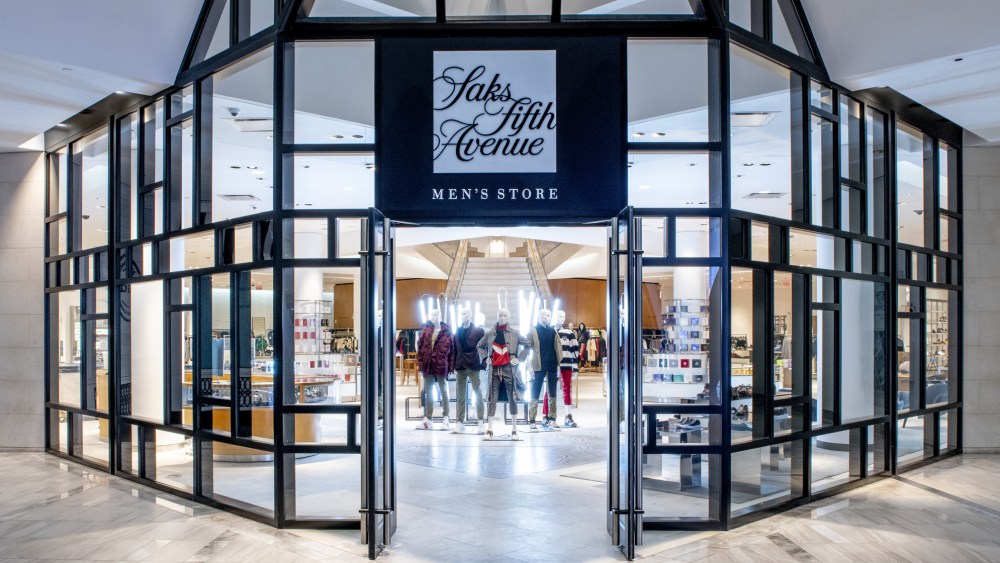
The hardest part might be over for Saks Global — but the work of rebuilding has just begun.
When the luxury department store group filed for Chapter 11 bankruptcy last week and former chief executive officer Richard Baker stepped down, the fate of the company was thrown into the hands of federal judge Alfredo Pérez in Houston.
Pérez has not suddenly become a retailer. The job of running Saks Fifth Avenue, Neiman Marcus and Bergdorf Goodman has fallen to the new chief executive officer Geoffroy van Raemdonck, who steered Neiman’s through its pandemic-era bankruptcy.
You May Also Like
But the judge — along with secured and unsecured creditors, a trustee and the industry — will be watching closely as van Raemdonck puts together a new operating plan for the business.
Attorney Mark Brutzkus, of Stubbs Alderton & Markiles, said the analysis of the company and its operations is the key.
“They’re going to obviously lay off a significant number of people,” Brutzkus said. “They’re going to really look at and close underperforming stores, and they’re going to try to come up with some type of model that’s really a slimmed-down model that works financially for them.”
And the many brands owed money, unsecured creditors all, will band together.
“There’ll be a meeting of creditors that’ll probably be coming up within the next 30 to 45 days,” he said. “And at that meeting of creditors, the creditors will be given an opportunity to question [Saks Global] in terms of what their plans of reorganization are going to be.”
From the bench, Pérez has the power to decide what goes, acting as a kind of referee for the very scripted bankruptcy process. Already, he’s made some big decisions.
During the “first day” hearing, Pérez nixed Amazon’s effort to delay approval of the company’s $1.75 billion financing package, ruling that to delay the funds would be to liquidate the company. He also signed off on a host of other motions that will allow the company to get moving again.
Amazon paid $475 million for a stake in Saks Global when the retailer bought Neiman Marcus Group in a $2.7 billion deal that ultimately left it with too much debt.
In a court filing, Amazon described that investment as “presumptively worthless after Saks continuously failed to meet its budgets, burned through hundreds of millions of dollars in less than a year, and ran up additional hundreds of millions of dollars in unpaid invoices.“
Susan Scafidi, founder and director of Fordham Law School’s Fashion Law Institute, said the case “is about the future of luxury retail in the U.S. and whether it will be most heavily influenced by Saks and the other traditional high-end retailers still standing, Amazon in its bid to upscale, or the powerful brands that are already showing a preference for taking sales back into their own hands.
“Saks managed to ward off Amazon’s initial challenge to the bankruptcy financing plan, but the next few weeks will allow the tech giant to regroup and attempt to improve its position,” Scafidi said.
Amazon’s acrimonious turn with its one-time partner is the biggest wrinkle so far, but the case could last six months with several key milestones ahead, including:
- The formation of the unsecured creditors committee made up of large creditors who have a responsibility to look out for smaller creditors as well.
- The debtor in possession financing lined up by bondholders, including Pentwater Capital Management, which holds $486 million in prepetition debt, will need final approval.
- The claims process will start up, giving vendors a possible avenue to recoup something on their past-due balances.
- Assets like real estate could be sold off.
- A plan to reorganize the company’s secured debt will be submitted and confirmed.
- And at long last, Saks Global could then emerge from bankruptcy, if the current direction holds, under the ownership of former debtholders.
Along the way, brands and their attorneys will get a chance to really dig in on the structure of Saks Global, combing for any place to gain traction.
“Understanding who the equity holders are, who the major lenders are, gives you more visibility to understand this whole process,” said attorney Jonathan Lazarow, cochair of Ambrose, Mills & Lazarow’s Corporate Group. “And then, when a company is going to court and saying, ‘We want this,’ it helps them interact with the company.
“We just want to know the whole landscape,” Lazarow said. “We want to know what we can plan for. It’s important for our clients to not only level-set, but do some business planning as well, because they have stakeholders, whether it’s bank financing, which unfortunately could land us in hot water, or trade financing, other vendors who we work with.”
Saks Global’s bankruptcy is expected to push some smaller vendors to close their doors, although it’s not clear how widespread the fallout will be.
Regardless, it could have been much worse.
Before the filing, there was some question as to whether or not the company would look to restructure in court or just liquidate.
But most experts now see a liquidation as unlikely, although not impossible.
Douglas Hand, a fashion-focused attorney at HBA who represents vendors, predicted Saks, Neiman’s and Bergdorf’s would “continue to live on in some form, some healthier than others.”
“I think Bergdorf as the smallest and most luxurious probably stands the best chance of emerging much in the same way,” Hand said.
While unsecured creditors, including vendors, are likely to get pennies on the dollar for their past-due invoices, brands that held on and shipped Saks Global just before the end can use the court process to try to get some inventory back.
“If you shipped within 45 days and bankruptcy was declared, you can file a reclamation action to get those goods back if they haven’t been sold,” Hand said. “That’s important because you haven’t been paid for those goods, obviously, and you’re not going to get paid from those guys. So you might as well have them back if you can get them back.”
But he said most brands haven’t been shipping to Saks Global stores for longer than that.
“The writing’s been on the wall for long enough that it’s faded graffiti at this point,” he said.
Now, Hand said it would be much safer to ship the retailer as it’s under court supervision and has new financing.
“That’s going to go to pay employees, but it’s also going to go to pay vendors because a healthy business requires an assortment and selection of vendor goods. That was part of the problem in the first place. There was really an inventory crisis here.”
But just because Saks Global has the funding to wake back up now, it doesn’t mean the company can rest.
“There are a lot of mouths to feed during the bankruptcy and the service professionals make sure that their mouths are fed first and employees need to be fed first because without them you can’t run a store,” Hand said. “So there is a lot to keep your eyes on. That sounds like a very healthy number, almost $2 billion [in financing], but as we’ve seen, it can go pretty quickly.”
Now that Saks Global unlocked the first $500 million tranche of its financing, the company has to quickly reestablish itself with vendors.
Attorney Oren Bitan, a partner at Buchalter, said “repairing” with vendors big and small is the priority now.
“The list of creditors is huge,” said Bitan, adding that van Raemdonck and his top deputies, Darcy Penick and Lana Todorovich, have good relationships with the brands.
“They’ll be able to coax new product into the stores,” he said. “I think that’ll be pretty smooth going, but that will need to happen. Whether or not money’s paid upfront, COD or half upfront for those big vendors, there’ll be some terms like that that are obviously quite different than prepetition when product just wasn’t being paid for at all.”
Echoing that sentiment, Joshua Schulman, CEO of Burberry Group, told analysts on Wednesday that, “We’re confident in Geoffroy and his team that they will be able to restore Saks Fifth Avenue, Neiman Marcus, and Bergdorf Goodman to their rightful place in the luxury landscape.”
At the same time, he made clear that the retailer is not the only game in town.
“I would also highlight that Saks Global is a very important customer of ours, but we also have other important customers in the market,” said Schulman, pointing to the brand’s recent takeover of Bloomingdale’s 59th Street in New York, which wrapped the store’s facade in 126,000 twinkling lights in the shape of a Burberry scarf.