While the top four footwear brands are same for both the U.S. and in the world, according to Euromonitor, it’s the fifth spot for each listing that’s most interesting.
Data from Euromonitor International’s 2026 report on “The World Market for Apparel and Footwear” has Nike, Adidas, Skechers and New Balance holding the top four spots for both the U.S. and for the world. Those top four spots haven’t changed for any of the brands for 2024 and 2025. But its the fifth spot that gets interesting.
For the top five brands in the world, Puma occupies a unique position. The German brand held the fifth spot in 2021, inched up to No. 4 in 2022 and 2023, but then fell back to the fifth spot in 2024 and 2025. Executives at Puma are in the process of stabilizing and raising awareness of the brand.
New Balance, which has been a star performer in the athletic space, was in sixth place in 2021, 2022 and 2023, but has held the No. 4 slot since 2024. Nike, Adidas and Skechers have maintained their respective positions since at least 2021. Euromonitor did not provide any data points for earlier years.
You May Also Like
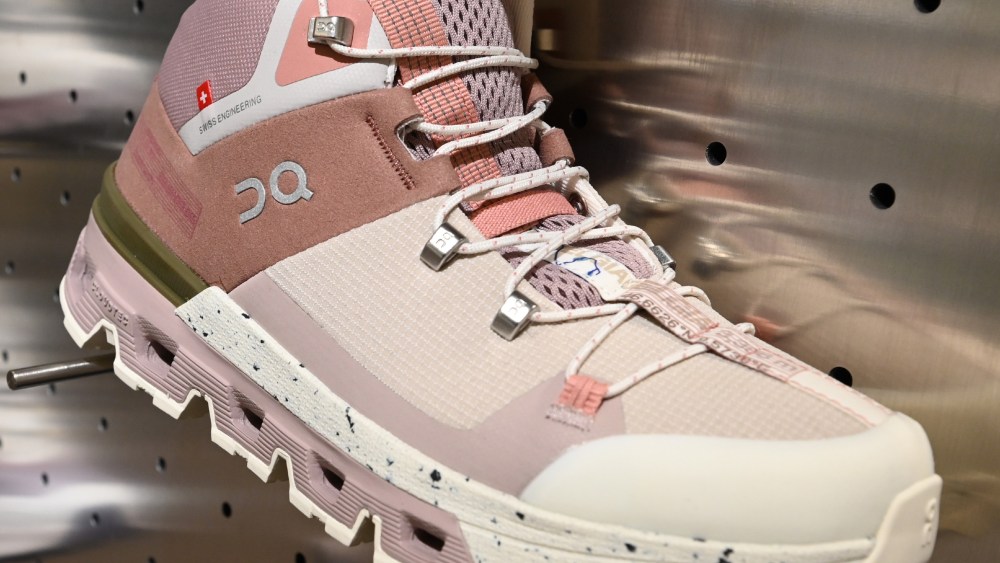
For the top five shoe brands in the U.S., rising label On AG took the fifth spot, climbing from No. 7 in 2024. Before that, it was No. 8 in 2023, and No. 12 and 18 for 2022 and 2021, respectively. New Balance, currently No. 4, captured the seventh spot for the U.S. ranking in 2023, and was previously No. 9 for 2021 and 2022.
Euromonitor’s research is culled from a combination of data points at the local, regional and global level that includes national statistics in nearly 50 markets, interviews with retailers, brands and wholesalers and company reports, such as regulatory filings.
Marguerite LeRolland, senior global insight manager for fashion at Euromonitor International, said both the On and Hoka brands are growing their presence through performance-led and community-driven narratives. “In recent years, both On AG and Hoka have achieved substantial growth by focusing on high-performance, lightweight footwear, disrupting the market with innovative cushioning and technology. Originally, targeting athletes, both brands have since widened their appeal and product portfolios,” she said.
LeRolland said both Hoka and On AG have “successfully bridged the gap” between niche, technical and lifestyle performance.
“As consumers become more health-conscious but also discerning in their purchases, Hoka and On’s strategies to showcase their engineering and designs in high-traffic, premium retail spaces help justify higher prices and fuel consumers’ willingness to pay more for brands they trust,” LeRolland said.
Other data points from Euromonitor’s World Market report for fashion and footwear indicate that the sportswear market is slated to grow at a CAGR (compound annual growth rate) of 2 percent between 2025 and 2030, fueled by longevity and even tech-enabled wellness, as well as more casual dress codes across work and social settings. The rate of growth for sportswear is outpacing the wider apparel market.
Among fitness enthusiasts, 31 percent plan to increase spending on apparel and footwear, versus 24 percent of global consumers in 2025. And e-commerce sales continue to outperform other channels, with the share of online shopping representing 32.4 percent of total sales of apparel and footwear in 2025.
The report also said that the global apparel and footwear market was valued at $1.8 trillion in 2025, with growth expected to remain below 1 percent CAGR through 2030.
“Global consumers are becoming more discerning with how they spend on fashion, prioritizing value, wellbeing and experiences over volume,” Euromonitor said.
And according to Euromonitor’s Voice of the Consumer: Lifestyles survey 2025, 71 percent of global consumers are still concerned about rising everyday costs, driving intentional consumption and greater scrutiny of perceived value, which in turn is accelerating market polarization around the globe.
LeRolland said that consumers aren’t necessarily buying less fashion, but they are buying differently on either the primary or secondary market. “Value now extends beyond price and intrinsic product features to include durability, versatility and emotional connection, creating clear growth opportunities for brands that understand these shifting priorities,” she said.