
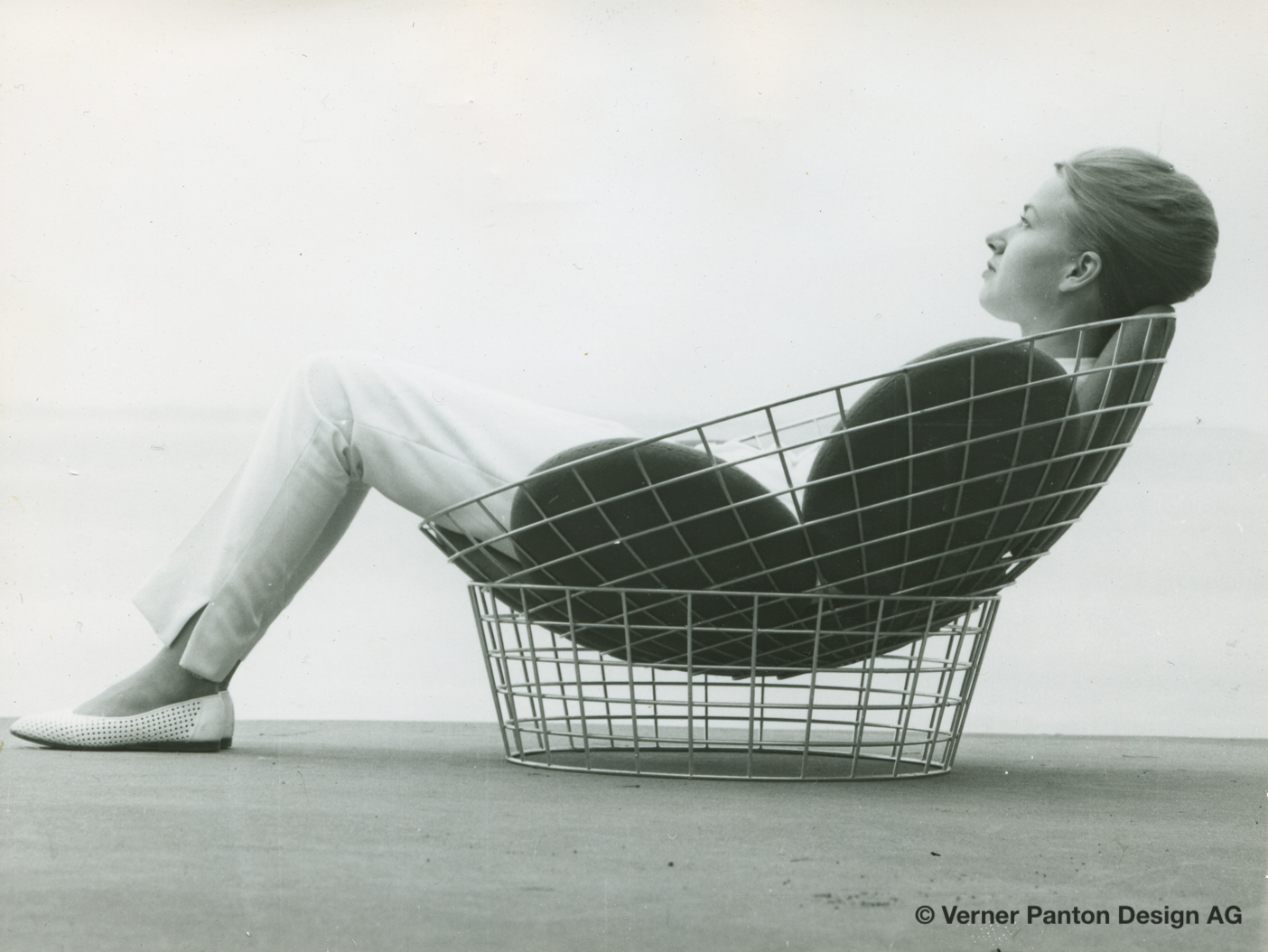
MILAN — Iconic, modernist designs are in high demand. Re-edited in new materials, colors and finishes, some of the design world’s most famous pieces have been reissued for a new generation of consumers. A penchant for pieces made between the 1920s and 2000 is on the rise from the worlds of fashion to design, with a recent report by 1st Dibs showing that 85 percent of designers source vintage pieces, with 36 percent of all items sourced for a given project in 2025 as vintage or antique. It’s no wonder that this season, remakes are on the rise like never before.
WWD has selected a few updated evergreen styles with runway potential.
You May Also Like
Cassina
This season, Italian design firm Cassina will unveil the reissue of Verner Panton’s disruptive Peacock chair within its Karakter collection, marking the centenary year of the birth of the Danish visionary.

The company will also unveil a series of relaunches from the Cassina Historical Archive that highlight the brand’s pioneering designer collaborations, reinterpreting works by bygone icons like Gaetano Pesce and Vico Magistretti for contemporary life.
Dalila by Gaetano Pesce

Dalila is a collectible design piece envisaged by Gaetano Pesce, developed specifically for outdoor living while preserving the integrity of the original form.
Inspired by the famous Biblical parable Samson and Delilah, the piece originated as an artistic sculpture fashioned with surreal forms, reflecting Pesce’s revolutionary spirit. The project revives two of the three original models designed in 1980, reinterpreting them according to the needs of outdoor settings. Available with or without armrests, Dalila is crafted from flexible polyurethane foam coated with a thin colored elastomeric layer that makes the seat both welcoming and comfortable.
Chloé Brings Back the Tomato Chair

Produced in just a limited number of pieces, the soft and squishy Tomato chair originally designed in 1970 by French designer Christian Adam remains a highly sought-after chair to this day. Made in collaboration with Italian manufacturer Poltronova, it’s round, tactile and shaped exactly like a tomato and endures as an emblem of the Italy’s Radical design movement. For Milan Design Week, the Tomato chair has been exclusively re-edited, under the creative direction of Chloé’s creative director Chemena Kamali.
“The Tomato chair found an immediate resonance within Chloé… It revealed a natural affinity with the Maison’s sensibility today, affirming a language of softness, fluidity and ease,” the house said.
Andrée Putman’s Elephant Chair

French interior design master Andrée Putman passed away more than a decade ago — but her contemporary design studio and legacy continue to thrive.
Her daughter Olivia Putman and Andrée Putman Studio chief executive officer Aurélie Laure have begun to showcase new editions and select collectible interior pieces from Putman’s vast archive. This season, the Milan design crowd will get a taste of her whimsical spirit.
The Elephant chair, which is available in both outdoor and indoor versions, was originally created for the Musée d’Art Contemporain de Bordeaux project in the late 1980s.
Tito Agnoli’s P3 Designs Revisited by Gubi and Bonacina 1889

Faithful to the original drawings, Denmark-based Gubi, which makes both contemporary furnishings and re-edits, brought Tito Agnoli’s P3 designs form the 1960s back into production. For the first time the firm introduced an outdoor-ready edition of the P3 lounge chair, crafted in high-performance synthetic rattan in collaboration with Bonacina 1889. The synthetic rattan renders the chair more durable for indoor and outdoor use and more affordable for younger generations.
FontanaArte‘s Signorina

FontanaArte will this season bring forth Signorina, inspired by the Signora first designed by Daniela Puppa in 1992, creating a heritage around its sleek design. Puppa is a name that resonates in the worlds of both design and fashion. In Paris, she continues to collaborate as an accessories designer for both LVMH Moët Hennessy Louis Vuitton and Dior. Her tenure in design dates back to the early 1980s, working under the artistic direction of Gae Aulenti — to make installations for the FontanaArte company events.
Gio Ponti‘s Oro Lamp for Poltrona Frau
In November, Molteni&C presented its first collection of objects designed by Gio Ponti, which included eight select pieces from the archive. Ponti designed with such passion and frequency, he filled his creative wealth with more than 250 design objects, some of which have never been seen by the public. Almost 50 years after his death, discoveries still abound. On the occasion of Milan Design Week, Poltrona Frau presents the “True Over Time” collection, celebrating authenticity as a timeless value. Among the highlights is the Gio Ponti Oro floor lamp, originally designed in the 1950s for a residential project but never brought to production.
Poltrona Frau said that Ponti created the lamp in 1956 to illuminate the Fondazione Gallini building in Voghera. The Gio Ponti Oro lamp brought linear light bulbs to the fore. The engineering involved pairing them with anodized aluminum reflective panels.

The Teatro basket by Gio Ponti for EditionsMilano

Gio Ponti is also the protagonist of the latest chapter of Archive, through which EditionsMilano brings back objects drawn from the archives of recent design history.
Designed in the late 1940s, the firm said that Teatro is considered the only basket created by Ponti throughout his career. Known for his beautiful yet impossible objects, it’s emblematic of the sort of whimsy Ponti was famous for.