BERLIN — Artificial intelligence dominated discussion at the World Retail Congress, but it was not the only theme. Across two days of panels, retailers and brands repeatedly returned to the questions of how technology, physical experience and shifting consumer expectations are reshaping the industry.
AI was most top of mind, with speakers frequently joking that no session could be held without mentioning it. But behind the buzzword was a more substantive shift. Executives described AI as both a major growth opportunity and a source of disruption, fundamentally altering how consumers discover, evaluate and engage with brands and retailers.
The technology has already begun to reshape the customer journey, becoming the entry point for customers across sectors, including department stores, luxury brands and sports.
It’s also increasingly influencing brand perception, putting retailers and brands on the back foot and forced to rethink long-standing strategies around marketing, customer acquisition and brand storytelling.
That shift was most clearly articulated by David Roth, chairman of brand analytics company BAV-WPP, who said large language models (LLMs) are already reshaping how consumers discover and evaluate retail brands.
“Every AI has an opinion of your brand today,” he said, adding that this perception was increasingly influencing purchasing decisions.
Consumer behavior is shifting rapidly. Seventeen percent of shoppers now start product searches with tools such as ChatGPT or Claude, bypassing Google altogether, according to WPP’s data.
That number jumps to 47 percent among Gen-Zers, highlighting the speed at which AI-driven discovery had boomed among younger consumers. Roth added that AI-driven discovery could account for an estimated $750 billion in retail revenue by 2028.
This shift has already begun to reshape marketing effectiveness and investment priorities for brands, as AI has effectively become independent arbiters of brand reputation. In essence, the machines are judging you.
LLMs form opinions based on combing sources, including reviews, forums like Reddit and editorial content. Much of that can be fragmented information, such as past negative reviews of problems that have since been addressed. “Your own website probably accounts for as little as just 5 percent of what all these models are drawing on.”
As a result, brand narratives are increasingly constructed outside companies’ and marketers’ direct control. Brands have to switch gears quickly from SEO to narrative optimization — not just making sure they are seen by LLMs but that they can frame their storytelling within the AI engines.
Roth added that 89 percent of retail CEOs said that AI-powered search is the shift that worries them the most.
“The discovery moments that are absolutely vital for new customer acquisitions, for new products, those discovery moments that many retailers have built their entire business on are now being overtaken by algorithms,” he said.
That was emphasized across sessions, as many panels discussed how customers are now showing up with significantly more information, having done reams of research beforehand on brand and product.
Retailers currently focus too heavily on conversion, said Kat Thomas, marketer and author of “Weapons of Mass Confidence,” which explores how AI can impact women’s behavioral and consumer choices.
“Confidence is the consideration point around who enters a category. You’re not going to convert them if they’re not showing up with interest and feel that it’s for them,” she said. Categories with tension points such as expensive luxury items, or research-heavy items such as tech or electronics, can be “emotionally loaded.”
“I would urge retailers not just to think about conversion, but to think about audience expansion to a wider set of potential customers,” she said.
Sports can be one of those emotionally charged sectors. Ellie Norman, chief marketing officer of Formula E racing, added that growth depends on expanding the market beyond the small proportion of active buyers and using inclusive storytelling. Changing their positioning has resulted in their audience being 47 percent women — “unusually high for motorsport,” she said.
“The storytelling we’re putting around that is very much aligned into being purpose driven, accessible, welcoming, and from that, there is a 40 percent increase in spend” on merch as well as high-end tickets and packages. That wider audience also appeals to sponsors, which is another revenue driver for the brand.
Brick-and-mortar stores are increasingly being used to validate decisions that have already been made online.
Customers “are leveling up from a knowledge sense,” added Thomas, which means the shift for retailers will be experience and service. “They want a more human experience, and they want all the information that they gathered to be validated.”
Across the conference, as much buzz as there was about AI as a tool and how it automated tasks such as stock management, the focus was repeatedly on the growing importance of “soft skills” for the future of sales and retention. With tasks such as stock now automated, soft skills such as emotional intelligence will become more important.
“Nowadays, the sales associate needs to move at the speed of the customer,” said Richard Butler, vice president of North America stores at Coach. He called the new approach “co-navigation.”
“The sales associates being able to not only navigate the process with the customer, but become part of it,” he said. Sales associates are now encouraged to recommend the best lighting, take photos for customers or assist in an unboxing moment for social media.
“That requires also emotional intelligence of the sales associate, knowing how to navigate in between these selling behaviors and navigation behaviors. It takes cultural fluency, so not only knowing like what is selling in the brand, what is trending online, what is blowing up on TikTok, but also what’s going on in the larger market, and being kind of that fashion know it all, so that they can share those exciting things with their customer.”
He added that Coach research shows that over 70 percent of Gen Z shop IRL weekly, and they want experiences outside of the digital world.
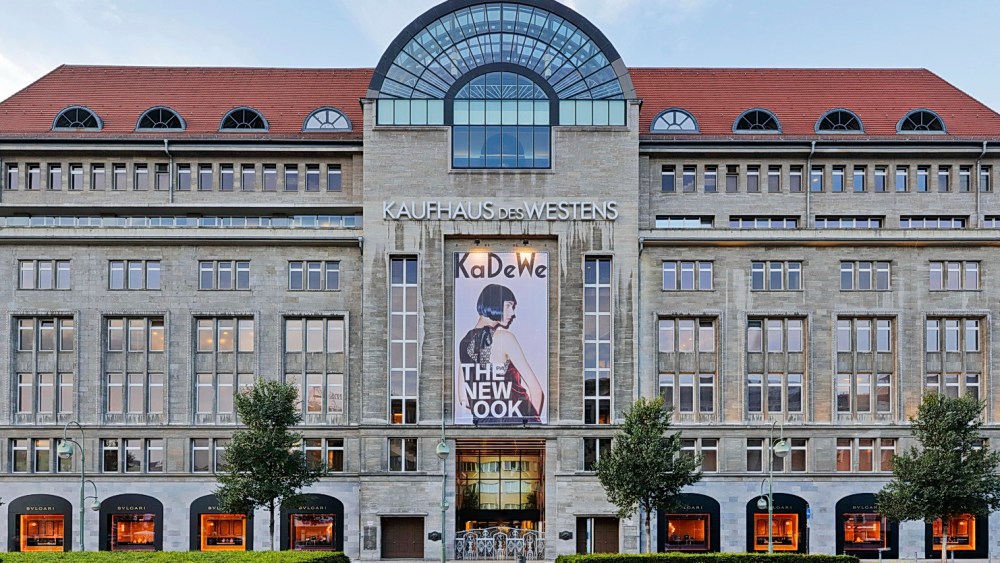
Timo Weber, CEO of KaDeWe, said AI is only accelerating the shift that began post-pandemic, when the retailer had to reframe the department store as a “third space” for socializing rather than simply buying.
The department store will open a gym, yoga and Pilates studio in mid-May. “Are we earning a lot of money with it? No. Fortunately, we have 60,000 square meters to fit experiences, and you can’t do it just with another shelf of clothes,” he said.
The store’s F&B play is now the main foot traffic driver, with 70 percent of people coming through the front doors heading to the top floor restaurants.
KaDeWe is also turning their windows over to artists instead of brands during Berlin Gallery Weekend, again to assert itself as a cultural space.
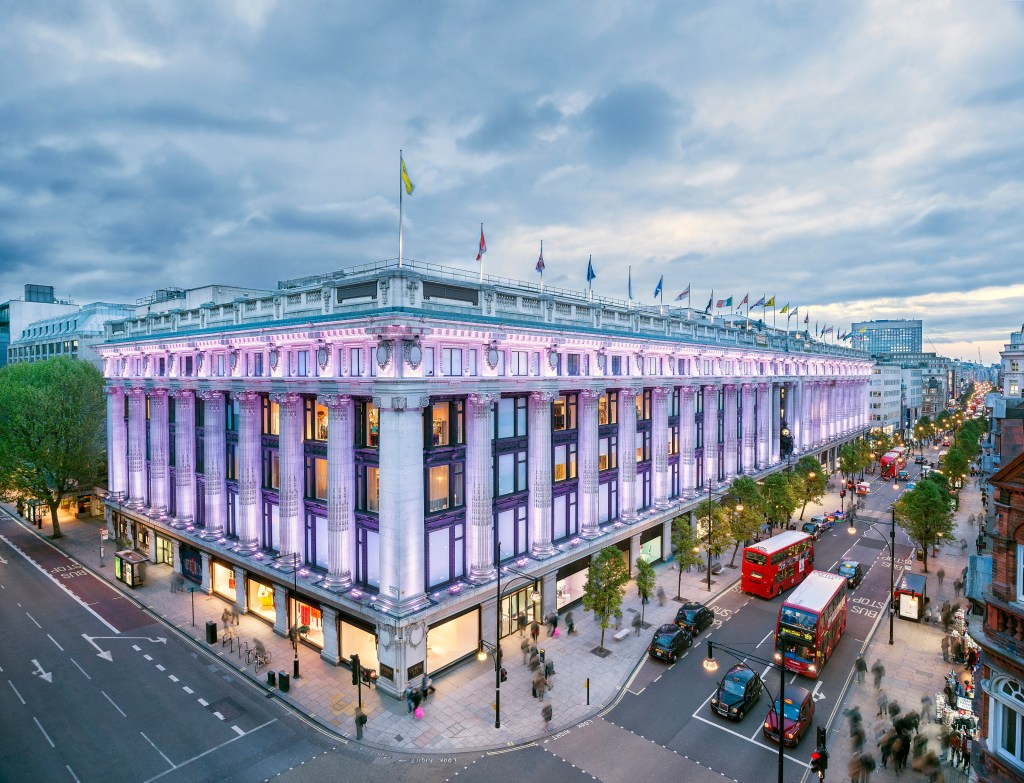
Selfridges Group CEO André Maeder emphasized a similarly experience-driven strategy, positioning department stores as curated cultural platforms. He said the group was moving toward what he described as a “retail media company,” with cinemas, restaurants, exhibitions and a newly launched members’ club designed to extend dwell time and deepen engagement. He said that the future department store would act more like a destination for lifestyle and social interaction than a conventional retailer.
Christian Louboutin CEO Alexis Mourot focused on brand discipline and selective growth. He said innovation needed to be balanced with protecting brand equity and added that the “power of saying no,” is central to maintaining the Louboutin identity, particularly with collaborations or category expansion.
Across the panel, speakers agreed that luxury growth increasingly depended on emotional value, cultural relevance, and elevated physical environments, rather than product alone.
Another key theme was the importance of curation. Department stores in particular were described as operating increasingly as edited spaces, where much of the decision making has already been done by staff. Maeder used the example of pepper mills — the department store used to offer 70 while now that is down to just 10 choices.
Sustainability Is Still in the Mix
Elsewhere, sustainability remained a key topic, though the heat around it has cooled from recent years, with companies moving away from headline-setting targets and into the nitty gritty of execution.
That means broad ambition to operational change by embedding sustainability into product design, sourcing and supply chains. This includes scaling the use of lower-impact materials, improving traceability and investing in circular models such as resale and recycling.
Executives including H&M chief financial officer Adam Karlsson and Zalando vice president of sustainability Pascal Brun agreed that there is ongoing tension between affordability and environmental progress, and it’s particularly acute for mass-market players. Delivering sustainable products at scale, while maintaining competitive pricing is an ongoing structural challenge — especially against the backdrop of global uncertainty.
As publicly traded companies, they are also beholden to shareholders. However, they argued that large retailers have a responsibility as well as the leverage to drive systemic change.
“We just open up sustainability not being a risk mitigation or compliance issue, but rather a way to protect and create value for the long term. And when we look at it, it’s no longer about whether we should do it. It’s rather how we do it, and that has helped us a lot not to think of it as an ‘either/or’; it’s a ‘rather than.’ We need to both earn profits and we need to excite customers,” said Karlsson.
Technology and data were highlighted as critical tools in this transition, enabling better tracking of environmental impact and more informed decision-making. But speakers cautioned that digital solutions alone would not be enough without internal accountability and alignment across teams.
Regulation and consumer expectations were also accelerating the pace of change. Transparency, in particular, was emerging as a key sticking point, with brands under increasing pressure to demonstrate measurable progress rather than rely on claims that consumers perceive as greenwashing.
The discussion underscored a wider shift in retail: long-term competitiveness would depend not just on growth, but on the ability to decouple that growth from environmental impact — turning sustainability from a cost center into a driver of resilience and value.