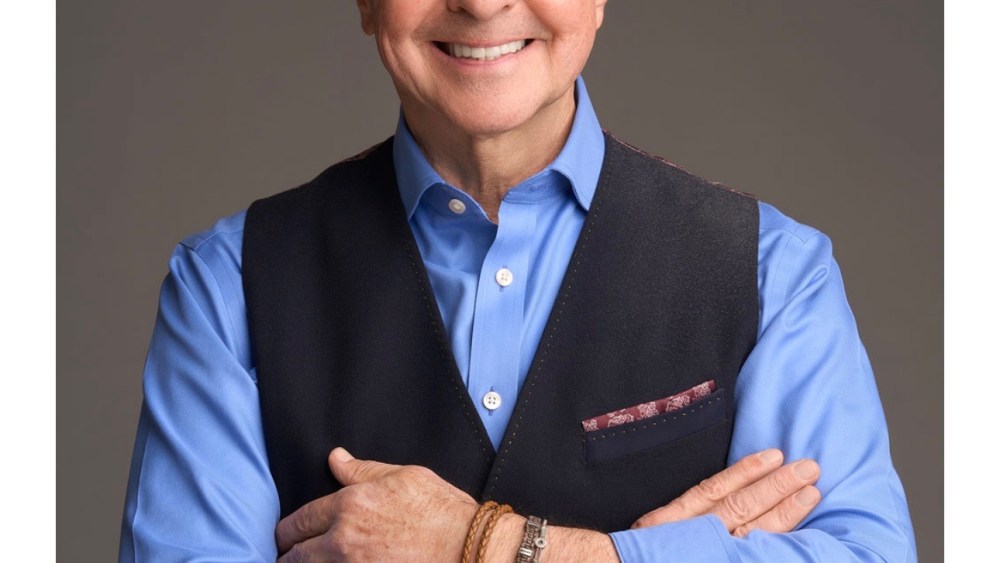
Five years after his first book, “Roar,” Michael Clinton is looking ahead.
The author is releasing his second book, “Longevity Nation,” Tuesday, the culmination of his in-depth research into how living a centenarian life will impact travel, health care, career trajectories and more.
For the book, Clinton interviewed 70 experts on longevity, prompted by the reaction to “Roar” and its subsequent consultancy, Roar Forward, which helps enterprises better connect with older consumers. “I was learning more about this huge movement around longevity, and I started meeting all these amazing people all over the world who were doing incredible work in medicine and technology and higher education,” said Clinton. “I realized they are the longevity innovators of our time, they’re the one writing the script.”
Related Articles
One of the things that compelled Clinton to write another book was the realization that most literature on longevity has been written by doctors. “Medicine is a really important part of it, but nobody did the sort of longevity 101, in terms of what’s happening in the landscape of longevity. I wanted to do a survey to show that this was a global ecosystem emerging in many sectors, and so to inspire people because it has so many different dimensions to it,” he said.
Case in point, there’s a chapter on skin longevity, as well as career pivots later in life, going back to school, what travel looks like, relationships and more. “‘Roar‘ was more personal development, and ‘Longevity Nation’ is more thought leadership with regards to the longevity phenomenon. It’s relevant for all ages,” Clinton said. “Younger people have a very keen interest in the longevity topic and the health topic. A part of that is that they continue to get under the surface. If you’re 35 today, you may live to be 100 or well into your 90s, and the second half of your life is going to be very different from previous generations.”
As Clinton sees it, “You’re going to have to think about longer careers, having more money, being engaged — you might have multiple relationships in your life,” he said. “There’s a lot of research we’ve done and the people we’ve talked to, people under 50 are having a lot of a-ha moments about longer lives. Younger cohorts see that future ahead of them.”
Clinton expects the longevity landscape will continue to shift dramatically. “The intersection of medicine, technology and AI” will be the biggest catalysts. “GLP-1s are a miracle drug, but I’m excited about technology and AI intersections in particular,” he said.
Case in point, when Clinton went to CES, he moderated a panel with a company called ElliQ, “which is a robot companion for people who are isolated,” he said. “There’s a big future in terms of how technology is going to help with relationships, loneliness or isolation. Another example is exoskeletons, which allow you to have more mobility.”