With the recent $20 billion merger of its foods division with McCormick & Co., Unilever — already the second-largest beauty manufacturer in the world — is looking to go even further and wider into the category.
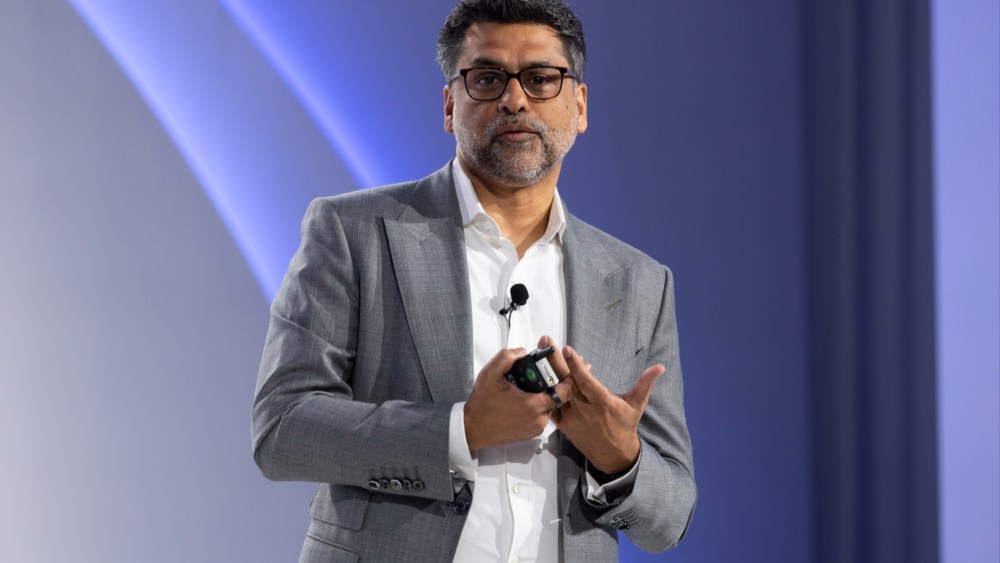
“The convergence of beauty, health and personal care will be the fastest-growing segment for the next 10 years,” said Herrish Patel, president of Unilever U.S. and chief executive officer of Unilever’s North American personal care division, at the Beauty CEO Summit.
Related Articles
Among his other predictions: male grooming will double in size as a category over the next decade. Unilever’s core health and beauty business is positioned to achieve high single-digit growth in the next five to 10 years. And Unilever’s most recently acquired breakthrough brands — Dr. Squatch, Grüns and Liquid I.V. among them — are on course to each become a billion-dollar business within roughly the same timeframe.
“William Lever, over 100 years ago, said that [Unilever] would bring hygiene to the many. We’ve reinvented that mission statement to say we will bring desire at scale to the many,” said Patel, adding that today, Unilever brands are in approximately 95 percent of American households.
Those brands, he said, each in their own way emphasize a combination of science, aesthetics, sensorial experiences and youth-spiritedness in order to win — or SASSY, the acronym Unilever uses to describe its strategy.
“We’re passionate that our brands are youth-spirited, but it’s agnostic of age,” said Patel, pointing to Dove’s latest “The Game Is Ours” Super Bowl commercial, which aimed to resonate with and empower women of all ages.
Product look and feel is also key to keeping with the times, and over the last couple of years, more than 80 percent of Unilever’s beauty portfolio has undergone some form of packaging, aesthetic or sensorial update, including legacy brands like Dove and Vaseline.
Meanwhile collaborations, like Dove’s Crumbl-themed body care collection, also bring forth critical cultural currency when done right.
“These are not just collabs,” Patel said. “Dove x Crumbl was a phenomenon socially; it was a four-month innovation that [reached] $60 million just in Walmart. We had billions of impressions, hundreds of thousands of pieces of organic content and a frenzy in the way we launched it.”
Dove’s current momentum, Patel said, is proof that “you can take a legacy brand and reinvent it for the digital world today.”
Part of that success also entails mastering the increasingly omnichannel ways of business.
“We believe you have to win three different shelves: the social shelf, the digital shelf and the physical shelf,” Patel said, adding that as AI comes further into play, the stakes are only getting higher.
“We predict that 50 percent of our organization will evolve in the next 12 months because of AI. So, how do we strike that balance between human creativity, powered by machines, but with a sense of purpose, in the way our brands show up and engage consumers in America?”
Unilever is on a positive trajectory so far, netting more than three consecutive years of volume sales growth.
“The industry is changing,” said Patel. “We believe this is a moment where beauty has become available for everyone. Communities own brands. Creativity flourishes. And we have the moment to allow America to express itself, and what beauty means from here.”