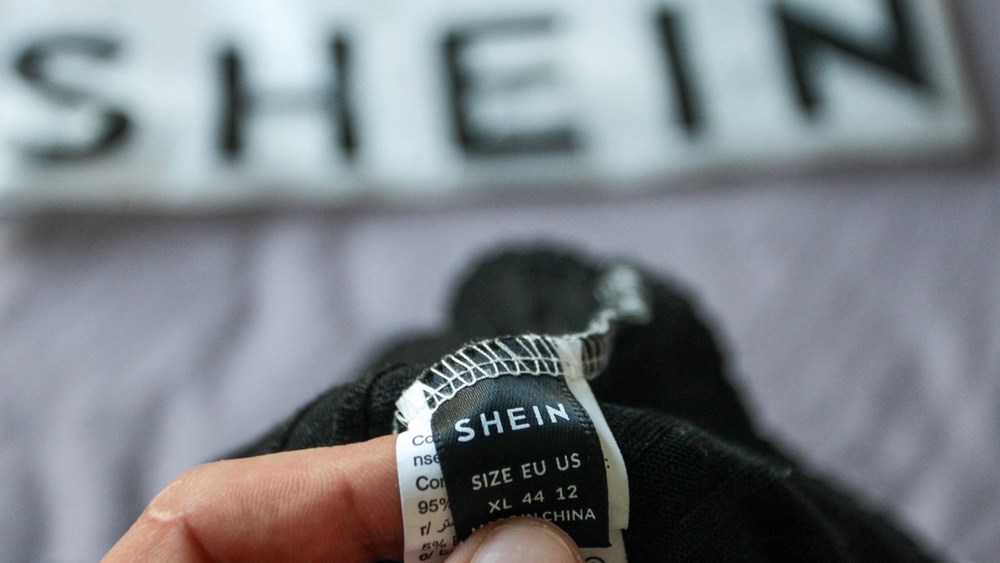
A German nonprofit is taking legal action against Shein after tests it commissioned found hazardous chemicals in 15 of 18 items from the e-tail juggernaut, including a women’s boot with a reproductive toxic plasticizer at 179 times the European Union’s legal limit and a jacket marketed to teenagers with polyfluorinated compounds at 12,000 times the legal limit.
The violations weren’t isolated: nearly 40 percent of the products tested by Deutsche Umwelthilfe breached EU chemicals legislation and “should not have been placed on the market,” said Viola Wohlgemuth, the organization’s senior expert on textiles and the circular economy. Among the products tested for the “forever chemicals” known as PFAS, 75 percent exceeded EU thresholds. The analyses also detected heavy metals linked to organ damage and cancer, including lead, chromium and nickel, along with additional reproductive toxic plasticizers and the liver-toxic solvent N,N-dimethylformamide.
“Hazardous chemicals are not an accident,” she said in a statement. “They are the price of a business model built on maximum speed. What is the point of having chemical safety limits if they are not enforced? The European Union and the German government must ensure that platforms repeatedly violating European product safety and chemicals legislation face effective sanctions and, in cases of repeated non-compliance, are excluded from the European market.”
While this is far from the first time Shein has faced such allegations, the fast-fashion giant said it is taking the claims raised by DUH seriously and has delisted the products while its product safety and compliance teams review them. The China-founded company added that it is conducting a site-wide review of related items in line with its product safety protocols.
“Earning and maintaining the trust of our customers is fundamental to our business, and we are committed to maintaining high standards of safety and compliance across the products offered on our platform,” a spokesperson said. “All vendors are required to comply with SHEIN’s code of conduct, our product safety standards and the applicable laws and regulations of the markets where we operate. We also work with internationally recognised testing and inspection agencies, including Bureau Veritas, Intertek, QIMA, SGS and TÜV SÜD, to support our efforts to identify and address non-compliant products.”
But Wohlgemuth, writing on LinkedIn, said removing individual illegal products is not enough and that the “real problem” is the business model. As Germany moves to implement the EU’s revised Waste Framework Directive through its upcoming Textile Act, Federal Environment Minister Carsten Schneider has an opportunity to turn it into a “genuine anti-fast fashion act.”
Barbara Metz, DUH’s executive director, agreed, pointing to calls from Germany, France and the Netherlands for coordinated European action against ultra-fast fashion at last week’s EU Environment Council in Luxembourg. Jochen Flasbarth, state secretary at the Federal Ministry for the Environment, was right to say that “producing cheap disposable clothing can no longer be a competitive advantage,” she said, but now action must follow.
“The upcoming Textile Act gives [Schneider] every opportunity to introduce a truly effective anti-fast-fashion framework,” she said. “Producer fees must be consistently linked to binding environmental criteria. Companies placing toxic, short-lived and difficult-to-recycle fashion products on the market should pay significantly higher fees than manufacturers of durable, low-toxic and circular textiles.”
The European Commission opened a formal probe into Shein under the Digital Services Act in February over what it described as the Singapore-headquartered firm’s “addictive design,” a lack of transparency in how it recommends products to consumers and the sale of illegal goods that could constitute child sexual abuse material. DUH said it will now submit the results of its tests to the Commission as part of the ongoing investigation.
“Shein’s clothing is a toxic chemical cocktail by design,” Metz said. “The ultra-fast fashion giant profits from selling ever more ultra-cheap clothing at ever-increasing speed—at the expense of the environment, human health and natural resources. But the real problem is not just the chemicals in the garments—it is the system behind them.”