A South Korean apparel manufacturer said it is expanding its use of blockchain technology to make its global supply chain more transparent.
ShinWon Corp., which has several fashion brands in South Korea including Besti Belli and Sieg, said in a statement that it wants more visibility from its raw material sourcing to finished product manufacturing.
This comes as the company prepares to enter a global market that has placed supply chain transparency among its top priorities, such as in the European Union, one of the world’s largest apparel markets, which will later require all textile and apparel to come with its own digital product passport (DPP).
The DPP will require more transparency from the fashion industry, giving both consumers and regulators a closer view of a product’s entire life cycle and its environmental impact. The specific EU rules governing DPPs in the textile industry are only slated to be finalized in 2027, with the full implementation expected sometime in 2028.
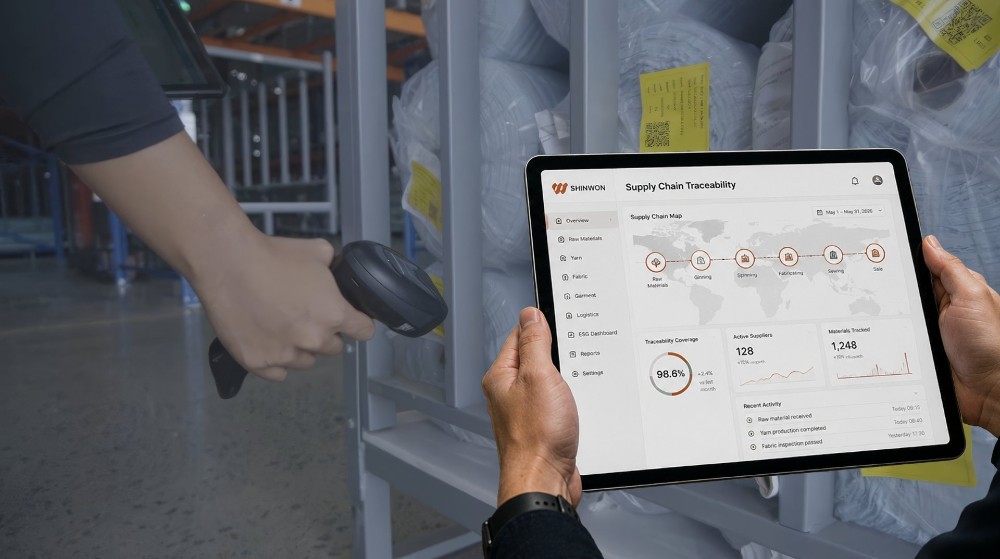
ShinWon said it is using Retraced, a blockchain-based supply chain traceability platform, to manage data across the entire value chain. This allowed ShinWon to automatically review, extract, and verify sourcing documents to detect potential discrepancies even before production begins.
“Transparency is becoming one of the most important competitive advantages in apparel manufacturing,” said JJ Park, ShinWon Corp. CEO. “By combining AI with trusted supply chain data, we’re helping global brands make sourcing decisions with greater confidence while building a more resilient and responsible supply chain.”
“Our goal is to continuously expand supply chain visibility and achieve 100 percent traceable raw materials across our global operations,” he said.
The company said the digitalization of how raw material received and and how yarn is processed processes has already significantly enhanced its supply chain visibility. Before production orders are executed, ShinWon’s key suppliers submit material sourcing plans through the AI-driven module.
ShinWon will then identify in advance the exact sourcing regions of raw materials and the manufacturing facilities where fabrics will be produced. Unlike conventional traceability systems that primarily capture information after production, ShinWon’s approach provides visibility before manufacturing begins, allowing potential ESG and sourcing risks to be identified and addressed proactively.
This enhanced visibility goes beyond simple monitoring, since this helps strengthen long-term collaboration with suppliers by providing deeper insight into sourcing and production. Based on these insights, ShinWon said it can offer more targeted support, improve operational efficiency, and foster mutually beneficial partnerships across its supply chain.