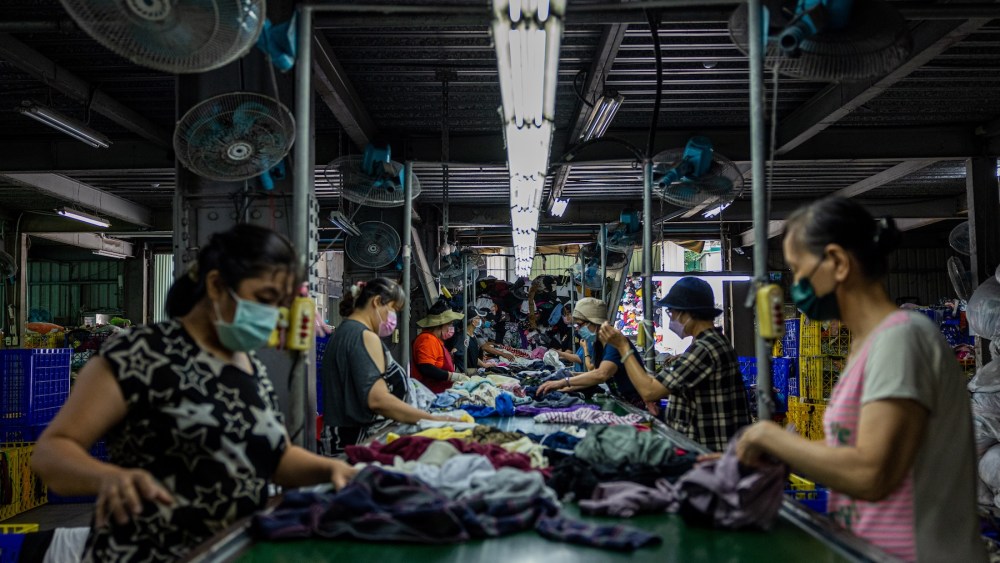
Nearly 600 migrant workers in Taiwan’s textile industry had yet to receive any recruitment-fee reimbursement as of July, more than two years after a forced-labor investigation put dozens of global companies on notice.
Taiwanese textile suppliers and some of their buyers have returned $4.4 million to workers, according to Transparentem. But current commitments leave approximately $2.3 million of the $8.3 million owed uncovered.
“On the Mend,” published by the nonprofit in July, found that 1,323 of 1,902 eligible workers had received at least partial reimbursement. Suppliers expected to repay approximately $6 million, or 72 percent of the total calculated by third-party organizations, by the end of 2026.
Repayment was uneven among the eight suppliers. Everest Textile completed $1.3 million in repayments in April, while Neng Neng concluded its repayment process in February after reimbursing 34 of 39 eligible workers. The remaining five could not be located or had returned to their home countries, according to the report.
De Licacy Industrial and Far Eastern New Century had returned 74 percent and 90 percent of the amounts they owed, respectively, and expected to complete repayment in July. Tung Hsin had repaid 47 percent and planned to reach full reimbursement by December.
Other suppliers were aiming lower. Libolon had returned 21 percent of its $3.4 million obligation and planned to repay only half. Lovetex had returned 45 percent of the approximately $474,000 owed and targeted 68 percent, while Lucky Unique had no repayment plans, citing a lack of financial capacity.
The figures reflected the latest information available to Transparentem when the report was published. The nonprofit said it had no reason to believe De Licacy and Far Eastern had missed their July targets but would not collect another round of updates until the end of the year. Their completion therefore has not been independently confirmed.
Transparentem published its original findings in February 2025 after interviewing more than 90 migrant workers from Indonesia, the Philippines, Thailand and Vietnam. That report listed nine suppliers, treating Li Peng and LeaLea separately. Because both companies belong to the Libolon group, the July update consolidated their reimbursements under Libolon.
Some workers said they paid as much as $6,000 to secure jobs in Taiwan, taking on debts that the nonprofit said left them more vulnerable to forced labor.
Audits commissioned by buyers and conducted by Verité and Dignity in Work for All broadly confirmed Transparentem’s findings and calculated workers’ eligibility for reimbursement. Auditors generally verified repayments by reinterviewing workers who had participated in earlier assessments. Transparentem separately contacted a subset of workers to confirm that they had received the money.
For workers who received the money, the effect was substantial. Verité interviewees described using reimbursements to clear debts, repair homes, pay university tuition and finance medical treatment.
“It felt like a blessing,” one worker said. “I cleared my arrears and was finally able to send help to my family without borrowing.”
But repayment has unfolded slowly since Transparentem first alerted global buyers to its findings in February 2024. More than two years later, 579 eligible workers had not received any reimbursement. Some former employees had become difficult to locate after leaving their factories or returning home.
Transparentem said the total number of former workers who remain unlocated—and the amount they are owed—will not be known until it receives final verification reports from all suppliers.
Transparentem attributed the delays partly to disagreements over who should pay for abuses beyond brands’ first-tier suppliers. Purchasing contracts had not established procedures for dividing remediation costs, the organization said, leaving companies to negotiate responsibility after the problems surfaced.
Twelve buyers led supplier remediation groups, while 13 told Transparentem they had contributed financially. The latter group included Amer Sports, Cotopaxi, Patagonia, PVH, REI and YKK. Helly Hansen provided relief for audit expenses rather than directly funding worker reimbursements.
Cotopaxi joined remediation efforts at Lucky Unique despite having no business connection to the supplier. YKK worked alone among buyers to advance repayment at Lovetex.
At Lucky Unique, none of the 57 eligible workers had received reimbursement after the supplier withdrew an earlier pledge to repay them. Lovetex had returned 45 percent of what it owed and, despite YKK’s involvement, expected to stop at approximately two-thirds of the total.
Transparentem’s original report identified companies it had asked to take action at the investigated suppliers, but it did not assign financial responsibility for the remaining shortfalls at Libolon, Lovetex and Lucky Unique. Transparentem referred questions about their decisions not to commit to full repayment to the suppliers.
The money trail was murkier among many other buyers. Adidas, Gap, H&M Group, Lululemon, Nike, Puma, Ralph Lauren, Target and VF Corporation were among the companies that declined to tell Transparentem whether they contributed to repayments. Amazon, Apple, Columbia and Under Armour were among those that did not respond to its latest information request, while Canadian Tire and Levi Strauss & Co. said they did not contribute.
Some buyers told Transparentem they were responsible only for workers whose materials could be traced to their products. Transparentem disagreed. It said companies should address abuses beyond their first-tier factories and establish funds to cover remediation before problems arise.
The investigation also prompted changes beyond reimbursement. When Transparentem began its investigation, four of the eight suppliers had no-fee recruitment policies covering at least some facilities. All eight have since reported adopting policies intended to prevent newly hired migrant workers from bearing recruitment costs.
The push for reform has also reached Taiwan’s industry groups and government. The Taiwan Textile Federation in December recommended that textile mills pay all migrant-worker recruitment costs. Two months later, Taiwan committed under a trade agreement with the United States to prohibit worker-paid recruitment fees and related costs in manufacturing and fishing within three years.
Taiwan’s Ministry of Labor has also published guidelines intended to help companies identify forced-labor risks. The Control Yuan, the country’s main government watchdog, concluded in June that existing prevention efforts were failing.
Comparing the labor-inspection system to “cleaning the deck on a leaking ship,” the watchdog recommended incorporating International Labor Organization forced-labor indicators into inspections, eliminating monthly broker service fees and establishing an independent grievance mechanism.
Transparentem called on suppliers and buyers to agree in advance on how future remediation will be funded, including through collective funds or insurance programs. It also urged companies to involve workers and worker organizations in designing reforms rather than relying solely on brands, suppliers and industry groups.
Some workers said the changes reached beyond their bank accounts and into daily factory life.
“It is like the company had a glow up,” one worker told Verité. “They are now giving us what should be given to us.”