Digital dyeing is transforming how fashion gets its color, and one of the technology’s pioneers is now undergoing a transformation of its own.
This week, WTRLSS was introduced as the next evolution of Lab Denim, the biotech company that developed indigo-free denim with bio-based finishing. The Swiss-born technology, called MultiActiv chemistry, simplifies the multi-stage denim dyeing process into just one step, resulting in dramatic water and energy savings.
More than a rebrand, the newly established company signals the technology’s commercial maturation and a broader opportunity to apply it across other markets. As part of this, WTRLSS now has full ownership of the technology, including its patents and IP.
The company is being led by CEO and co-founder Dustin White, a seasoned entrepreneur with extensive experience scaling businesses in fashion and technology; co-founder Kareem “Biggs” Burke, who co-founded Roc-A-Fella Records; co-founder and chief financial officer Marc Bishara, an entrepreneur with a track record in acquiring and scaling companies; and chief marketing officer Kimberly Doebereiner, who brings 35-years of experience with Procter & Gamble.

Doebereiner said the goal is to position WTRLSS as an ingredient brand the same way consumers may recognize a Tencel or Lycra hangtag on a pair of jeans. WTRLSS will partner with brands to make its technology visible on garments, establishing it as a new standard for how textiles are made.
She said the company’s research shows that consumers respond “incredibly positively” to its water-saving benefits, with WTRLSS adding another layer to the perceived value of a garment.
While the focus remains on denim, Doebereiner pointed out how the IP extends far beyond the category and will give WTRLSS the ability to expand into other non-denim textiles in the future. This is one of the reasons the new company has been set up, and the need for name that fits the vision.
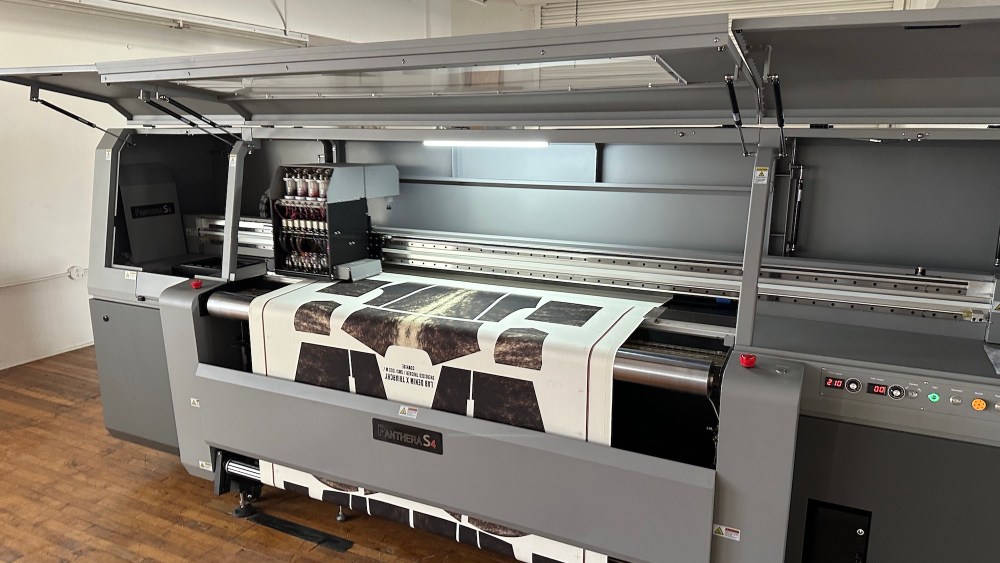
“We had such great momentum that we started looking at how we can deploy this technology outside of the denim market,” White said. Any cellulosic-based fabric can be digitally dyed in a solid color or with a print. WTRLSS offers dyes that fixate at or above industry-standard rates, as well as dyes that can be washed down to achieve specific desired levels. “We really put that in the control of the developer,” White added.

Commercial orders already underway. The company is now working with brands and manufacturers to bring WTRLSS into commercial production and scale the technology globally. This includes its partnership with Bangladeshi clothing manufacturer, Ha-Meem Group, on a commercial pilot. The textile and garment conglomerate is one of the world’s largest denim manufacturers and produces jeans for Levi’s, Gap, H&M and others.
“WTRLSS enables us to deliver world-class authentically finished denim while eliminating decades of water waste. Ha-Meem Group is proud to be first to bring this technology to commercial scale – and prouder still that Bangladesh is leading the way,” said Sajid Azad, director, Ha-Meem Group, Bangladesh.
White emphasized how crucial it is to make technology accessible in major manufacturing hubs like Bangladesh but said the opportunity could be even greater for nearshoring. By eliminating multiple wet and dry stages in the denim process, along with dye baths, wash-off, water-based pre- and post-treatments, and toxic chemicals, the technology could enable brands to produce jeans in places not typically associated with denim manufacturing.
ISAIC (Industrial Sewing and Innovation Center), a Detroit-based nonprofit, will be among the first organizations to utilize this technology within its state-of-the-art advanced manufacturing facilities. White said the technology is also available in Los Angeles and New York.
“We’re really looking at radically changing how textiles are dyed, and we’re starting with denim,” Doebereiner said. “WTRLSS has an ambition of changing some of the dirtiest industries to some of the cleanest.”