A B Corp. supply chain traceability platform is helping Brazilian brands, including Latin America’s largest fashion house, to prove their origin claims without exposing commercial data—all thanks to blockchain.
To do this, Brazil-based Blockforce said in a statement that it is working with Cardano Foundation, a non-profit that pushes for the Cardano blockchain platform as a public digital infrastructure across industries.
Prior to this, backing proof-of-origin claims used to run the risk of opening suppliers and their contracts to competitors, Blockforce said. Now it found a middle ground: the commercial data would sit on a private network, while only a cryptographic proof is published to Cardano. This way auditors, regulators, and even customers can confirm a record is genuine without seeing its contents.
“Our clients’ challenge has always been to go beyond knowing their own chain and actually prove it, without exposing suppliers and contracts to competitors,” said André Salem, chief executive officer of Blockforce. “Our proprietary blockchain architecture is built for easy integration, which made partnering with the Cardano Foundation straightforward. It delivers both to the market: commercial data stays private, and only the proof goes to the public network.”
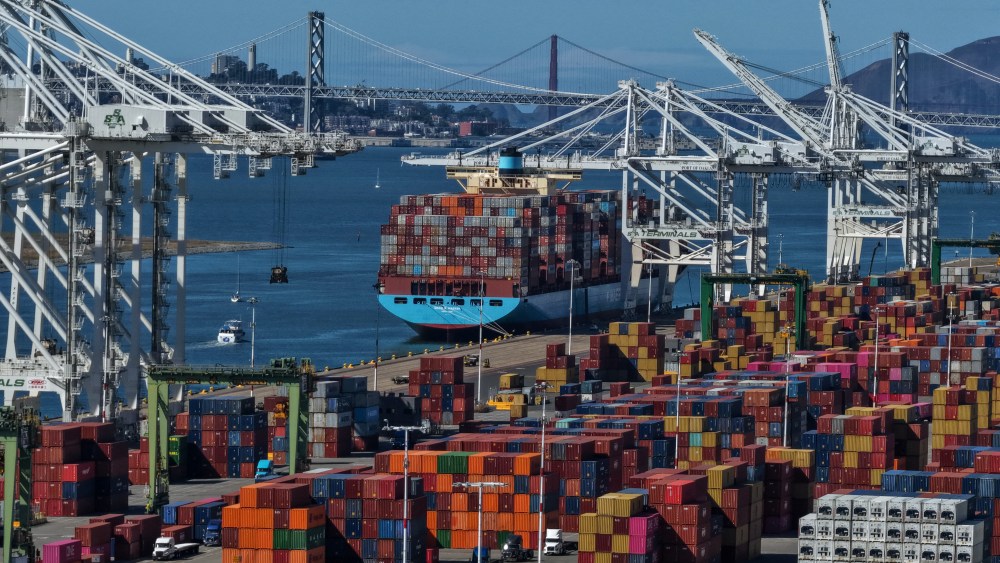
This comes at a time when brands are under increasing pressure from regulators across markets to be more transparent about their supply chains. In Europe, for example, the European Union’s Corporate Sustainability Due Diligence Directive focuses on the social and environmental impact of operations, while the highly anticipated regulation on digital product passports would ensure transparency across a product’s entire life cycle.
Azzas 2154, Latin America’s largest fashion group, is already using the platform to trace its leather chain by cross-checking fiscal documents, supplier records and official public databases into a single history for each product.
“Our goal is to trace 100 percent of the leather across our brands by 2030. To get there, we built a solution with Blockforce that works with the reality of the chain and uses the data suppliers already produce,” said Suelen Joner, head of sustainability at Azzas 2154. “Rather than asking them to adopt new systems, we start from that information and turn it into a single auditable record.”
Blockforce and the Cardano Foundation said they have signed contracts that cover 6.5 million certification records through 2030, with more planned in fashion, automotive, agribusiness, pharmaceuticals and cosmetics.
Blockchain, despite being popularly associated with cryptocurrency, can be applied to any industry, especially with its technology, which makes the input data immutable. It may sound complicated, but the Cardano Foundation believes it works best when people don’t even notice it.
“When a public blockchain fades into the background of everyday business, the technology is doing exactly what it should,” said Guilherme Pereira, Ecosystem Growth Specialist LATAM at the Cardano Foundation.
“Brazilian exporters are under increasing pressure to show where products originate and how their supply chains operate. This partnership brings that verification into day-to-day operations, and with this infrastructure embedded in major fashion supply chains throughout Brazil, we are seeing how blockchain can make a difference in how global trade actually works,” he said.