In March 2025, without public explanation, the then-new Trump administration lifted a measure that had blocked a major sugar producer in the Dominican Republic, Central Romana, from shipping its product to the United States. U.S.
Customs and Border Protection (CBP) had originally imposed the import ban in November 2022 because of evidence of forced labor and continued to enforce it for over two years.
The 2025 action was a modification—the agency’s term for permitting the goods to enter the U.S. again—which CBP issued despite ongoing indications that the company was not meaningfully transforming its labor practices. Leaving aside what this might say about the administration’s priorities, it exposes a structural defect in the forced-labor enforcement process.
Section 307 of the Tariff Act of 1930 bars the importation of goods where there is a reasonable indication that they were made with forced labor. CBP issues an import ban, called a Withhold Release Order (WRO), under these circumstances, an order that is supposed to be modified only in the presence of evidence demonstrating it is no longer necessary. When modification happens, however, there is no requirement for the agency to publish its conclusions about remediation of the underlying, exploitative labor conditions. And that is a problem.
Corporate Accountability Lab (CAL), the organization I co-founded and for which I serve as executive director, is an independent nongovernmental organization that is dedicated to holding corporations accountable for their contributions to human rights violations and environmental harms. CAL conducted 100+ interviews during five visits to the Dominican Republic from 2023 to 2025, generally documenting a lack of meaningful remediation of the conditions that were present when CBP issued the WRO. Most notably, CAL found evidence of the continued presence of indicators of forced labor under International Labour Organization guidelines as well as an undiminished climate of fear among the workers, especially among the Haitian-descended migrant workers who form the backbone of the company’s cane-cutting labor force. There is simply no publicly disclosed information that rebuts this evidence.
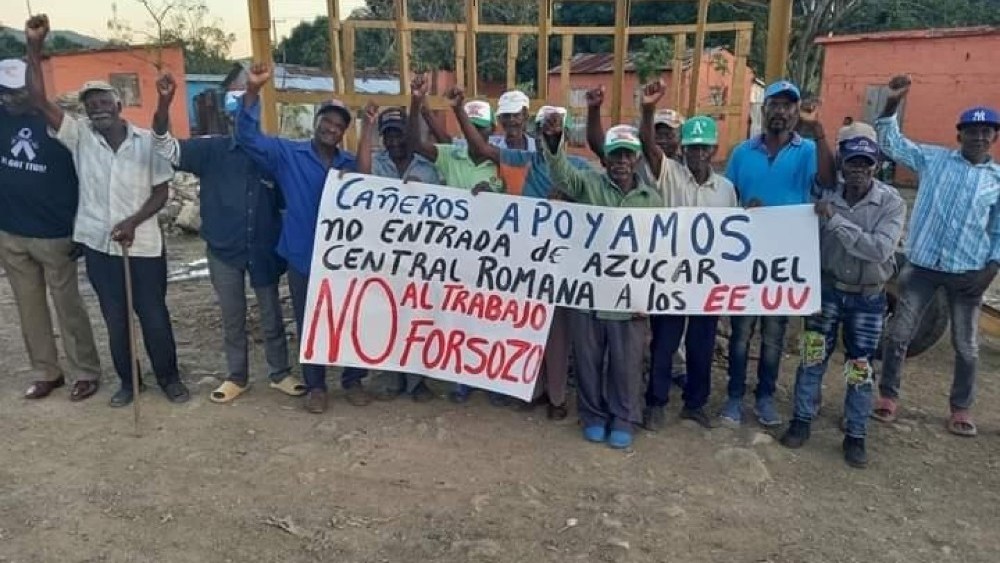
CAL’s report, titled Bitter Empire: Labor Exploitation in the Dominican Sugar Sector and the Trump-Billionaire Alliance Behind It, was issued on Aug. 18. It details Central Romana sugarcane workers’ descriptions of harrowing conditions, including paltry wages, denial of benefits to elderly workers, unhygienic and dilapidated living conditions, forced evictions, and the cultivation of fear by company guards and supervisors as well as by representatives of the company-dominated union.
On that last point, workers reported numerous incidents in which the union, the Sindicato Unido de Trabajadores, intimidated or threatened workers for criticizing the company, speaking with outsiders, or participating in meetings with other workers. The Sindicato Unido did not respond to CAL’s request for comment on this.
Workers also reported that the company’s private security forces, including personnel known as the guardiacampestre, guard the farms. Some workers reported that they have seen workers residing in the company compound violently evicted by the guardiacampestre, who are sometimes armed. Central Romana responded that CAL “makes no specific allegation of any wrongful action by these entities.”
Central Romana is not the only sugar producer in the Dominican Republic, but it is the largest. It is partly owned by members of the Fanjul family, some of whom have been very active politically in the United States. That activity intensified over the course of the WRO, including donations to the Trump campaign and substantial lobbying expenditures, which invites speculation about the reasons for the modification. What we do know is that CBP lifted the order by means of an irregular process—overturning its own refusal to take such action for over two years—and failed to provide the public with insight into the basis of its decision.
Lifting a ban on undisclosed grounds suggests to every foreign producer that remediation is optional, and it undermines the credibility of the dedicated staff in the Forced Labor Division at CBP. Most importantly, it leaves the exploited workers, who may have minimal legal recourse in the producing country, without effective protection in the importing country.
Given the absence of public-facing information from the agency, it is noteworthy that Central Romana has thus far declined to release the report it commissioned from auditing firm Elevate, which it contends “found no evidence of forced labor.” It is incumbent on the company to release that report, so the public can assess the accuracy of its characterization.
The Trump Administration currently emphasizes the need for effective forced labor import bans, going so far as to impose tariffs under Section 301 of the Trade Act of 1974 on trading partners who have yet to adopt and enforce such provisions. It has even cited forced labor as an inherently unfair trade practice. The persuasiveness of these efforts, however, is diminished when a WRO is modified without transparency and despite readily accessible evidence indicating that conditions for the workers have not truly improved. Transparency would be entirely beneficial at that stage of the process, as there is no longer an active investigation whose conduct needs to be shielded from public scrutiny.
This is not a partisan issue, and the fixes are straightforward. CBP should publish mandatory prerequisites for WRO modification, including worker-driven and worker-verified remediation as well as independent third-party access to production sites. In addition, after consulting with civil society, along with the workers themselves if possible, and then determining to modify a ban, CBP should explain its decision to the public. Of course, the agency must protect confidential information, including the identities of informants, but the path of its decision-making should be made clear.
We’re a long way from true corporate accountability for these kinds of human rights violations. Over the past ten years, however, forced labor has moved to the front pages of the business section, and combating it is a policy priority for almost every major trading country. Now is the time for the U.S. to ensure that decisions to modify U.S. import bans will no longer be made in the dark. Sunlight here would cost nothing, protect the integrity of the process, and ultimately work to the benefit of some of the most vulnerable workers in the world.
Charity Ryerson is an attorney, legal designer, activist and strategist with two decades of experience fighting corporate abuse around the globe, including extensive work in labor and human rights monitoring and investigations in Central and South America. She is the executive director and founder of Corporate Accountability Lab, where she leads a team of committed advocates who design, prototype and test new strategies to protect the world and her inhabitants from corporate misconduct. She teaches business and human rights at Northwestern Pritzker School of Law.