
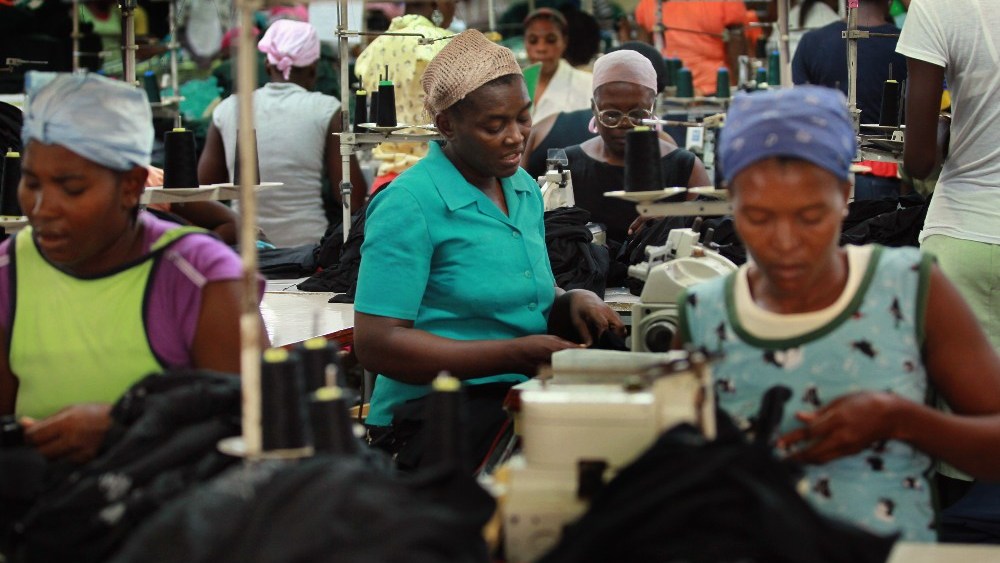
A proposal to renew two trade preference programs—the Haiti Economic Lift Program and the African Growth and Opportunity Act (AGOA)—for a period of two years was approved by the House of Representatives on Tuesday with bipartisan support from Washington lawmakers.
Members voted 370-48 to pass the Continuing Resolution bill to temporarily fund the activities of the federal government, with the extension of the Haiti HOPE-HELP and AGOA programs nestled within that legislation. Both were slated to expire on Dec. 31. The Senate voted to pass the CR, along with the AGOA and Haiti HOPE-HELP extensions, in August.
Now that the House has voted in favor of the CR, it awaits President Donald Trump’s signature. The bill’s passage will help stave off a government shutdown at the end of the fiscal year in September, extending the current budget through Dec. 11.
“Earlier this year, we reauthorized both these vital agreements for one additional year. Today’s legislation ensures both AGOA and Haiti HOPE-HELP will be in effect through the end of 2028, which will give our committee and stakeholders interested in these vital programs time to consider reforms and update them to ensure they continue to advance U.S. interests,” Ways and Means Committee Chairman Jason Smith (R-Mo.) said Tuesday.
“For over two decades, the African Growth and Opportunity Act has been the foundation of America’s trade relationship with the nations of sub-Saharan Africa,” Rep. Smith added. Speaking about the renewal of legislation pertaining to Haiti, he said, “These programs provide trade preferences for textile and apparel products… and encourage greater stability in a nation less than 600 miles away from the Florida coast that has long suffered political and economic upheaval.”
AGOA, which was signed into law by President Bill Clinton in May 2000, provides sub-Saharan African nations with duty-free access to the United States market on thousands of products including textiles and apparel. The Haiti HOPE-HELP programs were enacted in 2006 and 2010, respectively, to boost the Caribbean nation’s textile industry by nixing import duties for fabric and clothing destined for the U.S.
“We are grateful for the bipartisan, bicameral support these vital programs have received and look forward to President Trump signing the two-year extension into law,” said Beth Hughes, vice president of trade and customs policy at the American Apparel and Footwear Association, following the announcement.
“Our industry remains firmly committed to these programs and encourages Congress to use this extension as an opportunity to modernize AGOA and Haiti HOPE-HELP and build toward a 15-year renewal,” she added. “Long-term renewal continues to be the goal in order to encourage long-term investment, deepen trade partnerships, and strengthen industries at home and throughout the region.”
AAFA and other industry groups have urged Congress as well as the administration to renew the programs, which were extended for a period of one year after lapsing last fall, for a decade or more. The legacy trade preference programs have garnered widespread support across both sides of the aisle over a period of decades, facilitating the growth of supply chains that support the fashion sector outside of prominent Asia-based apparel-sourcing locales.
AAFA testified before the Office of the U.S. Trade Representative on the subject of AGOA’s renewal in July, saying that a long-term extension would provide much-needed certainty for American firms doing business in Africa and Haiti, as well as for the workforces and employers looking to invest in sectoral growth.
Data provided the basis for asserting AGOA’s growing significance to the apparel sourcing map. U.S. apparel imports from AGOA beneficiary nations grew 22.5 percent by volume and 7.8 percent by value in 2025, and that momentum has carried into this year, according to the trade organization’s testimony.
Apparel import volumes from sub-Saharan Africa increased during the first quarter of 2026 by 9.5 percent from the same period in 2025—a striking increase given that apparel imports from the rest of the world declined during that time.
AAFA members, which include U.S. brands and retailers, expressed that Washington’s support of the trade preference program is key to their continued sourcing from the AGOA region, Audrey Clark, the organization’s trade and transportation specialist, told the USTR in July.
The program has also proven synergistic, bolstering American jobs as well as African ones, she said. U.S. cotton growers and textile mills have benefitted from the program, which facilitates bilateral trade with African nations, and the knock-on effects of that business growth have had positive impacts on U.S. logistics operators, too.
Kenya’s State Department for Trade welcomed the proposed AGOA extension to Dec. 31, 2028.
“The extension… is an important opportunity for Kenya to maintain duty-free access to the U.S. market and strengthen trade relations between the two countries,” the State Department for Trade wrote in a statement last week as it awaited the results of the House vote.