MILAN — As exports decline, favorable EU energy policies are key to the prosperity of Italian furniture, FederlegnoArredo, the Italian federation of woodworking and furniture said on Wednesday.
“It is essential to preserve companies’ competitiveness, including through European energy policies,” said FederlegnoArredo’s president Claudio Feltrin said in a statement on Wednesday. Throughout Europe, there are rising industry pressures, which include inflation, shipping costs and energy prices, which are impeding growth.
According to economic data compiled by Italian statistics office Istat, wood and furniture exports fell 1.4 percent in June, following the sharp 10.1 percent slowdown recorded in May. The domestic market remained broadly stable, down 0.7 percent.
You May Also Like
Home to the lion’s share of the world’s luxury design firms, Italy’s wood and furniture supply chain said exports to main trading partners posted negative results in the month of June. The U.S. market plunged 11.3 percent and slipping from second to third place, while Germany was down 7.8 percent; France saw imports from Italy slip 4.6 percent, and the U.K. fell 5.3 percent. The United Arab Emirates fell off the list of Italy’s top trade partners for furniture in the month of June, with exports plunging 15.2 percent.
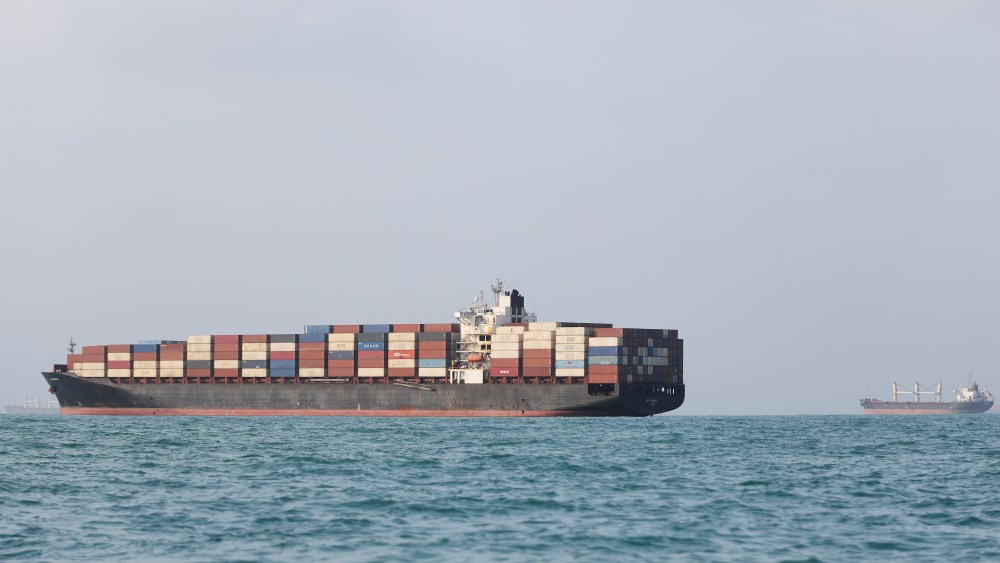
For the home and interiors industry, the ongoing conflict in the Middle East and disruptions in the Strait of Hormuz have cast a shadow over the prospect for the global design and interiors market, which had heavily invested in cities like Riyadh and Dubai as key growth hubs. In March alone, exports to the Middle East plunged by 48.8 percent, FederlegnoArredo reported.

“For a supply chain that exports more than half of its production, foreign-trade data represents the main indicator of the sector’s health. Unfortunately, despite some positive signals…the critical phase is not over. Geopolitical instability and the many variables affecting international markets continue to challenge our companies,” he added.
In general, one of the main policies scrutinized for impacting businesses across the bloc is the European Union Emissions Trading System, or EU ETS, the EU’s primary climate change system. EU ETS requires companies must monitor and report their emissions on an annual basis and surrender enough allowances to fully account for their annual emissions.
Since it was launched in 2005, the system has helped cut emissions by around 50 percent. It has also helped reduce gas consumption and Europe’s dependency on imported fossil fuels, according to the European Commission.

Natural Gas Prices at a Glance
According to the European Central Bank’s latest bulletin in August, oil prices initially fell after the U.S.-Iran memorandum restored hopes of open Strait of Hormuz traffic, but rebounded as renewed strikes ended the ceasefire. European gas price is up 24 percent, driven by historically low storage and stronger demand. Compared with pre-conflict levels, oil is 30 percent higher and gas 97 percent higher, the report said.
On Wednesday, data platform Trading Economics said that European natural gas prices fell to around 72 euros per MWh, or megawatt-hour, on Wednesday, as renewed U.S.-Iran talks revived hopes for a diplomatic resolution. MWh is a unit of energy that measures the total heat or thermal content released when that gas is burned. The cost of natural gas is about seven times higher than that of the U.S. In a recent estimate, Trading Economics said natural gas prices in the U.S. were trading at $10.30 per MWh.
In 2025, FederlegnoArredo said the value of the wood supply chain, which includes most Italian furniture firms, reached 52.3 billion euros.
Feltrin, who will complete his term in October, is expected to hand over the reins to Elia Vismara, who has been chairman of his family’s glass firm Vismaravetro since 2025.
Feltrin has held the role as president for the past six years and much of his tenure was spent guiding the association through some of the biggest economic challenges since World War II: the thick of the COVID-19 pandemic and most recently navigating a trade era marked by unprecedented tariffs.