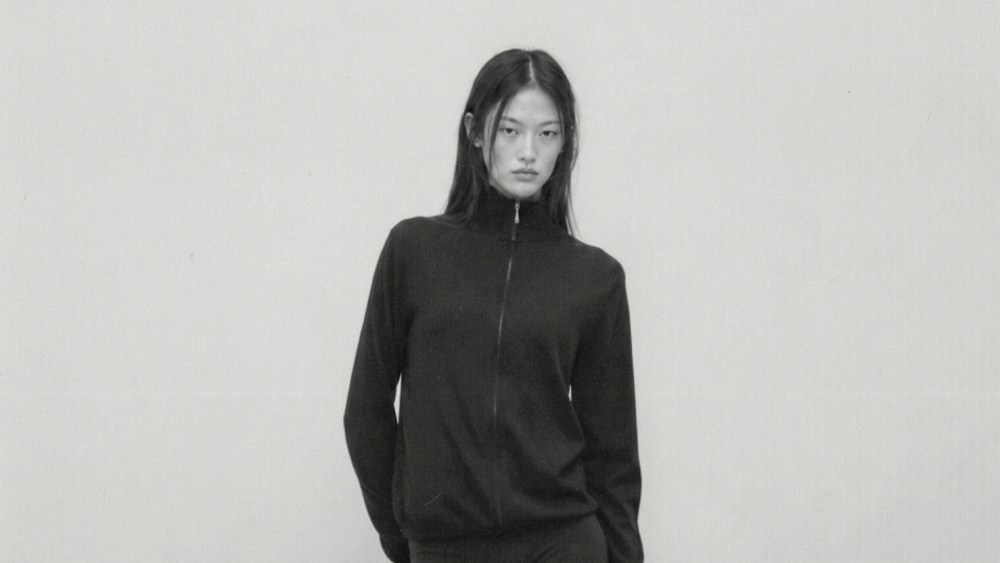
Heliot Emil designer Julius Juul has cofounded 444, a new activewear line, alongside Davide Maccari, whose background spans finance, fashion, design, neuroscience and endurance sport.
It started with what Maccari said was a “personal contradiction.”
He and Juul paid obsessive attention to what they put into their bodies, as well as tracking sleep and recovery as they were competing in Ironmans and ultramarathons, while largely ignoring what they were wearing during training.
“We come from fashion and design, yet we never paid enough attention to the labels on the clothes we trained in. The closest thing to our skin was also the most disposable thing we owned,” Maccari told WWD.
You May Also Like
“When we looked for alternatives, the options split in two — natural materials that didn’t perform or look right, or good-looking performance fabric made from plastic. We didn’t think those should be the only two options,” he added.
Launching Wednesday with a 14-piece collection made in Italy and Portugal, 444’s first “Uniform 001” drop is more than 95 percent natural or bio-based fiber content, according to the brand.
Eucalyptus-derived lyocell and wool form the foundation of 444’s T-shirts and base layers, corn-derived fibers provide structure for compression pieces, while hemp, silk and cashmere feature elsewhere in the collection.
The challenge, Juul said, was redefining what performance means. Rather than focusing only on stretch, sweat-wicking and drying speed, the brand looked at temperature regulation, odor resistance and how a garment performs after hundreds of wears.
The line also throws down a gauntlet in the performance and activewear category, where synthetics dominate.
“Polyester alone is around 59 percent of global fiber production, and close to 90 percent of that is virgin fossil-based. Activewear sits well above that average, because stretch and moisture management have been engineered almost entirely around polyester, nylon and elastane,” Juul said.
During the two-year development process, the duo began questioning the meaning of “performance.”
“When you train in natural materials every day, you notice other things [such as] temperature regulation, how a garment smells after a session, how it feels on day 300 rather than day one,” Juul said.
The brand is launching as DTC, while supplying uniforms and guest kits to hotels and wellness spaces to help reach the production volumes required by its suppliers. Labels, hangtags and packaging are made from bio-based materials including paper and silk, with no conventional plastic.
In the line, trousers, shorts and knitwear are synthetic-free, while T-shirts, socks and some compression pieces use small percentages of elastane to add stretch.
“Our goal is to bring that to zero within the next two years, as bio-based alternatives reach the same performance,” Juul said.
“We let the material decide the product,” he added.