What goes around comes around, except in this case, it becomes new poly bags again.
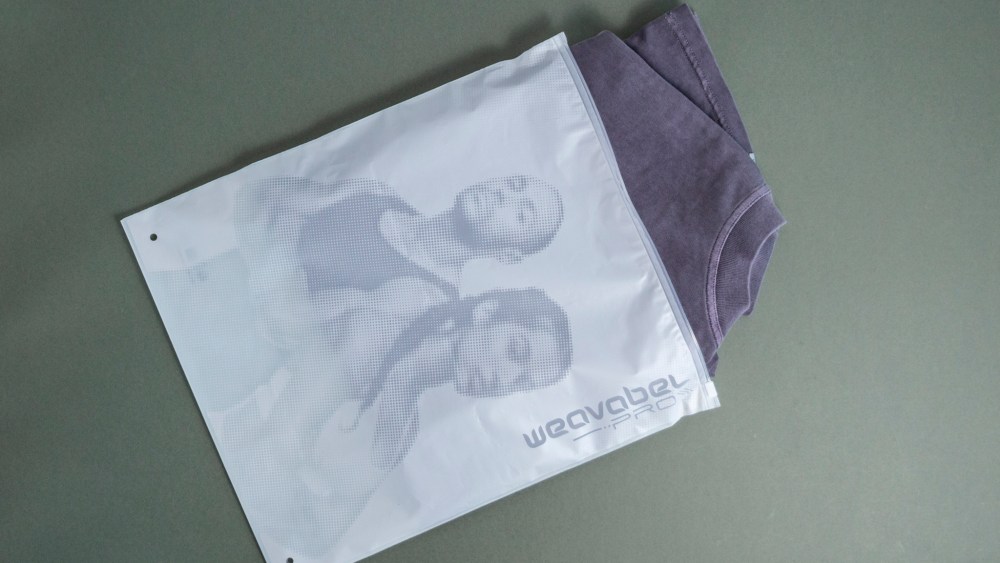
United Kingdom-based Weavabel designed a new packaging system that recycles and reprocesses used poly bags that would otherwise end up in a landfill. The global trims and packaging specialist described the closed-loop recycling system as an end-to-end solution for one of poly bags’ biggest customers: the fashion industry.
With this system, Weavabel addresses the European Union‘s fast-changing regulatory environment and provides a solution to the fragmented collection systems and limited infrastructure that can make recycling challenging.
“Poly bags have always been treated as disposable, but that thinking doesn’t hold up anymore,” said Saqib Ihsan, who heads regulatory compliance and sustainability at Weavabel.
“Regulation is moving fast, and most brands are being asked to prove circularity, not just claim it—so we built this loop to give them a real, traceable answer. It works with the way poly bags already move through warehouses, factories and distribution centres, so nothing has to change on the brand’s side except where the waste ends up,” he said.
The fashion industry uses poly bags to keep garments clean. They’re typically thicker and more durable than a regular plastic bag.
Weavabel’s system connects every stage of a poly bag’s journey. Compared with other recycling initiatives, Weavabel said the loop is fully integrated across warehouses, factories and distribution centers, giving brands a scalable path to extend the life of their packaging and reduce reliance on virgin plastic.
It begins in Weavabel’s warehouses, where poly bags are available for factories to order from their nearest location. The garment vendor purchases the bags from Weavabel, uses them to pack garments and ships the inventory to distribution centers. Once the garments reach stores, the brand collects the used poly bags from their stores and returns them to its distribution centers, where they are sorted and baled together with other waste.
Weavabel then collects the waste by truck and consolidates it across the EU and U.K. for recycling. The poly bag waste is sorted again, shredded and processed before being shipped to a licensed importer. The material then undergoes polymer processing and blending before being pelletized for film blowing at Weavabel’s production plant, where it can be made into new bags.
EU regulations, including the Packaging and Packaging Waste Regulation (PPWR) and the Ecodesign for Sustainable Products Regulation (ESPR), are pushing fashion and lifestyle brands to demonstrate material circularity. The closed-loop system is designed to help with regulatory compliance without requiring companies to build their own recycling infrastructure.
As Ihsan puts it: “We’re not asking brands to recycle better. We’re closing the loop for them.”