Puma and Columbia Sportswear are deepening long-term partnerships with major logistics providers as brands increasingly turn to 3PLs to manage complex distribution operations.
In late September, Puma unveiled it expanded its relationship with Maersk, tasking the ocean carrier giant with managing three of its automated U.S. distribution centers.
The facilities, located in California, Arizona and Indiana, span a combined roughly 2.3 million square feet and support the footwear brand’s retail, wholesale and e-commerce operations.
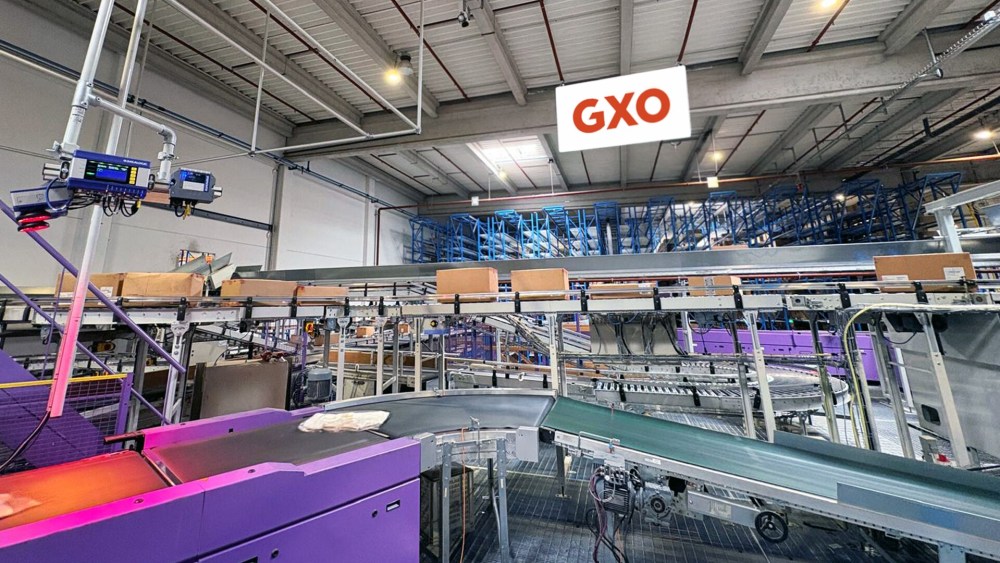
Meanwhile, Columbia Sportswear has entered a 10-year strategic logistics partnership with GXO in Europe, with the contract logistics provider taking over operations at the outdoor brand’s primary continental European distribution hub in France.
The agreements come as fashion companies face a supply chain environment defined by higher costs, trade uncertainty, shifting consumer demand and the need to move inventory across multiple channels without building a larger internal logistics organization on their own.
According to the 2027 Third-Party Logistics (3PL) Study from NTT Data, Penske Logistics and the University of Tennessee’s Global Supply Chain Institute, 86 percent of shippers said they are increasing their use of outsourced logistics services. Research from Gartner released in July indicates that one in three supply chain leaders expect their logistics outsourcing budgets to increase by at least 10 percent over the next two years.
Thanks to its outside investment, Puma is bringing robotics into the Maersk-run trio of warehouses via AutoStore automated storage and retrieval technology.
Together, the three facilities will help the footwear seller streamline product movement, process orders faster and ensure customers receive a consistent experience whether they’re shopping online or in stores.
“This next phase of our partnership strengthens our ability to move products more efficiently across channels, improve responsiveness to changing demand and create greater value from the investments we’ve made in our U.S. distribution infrastructure,” said Helmut Leibbrandt, senior vice president of supply chain management and logistics Americas at Puma.
When warehouses embed the AutoStore technology, inventory is stored within a compact “grid” and automatically retrieved by robots, which bring goods directly to employees at workstations for picking and packing.
By reducing unnecessary travel and manual handling, AutoStore aims to help improve speed, efficiency and workplace productivity while making better use of available warehouse space.
Maersk will also use available capacity in the network for other customers starting in 2027, with the Torrance, Calif. facility being the first North American AutoStore deployment supporting multi-client operations. The site will be capable of handling roughly 20 million units of throughput each year.
The container shipping company’s move is aimed at helping improve asset utilization and creating additional value from Puma’s existing infrastructure.
As for Columbia’s agreement with GXO, the partnership gives the logistics company responsibility for inbound logistics, storage, fulfillment and outbound distribution at the facility in Cambrai, northern France.
The warehouse will serve e-commerce, retail replenishment and wholesale customers across multiple European markets.
The lengthy contract between Columbia Sportswear and GXO is common. According to the Penske and NTT Data 3PL Study, 85 percent of shippers and 94 percent of 3PLs said their longest-standing partnership has lasted more than five years.
The length of the Columbia agreement is notable as brands increasingly use longer-term contracts to structure relationships with logistics providers. That longer-term approach could become more attractive as fashion companies reassess how much supply chain capability, they want to own themselves.
The warehouse’s transition was prepared jointly by Columbia Sportswear and GXO with a focus on operational continuity, employee integration and maintaining uninterrupted service for customers, the companies said.
GXO operates over 60 warehouses throughout France.
Both logistics providers have been expanding similar relationships with other fashion brands, with Maersk signing its own five-year agreement with Columbia to manage its U.K. and Ireland pick-and-pack operation.
Under that deal, the logistics provider will handle roughly 1.6 million inbound and outbound units annually for the sportswear company across about 25,000 SKUs.
GXO also has a recent fashion expansion in Europe in partnership with Guess. In September, the company deployed an Exotec Skypod robotics system at its Venlo, Netherlands facility serving the retailer, with 127 robots and 60,000 rack locations. The system can process up to 70,000 pieces per day, supporting Guess’ distribution across Asia and the Europe, Middle East and Africa (EMEA) region.