Looks like the European Union’s Green Claims Directive is officially dead in the water.
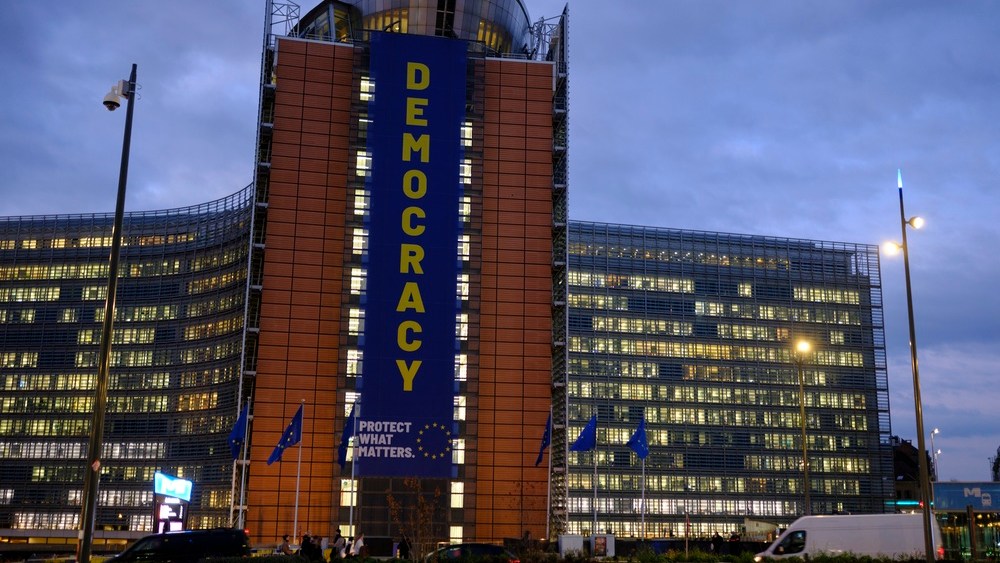
Paused since last June, when the European Commission pulled the proposed law from consideration at the 11th hour due to concerns over its impact on microenterprises, the Green Claims Directive is now set for a more definitive demise following its inclusion on a list of pending legislative proposals slated for withdrawal within six months.
The European Commission’s 2027 work program, published Wednesday, attributes the removal to a failure by the Council of the EU’s presidency to advance discussions in 2025, adding that the measure was unlikely to secure support in the Council within a “reasonable timeframe.” The center-right European People’s Party, the largest political group in the European Parliament, has maintained that it would not endorse the proposal in any trilogue negotiations, calling it overly burdensome and complex, with uncertain benefits.
The Green Claims Directive would have required companies to back environmental claims with life-cycle assessments and clear data, then obtain pre-approval and certification from independent, accredited verifiers before making them on products or in ads. Penalties for violators would have included fines of at least 4 percent of annual turnover, revenue confiscation and exclusion from public procurement.
“This is yet another EU retreat from the Green Deal,” said Nusa Urbancic, CEO of the Changing Markets Foundation, a corporate watchdog that regularly publishes investigations on greenwashing. “The Green Claims Directive was the crucial piece of the puzzle empowering consumers to make informed choices about a product’s sustainability. The Commission has ditched it because of the supposed burden it puts on companies, but all this has done is put the burden onto consumers, who now have to substantiate those claims themselves.”
The European Commission’s own research underscored the need for a regulatory crackdown. More than 230 sustainability labels are in circulation, yet half of them offer weak or non-existent verification. According to a market study it commissioned, 53 percent of green claims across products sold in Europe give vague, misleading or unfounded information, while 40 percent have no supporting evidence at all.
While the Green Claims Directive’s scuppering won’t affect the Empowering Consumers for the Green Transition Directive, or EmpCo, which entered into law in September, the two were originally designed as companion pieces. EmpCo focuses on the “what,” banning vague or generic assertions such as “green” and “eco-friendly” and carbon-neutral claims based purely on offsets outright. The Green Claims Directive would have revolved around the “how,” requiring explicit pronouncements to have explicit evidence.
“EmpCo already bans vague claims, and regulators from the U.K. to Italy are acting against brands that overpromise,” said Marwa Zamaray, executive director at the sustainability consultancy Eco-Age. “What it doesn’t provide is a shared standard of proof. Without one, every claim becomes a legal judgement call, made by each brand alone and tested only once it’s in market.”
Zamaray agreed with critics that the proposal had become too complex, but she said the answer to a complicated law is a better law, rather than no law at all. She also framed the directive’s withdrawal in the context of the EU’s broader sustainability rollback, including the omnibus simplification package that detractors saw as watering down mandatory due diligence requirements once hailed as game-changing for corporate accountability.
“That uncertainty has a cost,” she said. “Honest brands risk going quiet, vague ones take their chances, and investment in traceability gets harder to justify in the boardroom. Coming after the omnibus scaled back supply chain due diligence, this is a signal the industry should read carefully.”
When the EPP wrote EU Environment Commissioner Jessika Roswall in 2025 to demand the axing of the proposed Green Claims Directive, it called the introduction of a pre-approval requirement for environmental claims a “fundamentally flawed idea” that “deviates from established internal market practices and may set a precedent that is difficult to reconcile with our broader objectives of regulatory coherence, competitiveness and administrative simplification.”
As much as the party supported rules that strengthened consumer confidence in environmental claims, it said, the directive “risks unduly hindering sustainability communication through procedures that are overly complex, administratively burdensome and costly.”
For Urbancic, however, the burden argument overlooks a key distinction: Companies can choose whether to use sustainability messaging in the first place.
“The Green Claims Directive was only ever meant to apply to firms that chose to make environmental claims,” she said. “If a company is genuinely green, backing that up should be no obstacle. Without this safeguard, how are consumers supposed to tell greenwashing from real environmental action?”
There is also a risk of regulatory fragmentation. Without a single, harmonized rule governing green claims, enforcement falls to national authorities, domestic consumer protection groups and local courts under country-specific unfair competition and advertising laws.
In 2022, for instance, H&M Group agreed to drop its “Conscious Choice” designation and donate 500,000 euros ($557,000) to a sustainable fashion charity after the Netherlands Authority for Consumers and Markets found that the label could mislead consumers into thinking certain products were better for the environment than they really were. Last August, Italy’s antitrust authority fined Shein 1 million euros ($1.1 million) for vague, misleading and unsubstantiated sustainability claims across its website and marketing.
Despite her frustration and disappointment, Zamaray urged brands not to see the measure’s collapse as a reason to relax.
“Don’t mistake a missing law for a green light,” she said. “Shoppers didn’t stop caring about greenwashing because Brussels did. And the brands doing the real work were never doing it for Brussels. Regulation sets the floor. Leadership was always above it.”