
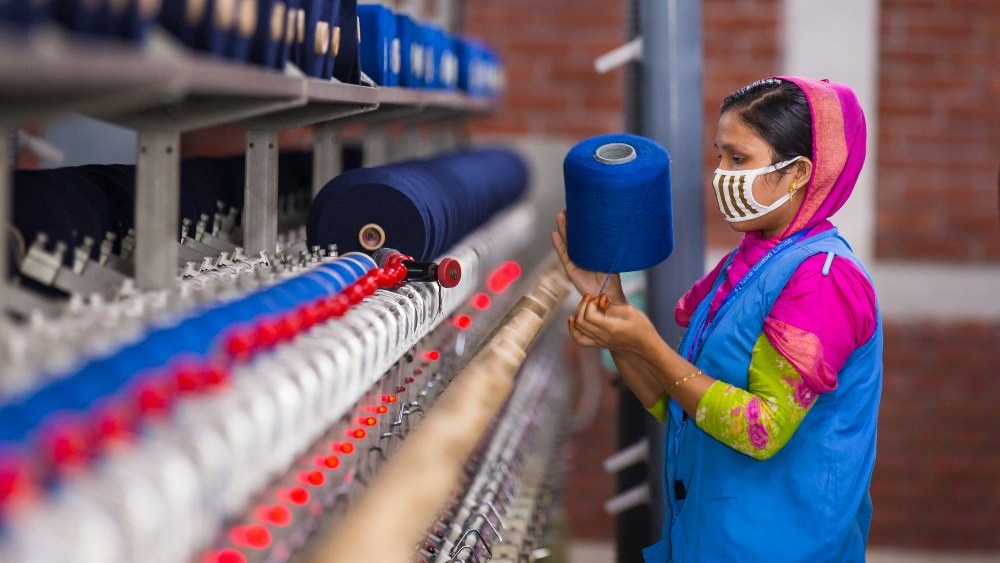
Garment workers in Bangladesh are making their voices heard. Their demands for unpaid wages, higher salaries and better working conditions are a reminder that the global apparel industry cannot separate its economic success from the livelihoods of the people who make its products.
A systemic challenge demands a systemic response
Recent protests in Dhaka’s Uttara district brought workers onto major roads, demanding wage increases and payment of outstanding salaries. Workers cited rising living costs and the difficulty of making ends meet on their current earnings. Some called for a minimum basic monthly salary of Tk 30,000, equivalent to roughly $244 per month. Separate demonstrations in Gazipur highlighted workers’ demands for payment of September wages, as widely reported by media.
These protests highlight two distinct but connected challenges: ensuring workers receive the wages they have earned and addressing whether those wages are sufficient to support a decent standard of living.
Unpaid wages are a compliance issue. Wage adequacy is a systemic challenge.
Garment workers have the right to work with dignity and earn a fair living wage. Their compensation should reflect the value of their labor and support their right to a decent standard of living.
When workers do not receive wages on time, businesses must treat the issue as a direct compliance concern. Social and labor assessments, audits and verification can help identify wage-related non-compliances, establish whether facilities meet applicable requirements and support corrective action.
Quality data can turn commitment into action
But identifying unpaid wages is not the same as addressing wage adequacy.
The recent protests reflect a broader challenge involving the cost of living, purchasing practices, employment conditions, and the relationship between brands and manufacturers. Workers’ demands for higher wages cannot be resolved through audits alone. They require businesses to examine the conditions that shape compensation and the commercial decisions that influence whether suppliers can pay workers fairly.
Credible data can help turn commitments into action.
Protecting workers’ rights requires businesses to understand social and labor conditions across their supply chains. Credible data and assessment can help identify risks and areas for improvement, giving companies a stronger basis for taking meaningful action.
The quality and credibility of that information matters.
Verification can strengthen the consistency, comparability, and credibility of social and labor data, helping brands and manufacturers build a clearer picture of conditions within facilities. It can also help businesses understand where they need to improve and whether their actions are delivering meaningful progress.
At Cascale, we steward the Higg Facility Social & Labor Module (Higg FSLM), accessible through Worldly. The module measures social and labor conditions in manufacturing facilities and supports a more consistent approach to understanding performance across the industry.
Alignment is critical to solve for success
Shared approaches to measurement can help businesses move beyond fragmented assessments and build a clearer understanding of working conditions. Alignment can also reduce duplicative audits, freeing up resources that companies can direct toward addressing underlying labor issues and improving conditions for workers.
This is an important distinction: measurement should not become an end in itself. Its value lies in what it enables businesses to do.
Credible assessments can help identify risks, prioritize improvements, and support accountability. Verification can strengthen confidence in the information used to guide decisions. But the industry must connect those insights to action, including examining purchasing and employment practices that influence workers’ experiences.
The industry must address the conditions behind wage challenges.
Brands and manufacturers share responsibility for building supply chains that support safe, equitable, and dignified workplaces.
Manufacturers need the resources and commercial conditions to meet their responsibilities to workers. Brands must understand how their purchasing practices, pricing expectations, lead times and order commitments affect suppliers’ ability to operate responsibly.
This does not mean that one assessment or one commercial change will resolve the challenges facing garment workers. It means businesses must look beyond individual facility findings and consider how their decisions influence labor conditions throughout the supply chain.
The industry must center collective action
The recent protests also underscore the importance of listening to workers. Workers should be at the center of how the industry measures social and labor performance, identifies risks and determines priorities for improvement. Their experiences provide essential context for understanding whether workplace policies and practices translate into meaningful outcomes.
Collective action is essential to lasting progress.
Advancing workers’ rights requires collaboration among brands, manufacturers, workers, NGOs and policymakers. Each has a role in addressing systemic labor challenges and supporting safe, equitable and dignified workplaces throughout global supply chains.
Shared measurement can establish a more consistent foundation for understanding conditions. Verification can strengthen confidence in the data. Alignment can reduce duplication and help direct resources toward improvement. And collaboration can bring stakeholders together to address challenges that no individual company can solve alone.
Consider Bangladesh a call to commit
The Bangladesh protests are a reminder that workers’ concerns cannot be reduced to audit findings or compliance scores. Unpaid wages must be addressed, and wage adequacy requires broader action on the conditions that shape workers’ livelihoods.
The apparel industry has made progress in measuring social and labor performance. The next step is to use that information more effectively—to identify root causes, strengthen accountability, and align business decisions with workers’ rights.
Ultimately, credible measurement matters because of what it enables: meaningful improvements in the lives of the people who power global supply chains.
Workers deserve more than promises. They deserve wages paid in full and on time, compensation that supports a decent standard of living, and workplaces where dignity and fairness are fundamental.
Delivering on that responsibility will take more than audits. It will take credible data, meaningful action and collective commitment across the industry.
Orine D’Souza is the director of social performance alignment at Cascale, the global nonprofit industry alliance where consumer goods organizations turn shared sustainability ambitions into measurable progress at scale.


