
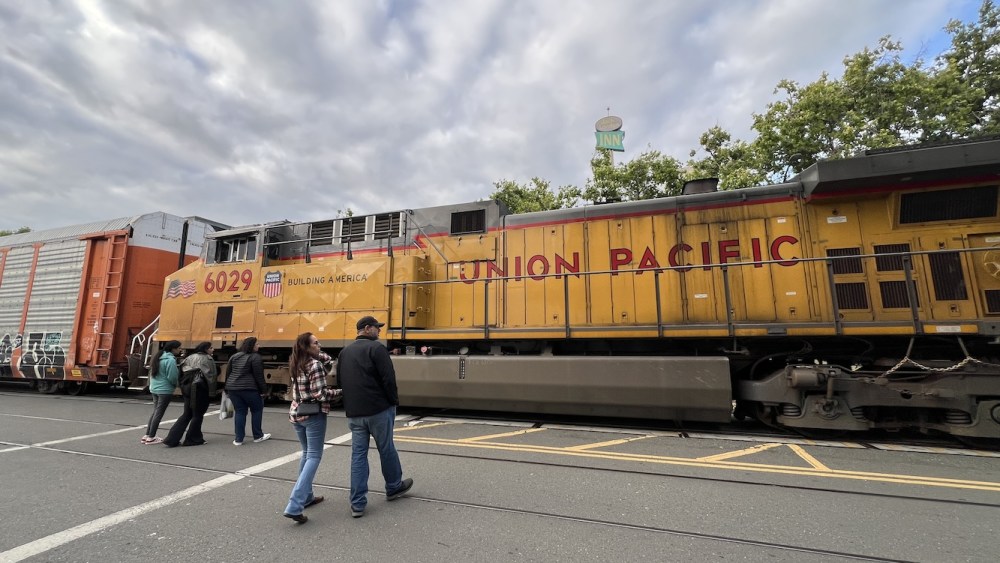
The Surface Transportation Board (STB), the federal regulator that will determine whether Union Pacific can acquire Norfolk Southern, has “serious concerns” that UP CEO Jim Vena’s remarks during a conference in March may have discouraged shippers from speaking freely about the proposed $85 billion deal.
The board ordered Union Pacific to release a full recording of Vena’s speech to railroad shippers, in which he made an apparent tongue-and-cheek comment about raising rates for customers that opposed the merger.
Union Pacific released the nearly 53-minute recording on Thursday, one day after the board rejected its appeal of an administrative law judge’s order to make it public.
The recording includes Vena’s keynote at the Southwest Association of Rail Shippers conference in Houston, in which he spent most of the address making the case for a coast-to-coast single-line railroad before closing with the rate remark and walking offstage. The question now is less whether Vena meant the remark as a joke than whether shippers felt free to oppose the merger after hearing it.
“We’re going to get this done…If we don’t do that, Union Pacific will still be there. And if I stick around, which I probably will, I’ll probably increase rates for everybody that said they didn’t want a seamless railroad by three or four extra percent to teach you a lesson,” Vena said.
Union Pacific submitted the speech to the board as confidential until the judge mandated it be made public on Oct. 23. The railroad appealed one week later, arguing that public release of the comments could cause irreparable harm to the merger attempt.
The STB unanimously denied the appeal and ordered a public copy provided to all parties by 5 p.m. Eastern on Thursday. Union Pacific complied that day.
The board used the same decision to address the underlying concern directly.
According to the STB, “evidence of actual or threatened retaliation bears heavily on the future course in this proceeding and how the board will weigh the public interest in assessing the proposed transaction’s merits.”
It invited any party to share alleged instances of perceived, threatened or actual retaliation, to be filed as confidential or highly confidential.
The fight over the video and the message’s intent is unfolding in the middle of a long regulatory timetable.
Union Pacific and Norfolk Southern first announced the proposed deal on July 29, 2025. The board rejected their first application as incomplete in January 2026 before accepting a revised application in May. But the STB briefly halted the merger review process upon accommodating the second filing, requiring the railroads to offer new customer assurances including service protections and fixed pricing agreements for more shipments.
With the updated application in hand, the STB resumed the review in August, and called on stakeholders to comment on the deal through Nov. 19.
The board’s projected timeline estimates the merger review process will last through at least May 28, 2027. The date for the close of record remains to be determined, with a final decision on the merger due within 90 days after the close of record.
The STB’s decision followed some concerns from lawmakers, customers and rivals alike.
Senator Tammy Baldwin (D-Wisc.), wrote to the board on July 17 saying Vena had “issued a thinly veiled threat to raise rates for customers who did not publicly support the merger.”
Five shipper organizations later warned in a joint letter that the statements risked silencing critics. Rival railroad Canadian Pacific Kansas City (CPKC) then filed a 193-page letter on Oct. 30 asking the board to terminate the merger review, arguing that Vena’s conduct had undermined the integrity of the proceeding because stakeholders might withhold honest views.
UP contends the remark was taken out of context. In the statement accompanying the video, the railroad said, “Let us be clear: Union Pacific does not retaliate against customers. A customer’s position on the merger will not determine its rates or how we deliver service. Customers should participate freely and candidly in the Surface Transportation Board’s review.”
The Omaha, Neb.-based railroad also noted that more than 1,000 participants are involved in the proceeding, including more than 500 customers who support the merger and represent more than 30 percent of its volume.
CPKC has rejected the joke explanation as insufficient, and its CEO, Keith Creel, made that point sharply on the railway’s recent earnings call. Creel compared Vena’s remark to a passenger joking about a bomb while going through airport security.
“I believe it was said with intent to chill the room. ‘I’m kidding, but not kidding,’” Creel said. The Canadian railroad said it raised “grave concerns” about the integrity of the entire merger proceeding, and whether rail customers of all sizes were discouraged from speaking their opinion.
Steve Blinn, a senior consultant at logistics and supply chain consultancy PLG Consulting, argued in LinkedIn commentary that the audience made the remark especially damaging, regardless of intent.
“Whether Jim Vena intended humor, frustration or something more serious, suggesting that customers opposing the merger might face an additional 3-to-4 percent rate increase was extraordinarily inappropriate,” Blinn said. “These are customers whose businesses depend on the railroad, some with few practical alternatives.”
Blinn, a former Norfolk Southern employee, said Union Pacific’s assurance and its CEO’s public suggestion cannot both reasonably represent the company’s message.
“That is why the STB must examine current pricing practices, customer treatment, market power, and competitive alternatives, not merely the concessions applicants offer,” Blinn said, indicating that the board must demonstrate that its rules apply equally to everyone. “Shippers must know their right to disagree carries no commercial price tag… And by my estimation, very few customers have offered their opinions.”
The board gave the applicants until Nov. 19 to respond to CPKC’s request to terminate the review, while stressing that the order to publish the video was not a ruling on whether the proceeding will continue.


