
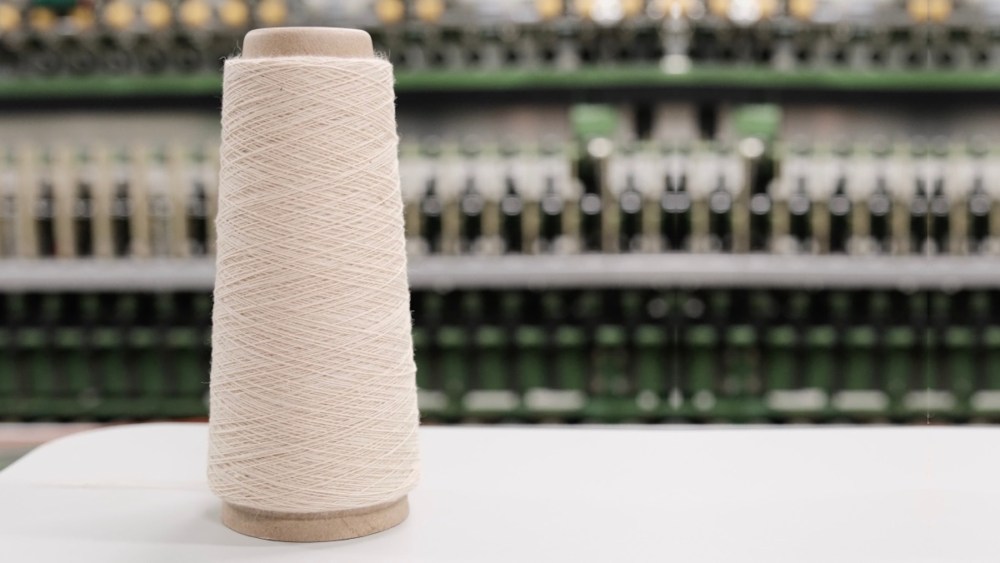
Textile recycling firm Apani Labs is using machinery acquired from bankrupt Keel Labs to expand production of its cotton-cellulose filament.
The Research Triangle, North Carolina-based company acquired all of Keel Labs’ physical and intangible assets through its Chapter 11 proceedings, including equipment, machinery and the patents behind seaweed-based Kelsun fiber, Apani co-founder Bryan Kokkeler told Sourcing Journal. The company is evaluating how Kelsun will fit into its business.
“Our near-term priority is focused on scaling production of Apani’s novel cotton filament product, but ultimately market demand will steer our product roadmap,” Kokkeler told Sourcing Journal.
Founded in 2022, Apani dissolves cotton cellulose and re-forms it into continuous filaments. The company says its process can use raw cotton, manufacturing waste and discarded textiles, including cotton-rich blends from which non-cellulosic material is separated before spinning.
Kelsun uses seaweed-derived biopolymers as its raw material. Developed by Keel Labs, which was founded in 2017 and previously known as AlgiKnit, the fiber has appeared in collaborations with brands including Stella McCartney and Outerknown.
Although the two fibers require different chemical processes, Kokkeler said much of their manufacturing hardware is compatible. The acquired equipment includes Keel’s wet-spinning line, yarn equipment and analytical instruments.
“In fact, Apani is already producing its cotton products using some machines from Keel Labs,” he said.
Apani has outgrown its current building and is moving to a space better suited to production, Kokkeler said, in Raleigh. Once the move is complete, it aims to bring the remaining machinery online in the first quarter of 2027.
Kokkeler did not provide current Kelsun production capacity or volume targets for the next 12 to 24 months, saying the production plan would depend on market demand.
Keel filed for Chapter 11 protection in June. Its revenue fell from about $139,000 in 2024 to just under $17,000 in 2025, with essentially no revenue in 2026 before the filing. The company’s filing listed nearly $1.4 million in assets and just under $337,000 in debts, most of which was owed to its landlord.
Triangle Business Journal reported in September that Keel’s assets had sold for $250,000. Kokkeler said Apani was not sharing financial terms beyond those in court records.
“Keel Labs’ challenges were primarily capital and timing, not the technology,” Kokkeler said.
Keel co-founder Aleks Michaelson has joined Apani as vice president of business development and operations. She is leading conversations with brands and industry partners that previously worked with Keel, Kokkeler said.
Several former Keel team members are working with Apani as consultants. The company is evaluating how the team fits into its longer-term plans and expects some to join as it grows, he said.
Apani’s initial commercial strategy favors specialized technical applications that can support smaller production volumes and higher margins.
“Competing with commoditized fibers on price requires enormous production scale,” Kokkeler said. “The whole next-generation materials sector has learned that lesson the hard way.”
Apani is appraising its cotton products and Kelsun to identify applications that suit each material’s properties.
“That’s why Apani is taking a selective approach to its initial markets, prioritizing high-value opportunities that can be served at moderate scale,” he said.


