In an era when there have never been more launches in the beauty category, the brands that stand out in a sea of sameness dare to be different. This year, our 2026 Beauty Inc Awards honor the people, products and brands that are true originals.
-
Creator of the Year: Mikayla Nogueira, cofounder, POV Beauty

Image Credit: Courtesy Photo Is she beauty’s ultimate influencer-entrepreneur? Mikayla Noguiera, who shot to fame as TikTok’s first breakout beauty star in 2020, has since built a multifaceted beauty empire.
The Massachusetts-based creator has amassed a social media following of more than 20 million across platforms, establishing herself as a go-to voice for beauty product reviews, tutorials and, now, founder content.
Indeed, in 2025 Nogueira leveraged her makeup savvy to launch a brand of her own, called Point of View, alongside industry veteran Ani Hadjinian. Ever the boundary-breaker, Nogueira launched the brand via TikTok Live with a range of skin prep essentials before taking it into color cosmetics later that year. This year, Point of View entered Sephora.
So it was no surprise when Sephora tapped Nogueira as its first TikTok Live host when the retailer debuted its own storefront via the platform that same month.
POV is backed by prominent venture capital firms like Skims investor Imaginary Ventures, and this fall raised a $15 million series A funding round led by Silas Capital. Slowly but surely, Point of View is expanding its color range, most recently adding Trace It sculpting lip markers meant for long-lasting wear in October. After all, what’s the rush? Nogueira has proven time and time again that she’s here for the long haul — and the same looks to be the case with her brand.
-
Launch of the Year: Marc Jacobs Beauty

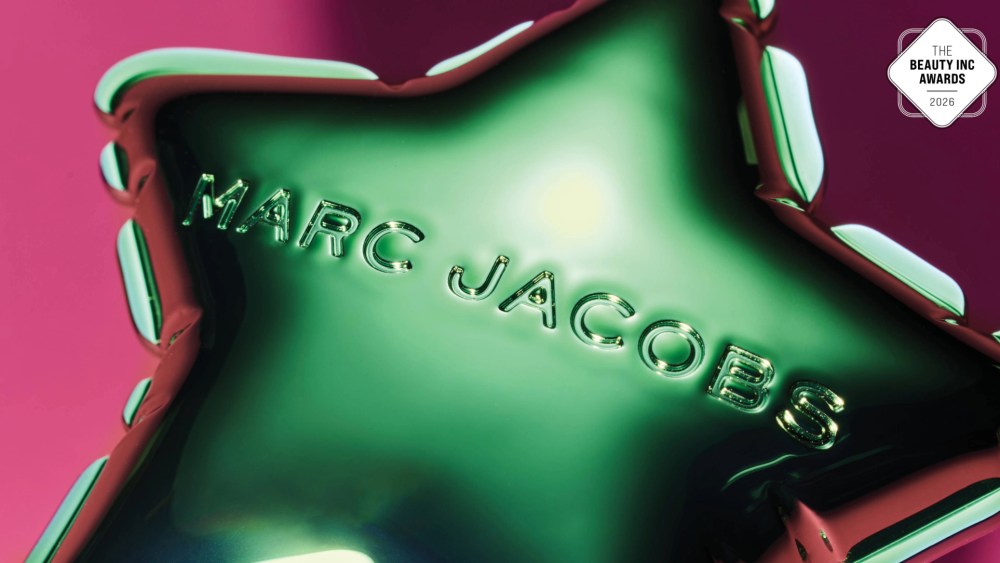
Image Credit: Joe Lingeman/WWD When it comes to Marc Jacobs, lightning is definitely striking twice. Back in 2013, the designer launched a makeup brand with Kendo that quickly gained cult status. But in 2021, the licensing agreement expired and the line was shuttered. Fast-forward five years, and Jacobs is back, with a new licensee, Coty (which also produces his blockbuster fragrances like Daisy), and one of the most innovative brands of the year. The Sephora-exclusive launch featured seven essentials across eyes, lips and face — all in eye-popping packaging resembling Mylar balloons in jellybean colors.
Coty’s Jean Holzman called the line “a maximalist manifesto in the minimalism era” and consumers responded in kind, driving both sales and social media mentions. For the designer, developing Marc Jacobs Beauty enabled him to do what he loves best — exercise his creative streak. “I like working on things where there’s a process, and through that process you figure out the story you want to tell, and I love makeup as an accessory,” Jacobs told WWD. “I love going down the rabbit hole of watching tutorials and seeing all these different makeup artists and people who are makeup fanatics, and how they use makeup and express themselves through it. I enjoy being a part of a creative process that I can understand, and there’s a parallel to fashion.”
-
Icon of the Year: Chanel

Image Credit: Joe Lingeman/WWD It seems fitting that Chanel’s blockbuster fragrance launch for 2026 fell under the Coco Mademoiselle mantle. The 25-year-old masterbrand remains the top-selling eau de parfum globally thanks to what it represents. “It’s the symbol of freedom, the symbol of reinvention,” said Simona Cattaneo, president of fragrance and beauty, earlier this year when she unveiled the newest iteration, Crush Absolu.
And, as with the fashion side under designer Matthieu Blazy, what a year of reinvention it was for the house’s fabled beauty business, too. Its makeup division got its mojo back, with buzzy blockbuster launches — starting with the limited-edition black lacquered Kit and Caboodle created for friends of the house, followed by the launch of Rouge Coco Hydra Gloss in delicious candy colors, a nine-pan smoky eye palette, a super cute Alpine-inspired holiday collection and the appointment of Lucia Pieroni as creative makeup director.
Fragrance-wise, Coco Mad’s Crush Absolu built on Chanel’s momentum in the category sparked by Chance Eau Splendide for women and Bleu L’Exclusif for men, while skin care, too, soared with Sublimage. All this while the brand doubled down on retail expansion globally. In an ever-competitive market where maintaining relevance is easier said than done, Chanel is, well, crushing it.
-
CEO of the Year: Christina Oster-Daum, president and founder, Cosnova

Twenty-five years after Christina Oster-Daum founded Cosnova — then called Cosma — alongside her partner Javier Gonzáles, business is looking brighter than ever.
The German beauty giant, whose flagship brands include Essence and Catrice Cosmetics, surpassed the $1 billion net sales mark for the first time in 2024, and in 2025, grew to $1.12 billion.
This momentum has continued into 2026, which Cosnova kicked off by stating it would not raise prices across its brands, even as tariff volatility drove price markups across the market.
The company is consistent if nothing else: This commitment to providing high-performance products at an affordable price point is precisely what fueled Cosnova’s sleeper rise through beauty’s competitive ranks, and now the group is stepping further into the global spotlight.
The number-one makeup brand in Germany, Essence launched this year in Walmart stores across the U.S., adding to a Stateside footprint that also includes Ulta Beauty, CVS and more. The brand sells one of its hero $5 Lash Princess Mascaras every three seconds in the U.S., and is building out a range of on-trend products that are defying the broader makeup category’s slowdown.
While Cosnova’s core expertise is in makeup, the company is expanding into more categories, this year acquiring Spanish beauty company Niche Beauty Lab and its skin care subsidiaries, Theramid, Acnemy and Transparent Lab as it looks to tee itself up for another 25 years of growth.
-
Brand of the Year, Makeup: Rhode

Image Credit: Joe Lingeman/WWD The juggernaut that is Hailey Bieber’s Rhode shows no signs of slowing down. Already the top-selling brand at Sephora in the U.S., U.K. and Canada, Rhode kicked off the year with a launch at Mecca in Australia, which became the biggest launch in the retailer’s history (attracting over 1 million people on opening weekend) and helped contribute to E.l.f.’s 80 percent growth for Rhode in fiscal 2026, driving the brand past $500 million in sales globally. In September, the brand launched in 19 new European markets via over 500 Sephora doors, turning the retailer’s Champs-Élysées flagship into a fully immersive Rhode world. While the brand’s core skin care continues to resonate, Rhode has deftly used color to stoke excitement, with its Pocket franchise of blush, bronzer and illuminators delivering supersized results and Peptide Lip Shape redefining the lip liner category. One year after its billion-dollar exit to E.l.f. Beauty, the brand has another nine-figure landmark in mind, aspiring to be the fastest beauty brand to surpass the $1 billion mark in net sales. Said CEO Nick Vlahos in October, “We’re pacing very well to meet that goal. There’s a lot of opportunity ahead of us.”
-
Brand of the Year, Skin Care: Prequel

Image Credit: Joe Lingeman/WWD Ben Bennett of The Center has a knack for creating rocket ships, and Prequel is no exception. The skin care brand, cofounded by dermatologist Samantha Ellis and launched in 2023, is on track to reach $100 million in sales this year. Cleansers, the star of the brand since launch, continue to perform well, but moisturizers have also assumed a leading role in driving growth. Serums, too, are a standout, suggesting that Prequel has successfully become a regimen-oriented brand for consumers, rather than one with hero products here and there. No wonder Prequel took its show on the road this year, entering all Space NK doors in the U.K. The brand launched originally on DTC and achieved TikTok virality early on with its $18 Gleanser, which contains 50 percent glycerin and removes makeup while maintaining the skin’s hydration barrier. No wonder Dr. Ellis has become a leading derm across social media platforms, racking up views and credibility. Cleaning up, indeed.
-
Brand of the Year, Hair Care: Redken

Image Credit: Joe Lingeman/WWD It’s only fitting that pop superstar and “Espresso” singer Sabrina Carpenter is the celebrity ambassador of Redken. The professional hair care brand is one of the buzziest around — in any category — with CreatorIQ reporting it is the number-one hair brand by EMV this year and the number-four player by engage- ments among beauty’s top 40 brands by EMV. Sales-wise, Redken has an iron grip on the top ranking in the salon channel, and is a powerhouse at retail, fueled by pro products like ShadesEQ hair color, heroes including the AllSoft collection and recent innovations such as Acidic Cleansing Mist, a next-gen dry shampoo that doesn’t leave residue or a white cast. Meanwhile, the iconic Fifth Avenue Redken Exchange found a new home in January as parent company L’Oréal opened a 46,000-square-foot L’Oréal Academy at Hudson Yards, doubling down on the high-touch approach that has fueled its professional hair care arm.
-
Brand of the Year, Fragrance: Kilian Paris

Image Credit: Joe Lingeman/WWD Earlier this year, Kilian Paris brought together the PYTs of Los Angeles — including Alix Earle and Victoria Villarroel — to fete the launch of its Cocktails Collection, which seems only natural given that the brand has a lot to celebrate. Fragrance has been a high point for parent company The Estée Lauder Cos. all year — up 20 percent in its most recent quarterly earnings — and the fastest-growing brand in the portfolio is Kilian Paris. Under the aegis of founder and creative director Kilian Hennessy and global brand president Jo Dancey, the brand has successfully diversified across key tiers of niche distribution, with the trio of Cocktails providing an entry point for Gen Z, and hero scents like Love Don’t Be Shy and Good Girl Gone Bad leading in luxury. Kilian Paris has also led the way in key olfactive trends, from extraits to gourmands and, of course, liquors — a natural for Hennessy who is a scion of the cognac family. Intoxicating, indeed.
-
Brand of the Year, Wellness: Cymbiotika

Image Credit: Joe Lingeman/WWD With its fast-growing retail footprint, star-studded cap table and uber-relevant offering, Cymbiotika is bridging beauty and wellness like few others.
The white-hot liposomal supplement brand, founded in 2019 by Shahab and Durani Elmi and Chervin Jafariah, ended 2025 with more than $150 million in retail sales and in 2026 doubled down on new avenues for growth. In March, the San Diego-based brand entered Ulta Beauty with bestsellers including its NAD+, Glutathione, and Vitamin C supplements.
In August the San Diego-based brand added Alix Earle — who previously took a stake in Poppi prior to its $1.95 billion sale to PepsiCo — as an investor, joining the likes of Kendall Jenner, Hailey Bieber, Zac Efron, Steve Aoki, The Weeknd, David Grutman and more.
But Cymbiotika’s success isn’t just hype: With its signature ready-to-drink format and ingredient-driven formulas, the brand is making supplements more approachable, for more people. It added Walmart to its retail footprint in October, and also sells at Target, Whole Foods, TikTok Shop and Amazon, where its 26-pack of the Glutathione Gut + Skin Support supplement sells more than 10,000 units monthly.
Now, Cymbiotika is going deeper into beauty with a Liposomal Beauty Peptide Complex, which taps collagen, ceramosides, amino acids and minerals to boost skin hydration as well as hair and nail health. We’ll (liposomally) drink to that.
-
Brand of the Year, Men’s: Old Spice

Image Credit: Joe Lingeman/WWD It may be over 100 years old — but there’s nothing fusty about today’s Old Spice. In a year that saw sales of men’s grooming products outpace the overall market in growth, the P&G-owned heritage brand continues to excel. What’s working? Deodorants and soaps, always Old Spice’s backbone, are performing well, but the brand’s hair care is also seeing particularly strong momentum, according to Circana, particularly in the shampoo and styling categories. In addition to its core audience, Old Spice is attracting Gen Z, with on-trend products, presence in key moments of culture and its trademark humorous marketing campaigns. Its activities are as broad as its consumer base: Taking a page out of the gourmand scent trend in the prestige market, Old Spice introduced three limited-edition scents for fall — Pumpking, Apple Crumbo and Frankenstud, which combines vanilla and pistachio, for example, while its NFL collection capitalized on its connection to star players with Saquon Soar Shampoo, for example, and Kittle Can Cook body spray, named for the Philadelphia Eagles and San Francisco 49ers stars respectively, and a campaign slogan of “You can’t play in the NFL but you can smell like it.” At a time when all eyes are on men’s grooming, it’s clear that Old Spice has taken the field and come to play.
-
Retailer of the Year: Sephora

Image Credit: Simon Garcia · arqfoto Sephora is on the fast track to growth, retaining its ranking as the number-one beauty retailer in Piper Sandler’s annual Footwear, Beauty and Brands Teen Survey — and no wonder. Never content to rest on its laurels, the retailer continues to evolve at the pace of culture to ensure it occupies pole position when it comes to what’s new and what’s next in the world of beauty.
In 2026, it made numerous money moves. In March, Sephora followed up its explosive 2025 Rhode launch (still going gangbusters by the way), with the introduction of MAC in 100 stand-alone doors and 850 Sephora at Kohl’s doors. (Estée Lauder Cos. CEO Stéphane de La Faverie called the move a “game-changer.”) Later that month, Sephora revealed a new AI-enhanced experience with the launch of its app in ChatGPT, and in August it unveiled the first of its in-shop collaborations with Olive Young. Those plans call for the K-beauty retailer to curate a collection in 500 Sephora stores in the U.S. and sephora.com, with expansion planned globally. A few weeks later, Sephora announced its entry onto TikTok Shop, with a monthly drop strategy.
Internationally, the retailer has been equally as active, rolling out Rhode and announcing a blockbuster deal to supersize its business in the U.K. via a partnership with high-street giant Marks and Spencer, which will see 100 locations open in 2027.
Sephora’s strategy is working — and it’s winning approval not just with teens, but with its top brass as well. In an otherwise tough quarter for LVMH, the retailer is a bright spot, posting strong growth in revenues and market share worldwide.
-
Deal of the Year: Unilever’s Acquisition of Grüns

Image Credit: Joe Lingeman/WWD Unilever chief executive officer Fernando Fernandez has made no secret of his strategy to become a powerhouse player in beauty, health and wellness, and he’s not wasting any time in getting there. In April, the company took another very large step in that direction: a $1.2 billion deal to buy Grüns.
In a year in which large beauty transactions were few and far between, Unilever’s move was significant for a number of reasons. First, it was a clear signal that VMS (vitamins, minerals and supplements) are the current hot commodity in the capital markets, while more traditional assets like color cosmetics continue to languish. (Just four months later, Procter & Gamble announced its acquisition of Thorne for $3.8 billion.) The deal also heralded the importance of the greens category — launched in 2023, each packet of Grüns is said to have more than 60 ingredients, including organic fruits and vegetables, vitamins and minerals, and prebiotic fiber. And it makes Unilever, which also owns Liquid I.V. (an electrolyte brand that has surpassed $1 billion in sales just five years after Unilever acquired it), one of the most important players in wellness.
Look for Grüns to hit that mark sooner rather than later. Currently the top supplement brand on Amazon, it said it has over 1 million customers and ships 10 million gummies every day. Look for that to accelerate. “What sets Grüns apart is its portfolio of science-backed products that people genuinely enjoy, trust and use,” said Jostein Solheim, CEO of Unilever’s well-being division. “This combination of efficacy and experience is powerful, and together we see a significant opportunity to scale the brand within our well-being business.”
-
Campaign of the Year: Kiko Milano

Image Credit: Courtesy of Kiko Milano When Kiko Milano, Italy’s number-one makeup brand, decided to launch in the U.S., it didn’t think small. No matter that its debut at Macy’s on June 8 coincided with the biggest sporting event in recent New York City history — game five of the NBA championships with the New York Knicks — that shut down Herald Square.
But Kiko had equally big ambitions and an ace up its sleeve — Madonna. The queen of pop music was named just the brand’s second global ambassador, and come launch day, she was everywhere. Literally. Not only was her Kiko campaign on every bus shelter and social media feed, Madonna herself showed up at Macy’s to DJ a set at the launch party.
“Kiko Milano is a powerhouse brand and it deserves a powerhouse face,” said Drew Elliott, chief brand officer, whose sales topped $1 billion even before its push into makeup’s largest global market. “Madonna is that person. She has Italian roots, she’s known for reinvention, for boldly being exactly who she is — and many times, using makeup to do that. She is the Kiko girl.”
-
Breakthrough Innovation: Lancôme Absolue MD Longevity

Image Credit: Joe Lingeman/WWD In a year in which longevity was one of the most overused marketing tactics in beauty, Lancôme reclaimed the word with a range backed by 15 years of research and over $50 million in investment. From the outset, Lancôme focused on its credibility in science-backed skin care, introducing its technology at the American Academy of Dermatology’s annual meeting in March before introducing the full range, called Absolue MD Longevity, in early May.
The breakthrough ingredient Lancôme innovated is called Mitopure, a very pure form of urolithin A that is a postbiotic clinically proven to reenergize mitochondria, which provide most of the energy necessary to power cells’ chemical reactions. The ingredient was developed by the Swiss company Timeline, with whom L’Oréal kicked off a joint research alliance in 2024. It was originally developed as an oral supplement, with Lancôme deploying it for the first time in a topical product.
Lancôme Absolue MD Longevity consists of three ranges — Anticipate, formulated for those under 35; Intercept, geared toward mid-age, or 35-55, and Reset, for 55-+. To demonstrate its efficacy for consumers, Lancôme partnered with Korean start-up NanoEnTek to develop Cell BioPrint, which measures how the product impacts skin’s biological age.
“Longevity is a frontier of radical scientific progress, and we believe that will shape the future of beauty,” said the brand’s global president, Vania Lacascade. “It is a proactive, science-led approach that acts at the root of aging mechanisms. It’s not a trend. It is a scientific reality.”