With Nike no longer the industry bellwether, athletic performance footwear is in better shape than many insiders think.
A UBS report from lead U.S. softlines analyst Jay Sole said that because Nike has long been thought of as an industry bellwether, “we believe the market is looking at Nike’s results as a proxy for overall industry health.” Sole emphasized that what the market is missing is that well-documented Nike’s issues are company-specific.
First, the company is still repairing its relationships with some of key retailers it abandoned during CEO John Donahoe’s tenure. Secondly, Nike’s brands have relied too much on legacy styles, resulting in a glut of inventory and lack of newness in the market.
As CEO Elliott Hill works to rebuild Nike’s relationships with wholesale partners, his focus on Nike Running has been deemed a success for the footwear category. Wall Street has generally noted that it is Nike’s sportswear and apparel options that have been a bigger drag on sales growth.
You May Also Like
Sole also cited the recent earnings report from Dick’s Sporting Goods as another example that supports his conclusion that Nike’s issues are company-specific. Sole said the big negative surprise was weakness at Foot Locker, which is heavily reliant on Nike and saw comp sales down 3.6 percent versus up 4.9 percent at the core Dick’s banner.
JD Sports also posted weak results, although the JD banner did better than its other nameplates, such as Finish LIne, Hibbett, DTLR and Shoe Palace.
JD said core banner is more multi-brand, which Sole described as a “key insight.” JD’s other banners, and Dick’s Foot Locker “are heavily skewed to the Nike, Jordan and Converse brands. Retailers with big exposure to these brands are struggling,” Sole said, noting that results were better for the JD And Dick’s banners. “This tell us recent earnings results point to Nike Inc. weakness, not necessarily broader industry weakness.”
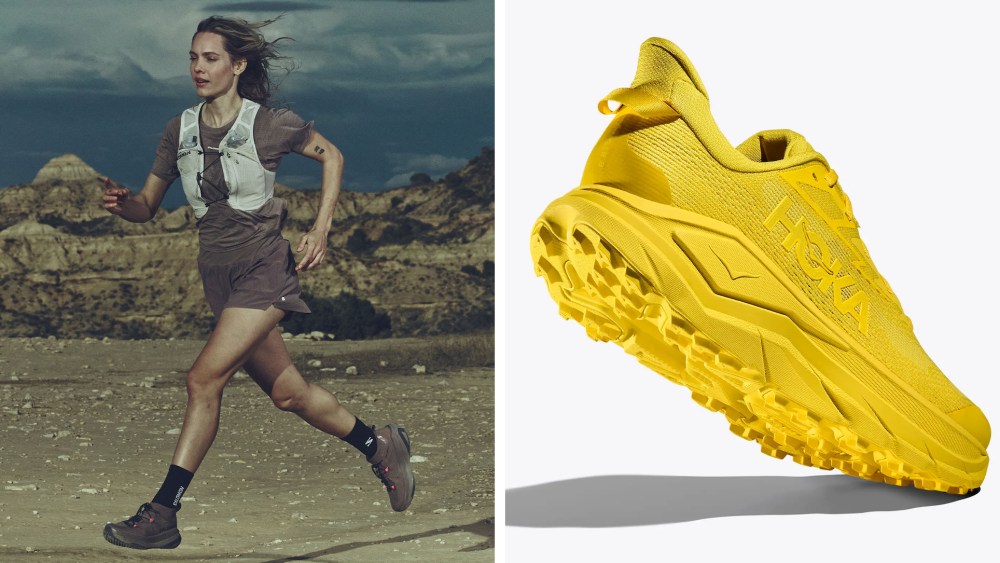
Another boon for Nike’s competitors is that brands such as On, Hoka and Under Armour (the latter of which has its own set of challenges) have declined to follow in the steps of Nike’s engagement in deep discounting to clear out excess inventory. That decision by the three brands results in better margins for retailers. And Sole believes that even after Nike clears out its inventory problems, retailers could “migrate their orders to strong brands” — such as On and Hoka — that have maintained pricing power and momentum with consumers, while also offering higher profit margins.
The UBS report concluded that athletic performance shoe brands will continue to benefit from the current global health and wellness trend, which will drive increased participation in sports that include running. Moreover, this trend “will be a long-lasting phenomenon,” the UBS report said.
“Stocks levered to this theme will outperform over the near-term and beyond, in our view,” Sole wrote.
Supporting the UBS health and wellness thesis, Sole cited to a Circana study that found running footwear grew 13 percent in the U.S. in the first half of 2026, in contrast with the year-over-year growth of just 1 percent for the same period for the U.S. footwear industry. He noted that across the pond, running footwear in Europe through August is growing in the double-digit percentage range, attributing the data point to an expert call on athletic wear trends in Europe that UBS hosted on Aug. 31.
In addition, recent second quarter earnings reports from several major footwear brands support robust global growth, Sole wrote, with several delivering strong North America growth. Excluding foreign exchange, the UBS report cited to eight global footwear brands: Salomon, up 35 percent;, Asics, up 22.9 percent; On, up 21.6 percent; Adidas, up 14 percent; Brooks, up 14 percent; Merrell, up 10.3 percent; Saucony, up 9 percent, and Hoka, up 7.7 percent.
So which athletic performance brands are expected to continue to do well in the back half of 2026? On Holding, Hoka parent Deckers Outdoors, Salomon parent Amer Sports, Saucony and Merrell parent Wolverine Worldwide, and Under Armour lead the charge in the category, with the shares of each firm rated a “Buy” because the “market is underestimating their growth potential.”
Under Armour might be seen as a surprise as the company last month posted a first quarter earnings report that also saw the firm lower its fiscal 2027 outlook due to projected softness in demand. Specifically, the Baltimore-based firm said it faces a demand challenge environment ahead, mostly in North America and Asia-Pacific. But the UBS report also noted that both Deckers and Under Armour have “robust new product pipelines,” while Hoka has new products that are resonating with European consumers and retailers.
When Amer Sports hosts its investor day on Sept. 17, Sole said the expectation is that the company will talk about how innovation will give Salomon a boost in the running footwear market. On is holding its investor day on Sept. 22, and is expected to highlight new product innovations, some of which will debut in the U.S. in October. Sole also highlighted On’s Cloudrunner 3, noting one recent feedback from a run specialty store owner about the style: “I hear from customers everyday that they want one shoe to run, train, travel, sprint, commute, drop off, that doesn’t look bulky, flimsy, or wear out too quickly. We get it. We’ve found it. And we keep reordering it.”
Both Adidas and Nike are hosting investor days as well, on Sept. 23 and 24 and Nov. 16 and 17, respectively.