The stars are aligned for many apparel specialty retailers.
Last year became apparent that the sector is on a positive trajectory. An unusually large contingent of specialty chains turned in strong financial performances through the third quarter of 2025, raising expectations for a financial replay in the fourth quarter, and burying perceptions of an overcrowded sector perpetually in distress. Indeed, holiday sales gains met or slightly exceeded plans, depending on the brand, though precise holiday results won’t be known until fourth-quarter results are issued in February and March.
Abercrombie & Fitch, Aritzia, Old Navy, Bluemercury, Coach and Uggs have been on a roll, posting comparable sales gains on top of year-ago comparable gains. Comp sales are widely accepted as a key metric for gauging the health of a retailer. On top of that, Gap, Urban Outfitters, Anthropologie, American Eagle Outfitters, even Talbots, Loft and Ann Taylor, which are part of the Knitwell Group retail portfolio, have all perked up.
You May Also Like
There are other bright spots, but there’s still a handful of slumping brands. These include Lululemon, which this month saw the departure of its chief executive officer Calvin McDonald, and saw declines in America, though with sales gains internationally the brand posted a 7 percent increase in third-quarter net revenues. Hoka, the running shoe brand, continued to show robust sales gains this year but not as strong as last year’s, causing some concern among investors that the business is slowing. The Gap Inc.’s Athleta brand still needs to find its way, but Banana Republic is looking better, while J.Crew is still far from its peak years and Express has seen better days. Express went bankrupt in 2024, closed many stores, and was taken over by brand management firm WHP Global and mall owners Simon Property Group and Brookfield Properties to get its footing back.
“Legacy brands, the ones that have been around for awhile, now seem to be appealing much more to Gen Z and even Gen Alpha,” said John Neutzling, chief operating officer of Miller Capital Advisors, which has 17 retail real estate properties in its portfolio, including such high-profile shopping centers as Ala Moana in Honolulu, Scottsdale Fashion Square in Arizona, and the Galleria in Houston. “People are returning to the Gap and Banana Republic, but Gap in particular has found a really good business plan.”
“The pendulum of spending has swung more to apparel and accessories,” said Craig Johnson, president of Customer Growth Partners, the research and consulting firm. “People have jobs. People have money for discretionary spending,” and they’re using those dollars first for entertainment, services and travel, and then for apparel, he said. “People are not investing in their homes as much. There’s a pause on home improvement,” Johnson added, leaving more money for fashion. “They have all the TVs they need.”

“Mall brands are back,” said one former president of a specialty apparel chain. “It was a big deal in our sector to see positive comps last quarter at a host of brands. A lot of it has to do with the leadership.” Fran Horowitz at Abercrombie & Fitch, and with Richard Dickson at Gap Inc., where three of the brands that had lost their way are making a comeback. The Urban Outfitters brand was really soft for a long time, but last quarter, net sales increased 12.3 percent to a record $1.53 billion. “People are winning by exhibiting a better sense of style, making it fun again to shop and connect emotionally. They’ve done research on what needs to be done,” the former executive said.
Other market observers point to several factors for the sector’s resurgence, including:
- New leadership with merchants at the helm rather than financial executives.
- Clearly articulated strategies for focus and differentiation.
- Digging deeper into the data to get a better handle on understanding the customer base.
- Making the brand “culturally relevant” and the shopping “experiential.”
- Doubling down on iconic styles that worked in the past, while pursuing new opportunities.
“We all got the memo three years ago that people wanted to come back to our stores,” said the former retailer. “Post-COVID everybody wanted to shop again and retailers starting experimenting with making more compelling retail environments. They all didn’t evolve with their customers and fell behind competitively, but in lots of these cases leadership clearly assessed the market and determined what the customer wanted from the brand. There are a lot of really good leaders in place who are very good at building a strategy,” the retailer said.
Some of the leadership is relatively new. Dickson, formerly with Mattel, joined Gap in August 2023; Trish Donnelly in September 2025 became division CEO for the Chico’s, Soma and White House Black Market brands of the Knitwell Group after working at The Row, and Shea Jensen joined Urban Outfitters as president of North America in February 2024, after serving as president of Good American.
But the question looms — can the specialty chains sustain the momentum through 2026? They will be up against a host of challenges — rising raw material, freight and labor costs; tariffs, and consumers continuing to trade down to mass merchants, off-pricers and dollar stores, seeking greater values and getting increasingly selective. If interest rates come down more, that could perk up the housing market, sapping business away from fashion chains. They must continue to provide speedier deliveries to stay competitive with Amazon, and spend on technology to upgrade old systems and advance AI utilization. Furthermore, they must meet the growing demand for eco-friendly and recycled clothes.
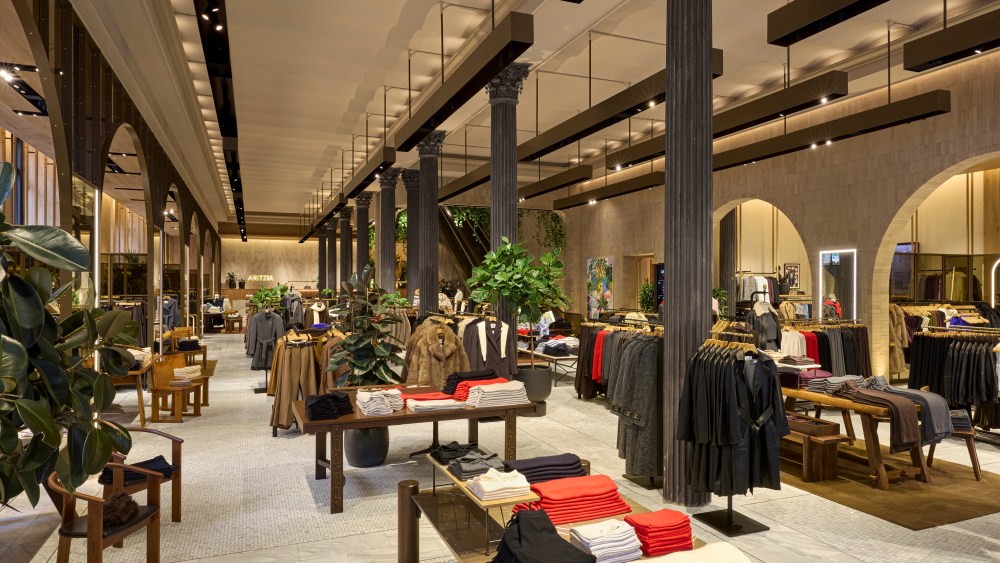
Some retailers will also be challenged by the Vancouver, Canada-based Aritzia, which is poised to gain market share and is steadily opening stores. Said another specialty retail executive, “The quality and style [at Aritzia] is unparalleled. The appeal is multigenerational. They’re adding products — workwear and sweaters — they made a huge play in cashmere, and they’re hitting it on the head with what’s happening in fashion.” Aritzia’s cashmere program featured former J.Crew creative director Jenna Lyons as the face of the campaign.
Zara is another big threat. The international retailer is successfully working to significantly elevate its products and its store environments to be tech-enabled, cleaner, more contemporary, and with a warmer ambience for easier shopping and heightened service.
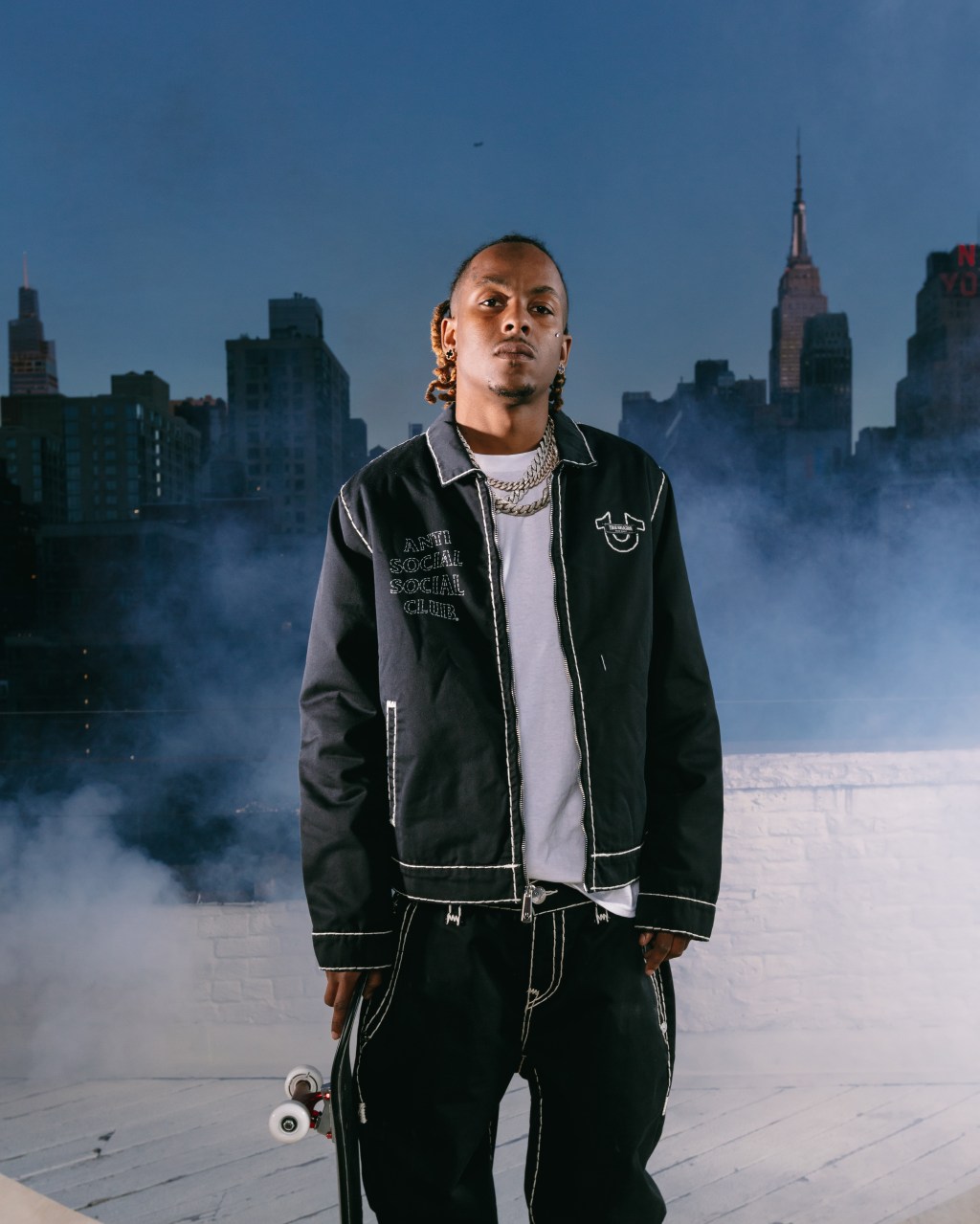
For the vast majority of these retailers, it’s still about selling denim jeans, chinos, striped sweaters, colorful knits but as of late, they’re doing modernized versions of all that, and breaking them out with partnerships with celebrities, influencers and musicians.
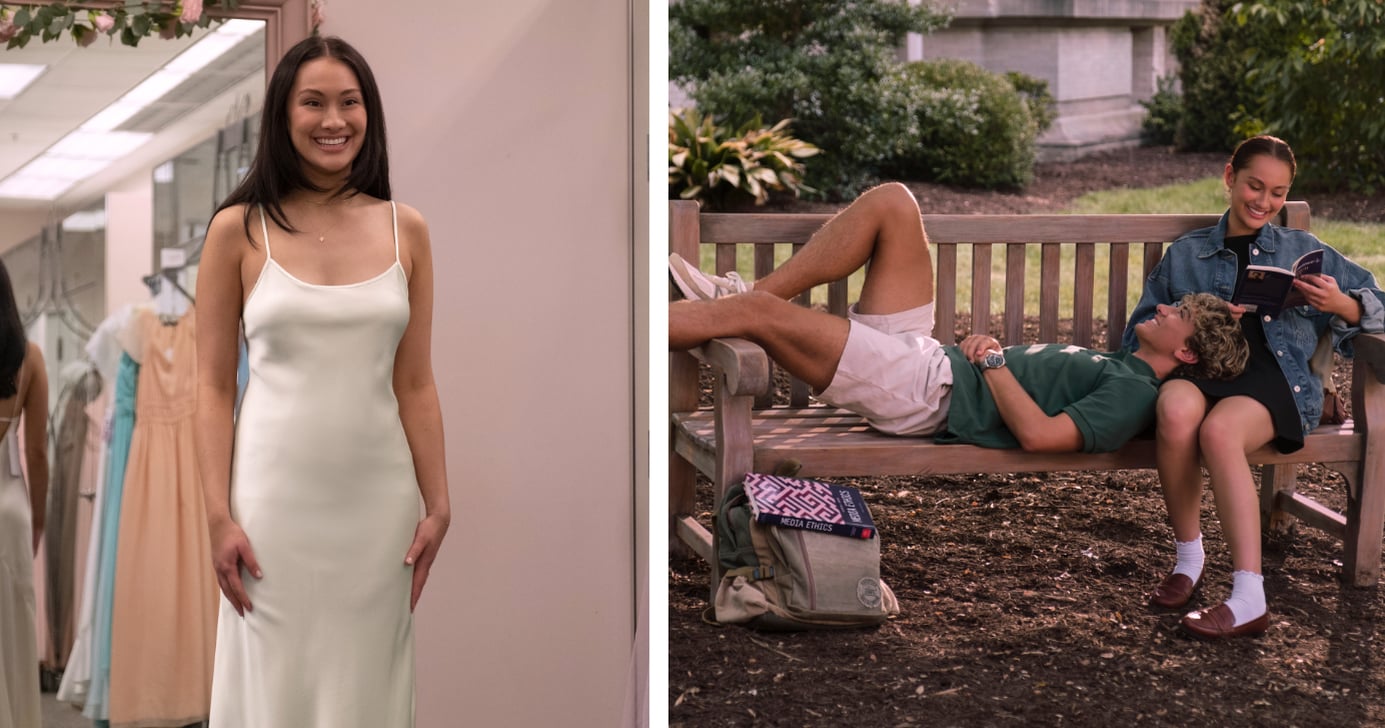
Within the sector, there’s been a wave of new formats and strategies introduced. For example, A&F introduced a collection of wedding guest dresses and jumpsuits to appeal to a more grown up customer. Loft, long known for casualwear, introduced a workwear line in spring 2025 called Versa. It’s billed as versatile enough to wear to the office and dinner afterward. Meanwhile, the always career-oriented Ann Taylor introduced Ann Taylor Weekend in 2024, giving the brand a more casual component.
At KnitWell, Haven Well Within was launched online in 2020 but due to the pandemic shifted from its stand-alone positioning and was integrated into talbots.com. But last October, Haven Well Within opened its first permanent store at the Roosevelt Field Mall in Garden City, Long Island. Haven Well Within offers “easy-to-wear essentials” including loungewear, sleepwear, intimates, accessories, beauty and home products.
Anthropologie’s private label, the preppie-ish line Mauve, opened its first store last year in Raleigh, N.C., with more expected to come. The parent company, Urban Outfitters, reported a strong third quarter, with revenues up 12 percent and net income up 13 percent. Other specialty retailers also performed well. Gap Inc. reported third quarter comparable sales up 5 percent, while Abercrombie & Fitch reported third-quarter comparable sales increased 3 percent, marking three years of consecutive quarterly sales growth for the retailer. And look to Aritzia to advance its winning streak when it reports third-quarter results, scheduled for Thursday.