
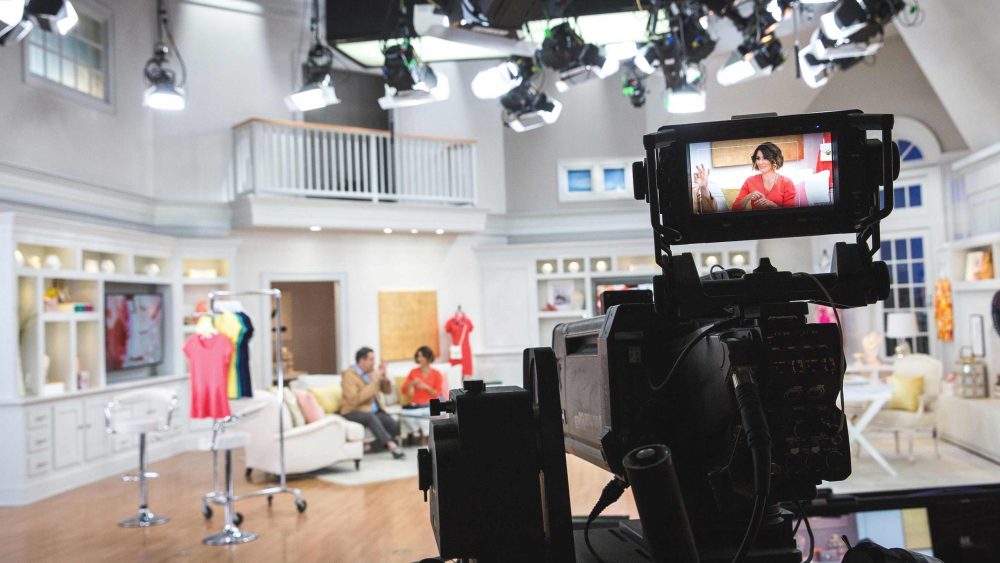
Ultimately, it was a failure by the QVC Group to keep up with changing times that sealed its fate.
The QVC Group — which includes the QVC, HSN, Ballard Designs, Frontgate, Garnet Hill and Grandin Road brands — acknowledged in a regulatory filing that it was preparing to file for bankruptcy imminently.
Industry experts were not surprised.
“QVC has been bleeding market share, and hemorrhaging cash — the victim of a brand rooted deeply in a bygone era,” said Craig Johnson, president of the Customer Growth Partners consulting and research firm. “QVC and HSN had their best years not just in the last decade but in the last century when marketing was dominated by TV, cable and mass marketing, and long before the online channel, mobile lifestyles and streaming all came to be ascendant. In short, the digital parade simply passed by QVC and its brands — also including Ballard and Frontgate — leaving QVC in the dust, a dollar late and a dollar short as it tried to keep up.”
Investment banker William Susman, managing director, head of consumer and retail at Cascadia Capital, said: “Anything that has $10 billion in revenue should not go away tomorrow. Shopping has changed dramatically. Consumers are watching less TV.”
You May Also Like
Susman said QVC’s “today’s special values” have been a big thing for consumers, and remained a major revenue generator, though consumers are more than ever comfortable buying in a digital format, on their phones or laptops. The “today’s special values” typically promoted what QVC considered a must-have item at a discounted price.
“I believe QVC has a reason to exist, but it needs to learn how to exist in 2026, not just in 1996,” said Susman. “The restructuring process gives management a moment in time to hit control-alt-delete, start anew, reduce debt, get out of bad vendor payables and pick what brands work the best, and management must have a transition plan that is successful.”
For the first nine months of 2025, QVC reported losses totaling $2.37 billion.
In early April, the company indicated in a Securities and Exchange Commission filing that there were “substantial doubts about the company’s ability to continue as a going concern.” That statement followed a turbulent 2025, marked by periods of consolidation, layoffs, a string of quarterly revenue declines and a rebranding. In a telling move, the company shut down its HSN campus in St. Petersburg, Florida resulting in hundreds of layoffs. HSN operations were folded into QVC’s headquarters in West Chester, Pa.
QVC has also been hurt by its failure to attract younger audiences, and capitalize on social media and livestreaming fast enough.
Last year, David Rawlinson II, president and chief executive officer of QVC Group, said the company was “particularly challenged as linear television viewership continued to decline, and tariff volatility strongly impacted consumer sentiment in discretionary retail.” He said social shopping is a transformative opportunity and that the company was moving quickly to be a leader there. The QVC Group did sign an agreement in August 2024 with TikTok, and QVC Group deepened its partnership with the social media platform in April, beginning to debut 24/7 shoppable streaming content and increasing the amount of partner brands highlighted.
“We are excited to share our powerhouse lineup of celebrities, hosts, brands and products in this interactive format,” said Rawlinson at the time. “Our agreement will be a catalyst to transform shopping and discovery, not only for QVC Group and TikTok Shop, but also for social shopping at large.”
One industry source involved in streaming and brands, said: “There is a systemic problem in all of linear TV, not just linear TV sellers, and the systemic problem is happening because people are cutting back on cable television and switching to streaming networks. A lot of the television sellers, and quite frankly, even linear TV distributors, have been slow to switch over to streaming.”
Consolidating HSN into QVC studios was needed, according to the source. “It didn’t make sense for them to have two high cost television studios in different parts of the country.” He also said that with the TikTok deal, he expected QVC to lean into the streaming channels more. “That would help them with new audience growth.”
One designer who is a regular on QVC said: “I think they will figure out what to do, just like a lot of stores that have been restructuring or rearranging. We are moving full steam ahead on QVC.”
Last year, the company changed its name from Qurate Retail to QVC Group Inc. The group lived with the Qurate name for six years, which was a curious amalgamation of QVC and the word “curate,” although it’s close to the word “quorate” which means having a quorum.

For those who worked at the 70-acre HSN campus, which at one time had 3,500 employees, or sold through the network, the shutdown was devastating. “There was a clear mission to do things differently, generate great content, and take some risks, like an independent studio in Hollywood,” said one former HSN executive.
“This was a special culture. Everyone loved being on that campus. It was a fixture in the Tampa area and a major contributor to charities and the local economy,” said one former senior executive there. “We created these wonderful partnerships and collaborations with movie studios, record companies, celebrities” including Serena Williams, Iman, Keith Urban and Sheryl Crow.
But as the years past, the business weakened.
“What affected the business was the erosion of their active customer base, a lack of creativity, and ignoring the growth of social commerce. The two brands — HSN and QVC — became homogenized, and failed to differentiate enough,” the former HSN executive said. “They never really understood, you needed to have two distinct entities. One of the things that really hurt the business was this over-rotating of brands, more on the HSN side. If you want new customers, if you want engagement, you can’t keep doing the same things.”
One designer who appeared frequently on HSN, said: “Guests and celebrities were treated really well at HSN. There was a green room to do makeup and hair and relax, and you had a TV to see your sales in real time.” On air, “You’d wear an earpiece, telling you what product is selling and what product to push, like there was just two dozen left of something, or sell more pink bags. You’d have to paint a picture about why you need to buy this bag… It was a culture built by Mindy Grossman,” who stepped down as CEO of HSN in 2017 and is currently vice chairman and partner at the Consello Group, a financial services with a private equity arm for strategic investing. “Mindy brought a lot of entertainers in,” the designer source said. “She ran it differently. She built 40 businesses that were doing $20 million as opposed to QVC building four or five blockbuster businesses, and I’m referring to fashion where brands like Isaac Mizrahi did $150 to $180 million per year. Lori Goldstein did the same numbers as Isaac.”
Wendy Liebmann, founder and chief shopper at WSL Strategic Retail, said in a discussion about QVC last year: “When you think about the value that television shopping and that experience delivered, this was the forerunner of people willing to buy things unseen. But the competitive environment for that shopping experience has changed dramatically…They’re late to the party. In this world of social shopping, if you’ve got the right content and the right partnerships, it doesn’t mean you cannot deliver…The big challenge for them is relevance and having a brand that doesn’t feel old.”
Another industry source who requested anonymity, said: “QVC didn’t make the necessary technology investments quickly enough to build their digital business and meet customers where they were spending time. The opportunity now lies in translating QVC’s proven storytelling formula to platforms where consumers are actively engaged.
“They could have taken their entire business model to TikTok, Instagram and other social platforms where product demonstrations and authentic storytelling thrive. The challenge for QVC wasn’t just technology adoption, but cultural transformation. Companies with decades of success in one medium often struggle to pivot their organizational structure, talent and business processes to embrace new channels,” the source continued.
The QVC Group did maintain relevance with consumers between the ages of 45 to 75, but it started waning. “The TV audience is going to be gone in 10 years, and for QVC Group, it’s all going to come down to the execution of this TikTok partnership,” the source said.
Traditionally, shipping inventory on consignment proved a logistical challenge for brands, the source continued, which also turned some entities off from the platform. “You had to give them inventory you could be selling in retail or via d-to-c,” said the source, adding that the TikTok partnership could alleviate some of the stresses. “If you’re a small-to-medium brand and you don’t nearly have the muscle that QVC will with this partnership, you’ll be able to make some headway.”
Still, QVC does have a history of innovation, by first becoming a pioneer in shopping via cable television decades ago, then advancing into e-commerce and mobile shopping, and more recently leaning into streaming and social media. The company built a track record of recruiting designers and celebrities to sell their wares, among them Rebecca Minkoff, Stan Herman, Dennis Basso, Martha Stewart, Nicole Miller, Isaac Mizrahi and Jason Wu. However, there have been questions whether the company innovated fast enough to keep up with competitors such as Amazon and emerging retail formats and attract new generations of shoppers. Whether the company can innovate itself out of its financial bind and build up its customer base, remains to be seen.