
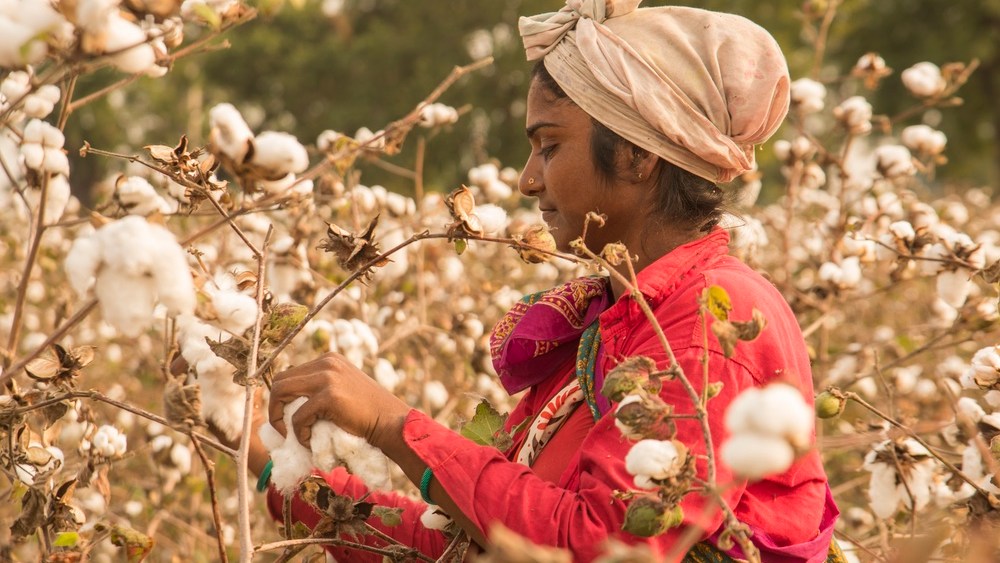
It’s official: The Better Cotton Initiative, better known as BCI, announced Tuesday that it is now operating as a regenerative standards system, a move it says will unlock a “triple win” for nature, farmers and industry as it promotes healthier soils, more resilient ecosystems and stronger farmer livelihoods.
The pivot from a nonprofit, multi-stakeholder organization to an external certification system comes as the fashion industry increasingly looks to regenerative cotton to anchor its sustainable sourcing, the world’s largest cotton sustainability organization said. The overhaul is intended to help “bridge the gap” between corporate ambitions and field-level realities by ensuring progress is powered by “genuine partnerships” with farmers and backed by verifiable results, BCI added.
“When nature thrives, farmers thrive,” Nick Weatherill, CEO of BCI, said in a statement. “And when retailers and brands support those conditions through their sourcing and investment, they help build more resilient supply chains and future-proof the supply of cotton.”
Regenerative agriculture is sometimes hailed as “organic plus,” though that can be a reductive characterization. While organic cotton seeks to avoid environmental harm by banning synthetic pesticides and fertilizers, regenerative cotton focuses on outcomes such as rebuilding soil health, restoring biodiversity, capturing carbon and retaining water. Because “regenerative” lacks a single legal definition or regulatory enforcement, conventional farms can adopt regenerative practices, say, by planting cover crops and practicing no-till farming while still spraying synthetic pesticides and using GMO seeds. At the same time, proponents say regenerative agriculture gives farmers far more flexibility than standard organic farming.
BCI’s restructuring has been underway behind the scenes for the past two years. It includes updates to the organization’s principles and criteria that strengthen the existing requirement for farmers to demonstrate continuous improvement by placing greater emphasis on regenerative agriculture when setting and meeting targets. Much like its original standard, which covers more than one-fifth of cotton grown worldwide, BCI’s new regenerative standards system doesn’t outright ban synthetic pesticides or chemical fertilizers, though farmers must phase out the most dangerous so-called highly hazardous pesticides over time. It also doubles down on integrated pest management, alongside mandatory soil health, cover cropping and biodiversity measures.
Together with those changes, BCI has revamped its investment, capacity strengthening, assurance and impact measurement activities to prioritize regenerative farming, bolstering what it says is its ability to “deliver regenerative outcomes.”
The timing of the shift also coincides with mounting public scrutiny of BCI’s certification credibility, most notably from watchdog group Earthsight’s April 2024 exposé, which criticized the organization for certifying cotton linked to illegal deforestation, land-grabbing and environmental violations in Brazil’s Cerrado region. That two of the biggest high-street brands, H&M and Zara, were implicated made the issue—and the headlines—more difficult to ignore.
BCI, then known as Better Cotton before returning to its original name, said at the time that while a third-party audit found no breach of its standards at the investigated farms, it planned to expand its due diligence requirements to improve oversight and encourage greater collaboration across commodity stakeholder groups, standards bodies and certification schemes to better tackle cotton production’s social and environmental impacts.
“We welcome the scrutiny of organizations such as Earthsight as they help to shine a spotlight on areas where both farm and regulatory oversight need to improve,” Alan McClay, then-CEO of Better Cotton, said in the aftermath. “Better Cotton’s mission is to promote more sustainable agricultural practices globally, helping cotton communities survive and thrive while protecting and restoring the environment.”
Now, many of those efforts appear to be coming together. Among BCI’s biggest moves is the acquisition of the team and technology behind Co:Farm from agritech company Materra, a deal that BCI says will create a digital infrastructure to simplify and speed up field-level data collection while reducing the administrative burden on growers and implementing partners.
“Co:Farm is more than a technology acquisition,” Alia Malik, chief commercial officer at BCI, said in a statement. “We are investing in the infrastructure needed to support regenerative agriculture and the transparency the market increasingly expects. Very few organizations can take an innovation proven with 10,000 farmers and scale it across one of the world’s largest farmer networks. Combining BCI’s scale and reach with Co:Farm’s technology and expertise will help deliver the data, visibility and assurance needed to translate regenerative ambition into impact.”
To inform its transition, BCI commissioned a third-party review by SureHarvest, an agricultural consulting and software firm, which benchmarked BCI’s existing framework against leading standards from RegenAgri, REEL, Textile Exchange and others to assess alignment. SureHarvest found that BCI’s standard “already aligned well with widely recognized regenerative practices and outcomes, particularly within Principles 2 (Natural Resources), 3 (Crop Protection), 5 (Decent Work), and 6 (Sustainable Livelihoods).” Using those findings, BCI closed the remaining gaps and refined its principles and criteria ahead of version 3.2, which took effect in April.
Meanwhile, one example of its regenerative approach is already in action, BCI said. Launched with H&M in India in 2025, the Gujarat Regenerative Agriculture Project is training and supporting more than 12,000 farmers in the western Indian state as they adopt or expand regenerative practices. To date, more than 1,760 growers have received incentive payments, while 1,700 metric tons of traceable BCI lint cotton have been linked to H&M’s supply chain.
BCI will formally launch its regenerative standards system at this week’s Textile Exchange Conference in Vancouver, where it will also host sessions on regenerative agriculture, industry readiness and the path to scale.
On World Cotton Day on Wednesday, the organization released its first impact report in five years, finding that a majority of farmers had reduced synthetic nitrogen use, pesticide active ingredients, carbon footprint and irrigation water. But it also flagged persistent challenges, including continued hazardous pesticide use in Brazil—the country supplying the largest single share of BCI cotton—and on large industrial farms; uneven economic benefits that vary widely by country; and the ongoing transition away from its traditional mass balance system toward its newly implemented physical traceability standards.
Smallholder farmers also remain acutely exposed to climate shocks, lacking the immediate capital and resources to weather bouts of extreme heat or catastrophic floods. In 2022, a “monsoon on steroids” in Pakistan submerged one-third of the country, killed more than 1,700 people, displaced millions and wiped out up to 40 percent of its annual cotton crop.
“For the farmers, and we really focus on the farm, there’s no denying climate change,” Malik said at the Sourcing Journal’s recent fall Sourcing Summit. “The climate is the farmer’s boss. And you are a taker of what is happening in the climate, whether there’s water, there’s not water, whether it’s too hot, or whether it’s too wet. So that it is challenging, and it means a lot of adaptation is needed.”