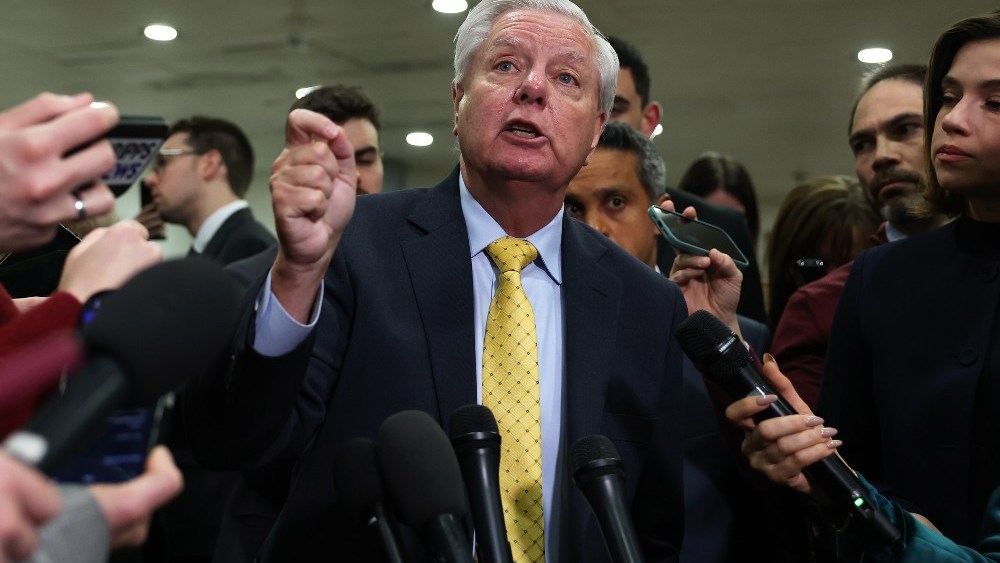
A bill championed by late Senator Lindsey Graham (R-S.C.), who died over the weekend, aims to target America’s top trade competitors with substantial new tariffs as a result of their Russian energy purchases.
Introduced Tuesday by a bipartisan group of lawmakers, the Sanctioning Russia Act of 2026 would impose fresh duties and penalties on prominent apparel and textile sourcing locales with the goal of deterring purchases of Russian exports like crude oil and natural gas.
The bill, which garnered the support of more than two dozen bipartisan co-sponsors by Tuesday afternoon, aims to choke off Russia’s access to funding for its war in Ukraine by stifling the sale of oil. The draft of the bill was completed before Graham’s trip to Kyiv to meet with Ukrainian President Volodymyr Zelenskyy last week.
Under the law, the top five purchasers of Russian oil—China, India, Slovakia, Hungary and Azerbaijan—would be hit with duties worth up to 100 percent. Additionally, the top five buyers of Russian natural gas, which include China, France, Belgium, Japan and Hungary, would also face tariffs. Nations that currently represent less than 15 percent of Russia’s market for natural gas exports would be spared from the levies.
Should the law be passed, a 180-day re-evalution process would be triggered, allowing the tariffs to be lifted if progress is made. In the meantime, lawmakers have said they want to inspire the named countries to diversify their energy buys away from Russia.
Beyond the imposition of tariffs, the measure would hit Russian President Vladimir Putin, along with top Russian officials, banks and corporations, with mandatory sanctions, and it would prohibit U.S. entities from doing business with Russia’s energy sector or its government.
“Sanctions will be a decisive factor in this war, throttling Putin’s economy, stopping the flow of oil and gas revenue, and targeting the countries that are complicit, the bad actors, including the enablers and evaders,” Sen. Richard Blumenthal (D-Conn.) said during a press conference on Tuesday.
“It’s been referred to as a tariff bill, but actually, it imposes full blocking sanctions on wide swaths of the Russian economy,” Blumenthal added, saying that the duties in question “are targeted—narrowly limited to the five major purchasers up to 100 percent with waiver authority that is narrowly tailored and constricted.”
Lawmakers are eager to see the bill pass quickly after months of “painful” negotiations, the senator said. President Donald Trump indicated on Monday that he would support the effort and sign the bill into law pending Congressional approval.
The Sanctioning Russia Act is not the first time tariffs have been deployed against a major U.S. trading partner with the goal of impeding Russia’s war efforts. In August of last year, Trump hit India with 25 percent duties—on top of existing 25 percent “reciprocal” tariffs imposed under the International Emergency Economic Powers Act (IEEPA)—bringing the country’s total tariff burden to a staggering 50 percent. The 25 percent duties related to the purchase of Russian oil were lifted on Feb. 2, weeks before the president’s IEEPA tariff scheme crumbled under an unfavorable Supreme Court ruling.