“We’ve evolved, we’ve added depth but we’ve never strayed from our course.”
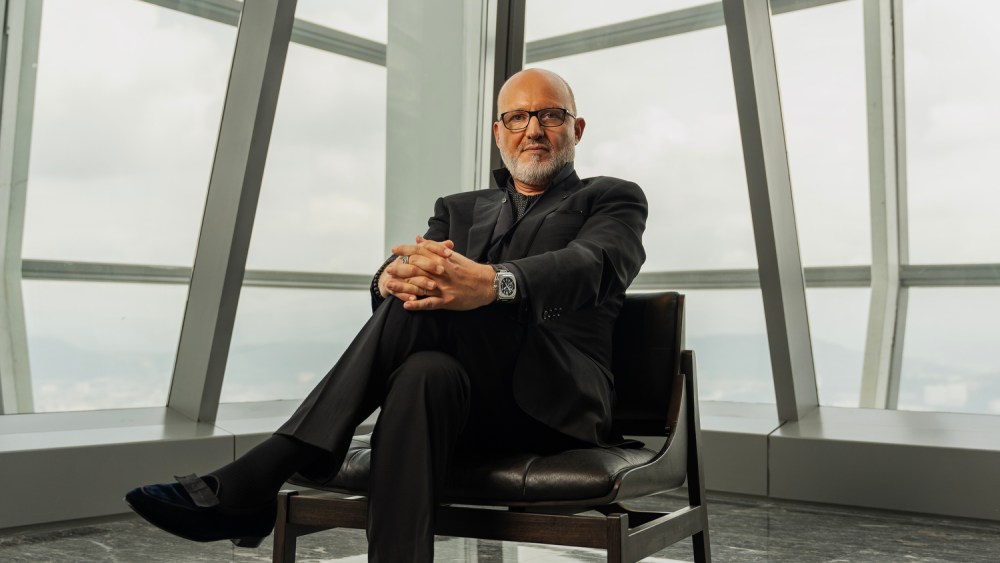
That’s how Carlos Rosillo, cofounder and chief executive of Bell & Ross, sums up more than three decades of building the French-designed, Swiss-made watchmaker from professional instruments favored by elite military units to refined timepieces worn by presidents and political elites.
Founded in 1992 by Rosillo and childhood friend Bruno Belamich, who serves as creative director, the watchmaker they’d imagined as part of a college project had a clear mission: offer watches inspired by and made for the aeronautical world.
Within the space of a decade, Chanel had taken a stake in the watchmaker and it has concentrated its production in the watchmaking epicenter of La Chaux-de-Fonds, cementing its impeccable technical pedigree with an official “Swiss Made” appellation.
You May Also Like

Early clients weren’t just watch collectors but also those who live by precision, from pilots to military personnel. Reputation soon made, the company became a supplier to France’s air force and elite units such as GIGN, RAID and GSPR, the unit in charge of presidential protection.
Meanwhile, Bell & Ross’ timepieces made their way to the wrists of France’s political elite, including President Emmanuel Macron, who was most recently spotted wearing a BR model from its Vintage V 1 collection for a state visit to the U.K. in July.
These days, it’s a broader group who reaches for Bell & Ross timepieces, thanks to a range that stretches to dressier designs and high complications models, like the one it will introduce at Dubai Watch Week.
Serving as the kickoff for this transformation was the 2005 launch of the BR-01 design, which defined the brand’s now-signature “circle-within-a-square” aesthetic inspired by aircraft cockpit instruments.
Another watershed moment came with the BR-05, which brought a sleeker, integrated-bracelet silhouette in 2019 that landed Bell & Ross squarely at the crossroads between the city and the sky.
Although the privately owned company doesn’t disclose figures, Rosillo described the company as being “semi-artisanal” on par with the likes of Hublot or Panerai, which he deemed a peer. According to a 2025 report by Morgan Stanley and specialized consultancy LuxConsult, they are estimated to have produced between 39,000 and 55,000 pieces in 2024.
The brand boasts some 26 boutiques and overall 600 doors across 80 countries. Fifty percent of its sales can be slated to the urban BR-05 or X5 range, while the other half continues to focus on the professional BR-03 or X3 ranges.
It’s a movement that the company is amplifying, shifting its focus for the first time from the wrist to seeing models in their entirety in a campaign released in the early fall.

Rosillo tells WWD that staying the course is as much a philosophy as a business strategy, what he thinks of Bell & Ross knockoffs and how it plans on growing its female consumer base.
WWD: To what do you attribute Bell & Ross’ enduring appeal?
Carlos Rosillo: Quite simply, to staying the course. I believe, particularly today in light of economic, political, and social uncertainties in having convictions and holding your course through every storm.
Our inspiration has always been aeronautical and we’ve never deviated from that. What we did was evolve while maintaining our direction by transforming the cockpit instrument into a wristwatch.
Over time, we’ve taken some distance from literal references and moved toward a more symbolic form, the circle within a square, which has become our iconic shape. Day or night, it remains instantly recognizable as part of our universe.
Today, we’ve gained more distance and maturity. For example, this year marks the 20th anniversary of the BR-03, our iconic watch. We’ve maintained that same visual identity, simply making it more refined and stylized.
Over the past 20 years, we’ve created over 500 models using this iconic shape. It’s allowed us to explore poetic pieces like the BR-03 Astro, symbolic ones like the Skull Airborne, and highly technical ones. Throughout, the essential elements remain the same: the round within a square, the signature dial, and the distinctive case.
We’ve evolved, we’ve added depth — but we’ve never strayed from our course.
And I think that’s what defines successful brands: they know how to renew themselves without losing direction. They evolve without betraying their essence. Those are the brands that audiences understand best, unlike those constantly changing course to chase trends.
WWD: How would you describe the inflection that you’re leaning into with the new campaign?
C.R.: We’ve moved from the professional, military tool toward something more civilian — from off-road to urban, from rugged instrument to refined accessory. That’s our evolution.
When we launched the BR-05 six years ago, the goal was to reach a wider audience. It was a major design step forward, with an integrated case and bracelet, still keeping our codes but in a sleeker, more wearable, more lifestyle form.
By doing this, we stepped out of our niche. We became accessible to a broader public. At the time, only a few legendary brands like Patek were exploring this type of design. A year later, a dozen were doing it. Two years later, 50. Now, almost the entire industry follows that path.
WWD: What reservoirs of growth do you see ahead for the brand?
C.R.: From a business perspective, our two big opportunities are international development, maintaining strength in Europe while expanding in the U.S., Asia, and the Middle East; and gender segmentation.
We’ve traditionally had a very male clientele, accounting around 90 percent of the business, but we’re working to reach more women. The campaign film you saw with a man and woman reflects that with a 40 mm version for men, and the 36 mm for women.
I think we can reach an 80-20 split. Our DNA is indeed masculine, rooted in strength and functionality, but women are increasingly drawn to that aesthetic. We fit in the “power symbol” watch category. Like women wearing Rolexes, it’s a way of expressing strength and confidence.
WWD: Is Europe still your main market?
C.R.: For now, yes. But we can’t ignore macroeconomic evolutions. The world’s wealth is no longer growing fastest in Europe. We’ve always been strong in France and Europe, but the biggest potential now lies in Asia and the Americas.

Despite global uncertainties, our U.S. business is growing well. I’m confident about both North and Latin America and in Asia. We’ve been cautious with China — a small market for us — so the recent troubles there haven’t affected us. Our development is stronger in Singapore, Malaysia, Indonesia, Thailand, Vietnam, Hong Kong, Japan and India.
Macro trends matter: Europe’s structural economic difficulties limit growth for everyone.
WWD: What is the impact of having a public figure such as President Macron wearing a Bell & Ross?
C.R.: As a private company, we stay out of politics but we’re proud that many public figures wear our watches. It’s interesting — recently, the press pointed out that Macron [and former prime ministers] Édouard Philippe and Gabriel Attal all wear Bell & Ross.
If politics achieved the same unity that our watches do, France would be in great shape!

But more seriously, there’s a story behind it: it all began with elite French security units ordering our professional watches. From there, their leaders, and eventually public officials, started wearing them. It’s a purely merit-based path, earned through service and trust, not politics.
Today, nearly every French elite unit wears Bell & Ross because we’ve delivered reliable, customized products at fair prices. That’s why the president wears one: it’s French, it’s well-made, and it’s non-polemical.
WWD: There was still much talk about the price of his timepiece. What is the average price for the brand?
C.R.: The [now-discontinued] model President Macron wore was 2,300 euros. It’s not cheap, but still accessible. We also have collectors who save up to buy one, as well as clients who purchase our most sophisticated pieces.
Our highest-end watch costs around half a million euros [solely because of] mechanical complexity, like our BR-X1 sapphire-cased chronograph tourbillon with five-day power reserve and column wheel movement. It’s understated, but extremely advanced technically. Like a Mercedes S-Class: discreet, but filled with excellence.
WWD: How do you see the market’s evolution?
C.R.: Honestly, I’m relieved we don’t depend on mass volume. Competing in that space today would be extremely difficult. The market dynamics have changed too much.

In the luxury world, watches still offer something few other objects do: emotional longevity. Sure, smartphones get updated every year but does it bring lasting joy? Probably not.
A watch, on the other hand, can move you decades later. I still have one from when I was 10, and when I showed it to my kids recently, it brought back real emotion. That’s something rare in today’s disposable culture.
Since we’re not chasing massive production numbers, and we’re focused on design, craftsmanship, and emotion, I believe we have great years ahead. It’s a sector where creativity and meaning still matter.