During the coronavirus pandemic and its aftermath, affluent Brazilians discovered shopping in their home country — and Iguatemi S.A. keeps giving them reasons to continue to do so.
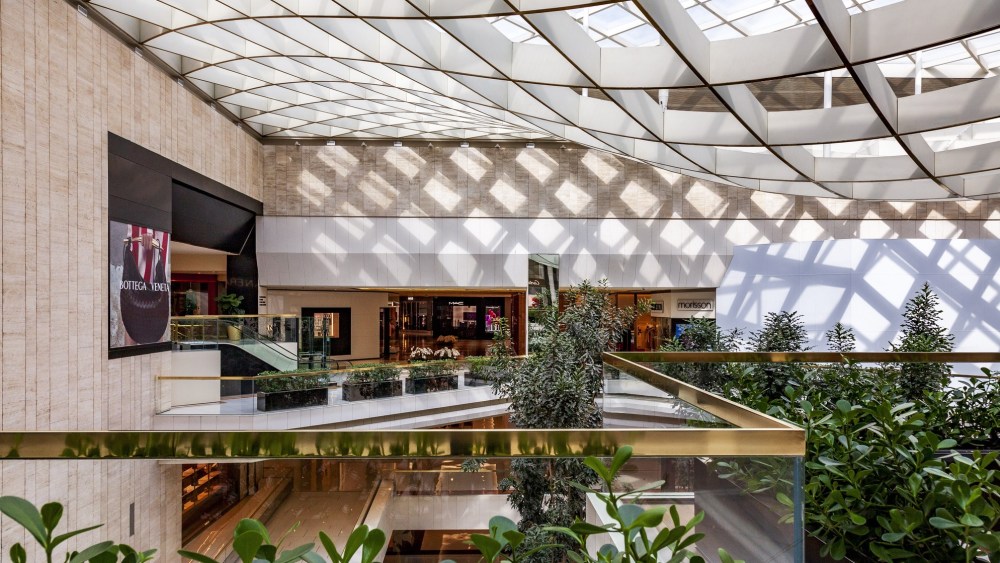
The company, which specializes in mid-tier and luxury shopping centers, has added concert venues, lounges, open-air cinemas, rooftop restaurants and fashion talks — plus a steady stream of new retail banners, from Alo and H&M to Balenciaga, Comme des Garçons, Loewe and Tiffany & Co.
It boasts more than 1 million active members in its loyalty program, Iguatemi One, which gives them access to curated gatherings, event spaces, premium parking, guided visits to the SP-Arte fair, screenings and discounts and perks at places like The Mark hotel in New York City.
Listed on the São Paulo Stock Exchange, the company has yet to report its fourth-quarter numbers, but it demonstrated impressive momentum in the third quarter, with sales jumping 22.5 percent to 6 billion real, or about $1.16 billion at current exchange rates. The numbers reflect recent acquisitions, such as Rio Sul in Rio de Janeiro and Pátio Paulista in São Paulo.
You May Also Like
“Iguatemi has always prioritized our client,” said Ciro Neto, chief executive officer of the company, which operates 15 shopping centers and two premium outlets, in addition to four commercial towers. “At our flagship properties, gastronomy, beauty and culture have become major traffic drivers.”

The approachable, ebullient executive said his mission is to reinforce Iguatemi’s position as the “leading platform and entry point for luxury and lifestyle in Brazil” — and to maintain its current business momentum.
Neto started his career as a regional manager for Dutch retailer C&A, moving over to Iguatemi in 2010 as operations director and rising to commercial director in 2017. He logged another stint at C&A from 2020 to 2023 before returning to Iguatemi, where he was groomed to take over the CEO reins from Cristina Betts one year ago.
He said his main priorities are strengthening the company’s portfolio via selective acquisitions; elevating the customer experience across all touch points, and acting “as a bridge between Brazil and the international luxury ecosystem.”
Billed as the first shopping center brand in Latin America, Iguatemi will celebrate its 60th anniversary this year, while continuing to serve as a gateway for newcomers like Birkenstock, coming in 2026 to Rio Sul.
“Our value proposition is credibility, scale and expertise,” Neto said in a recent interview conducted over Teams. “We were the first to bring brands like Emporio Armani to the continent. When JK Iguatemi opened in 2012, it welcomed more than 30 brands that were entirely new to Latin America. That track record matters.…It means accessing the right customer, the right environment and long-term strategic support.”

Iguatemi is known for its city-center complexes in affluent neighborhoods, and now it’s also playing a hand in creating new urban environments like Casa Figueira in Campinas, envisioned as a walkable, sustainable city of urban parks and eye-catching architecture.
It will ultimately accommodate 50,000 new residents and 100 mixed-use towers, with the main residential building, designed by Andrade Morettin Arquitetos, recently completed.
In Neto’s view, consumers “want shopping to be woven into daily routines rather than treated as a stand-alone activity.”
In a wide-ranging conversation, Neto highlighted some of the particularities about the market — which include a penchant for paying in installments and “incredible” dynamism in beauty — and elaborated on efforts to expand its cultural and experiential offerings:

WWD: What’s the mood of consumers in Brazil today, and what categories and segments are standouts in the country?
Ciro Neto: Brazil is in a different phase of the luxury cycle. While Europe and Asia are normalizing after a period of extraordinary growth, Brazil’s luxury market has been expanding a lot. Between 2018 and 2023, the market grew more than 30 percent and it’s projected to continue growing through the rest of the decade.
The luxury market in Brazil represents about 100 billion reals. In the next five years, we project it to grow to maybe 150 billion reals.
Brazilian customers are sophisticated, informed and emotionally engaged with brands. They value craftsmanship, storytelling and service and they are willing to invest in categories that feel meaningful. Beauty, accessories, experiential retail, fine dining and lifestyle brands are particularly strong.

WWD: Iguatemi straddles mid-tier to luxury. Is luxury still outperforming the other segments?
C.N.: Luxury continues to outperform in terms of productivity, sales per square meter and brand investment.
Our positioning in São Paulo represents the best locations you can have today. We have 14 of the best neighborhoods in terms of income per person in Brazil, because Brasilia has the highest income per person, and São Paulo is second.
That said, our more democratic malls are performing well, especially in categories where value, convenience and experience intersect. What we see is not a simple split between luxury and mass, but a more intentional consumer behavior. They are trading up selectively, prioritizing value, experience and emotional value.
We believe we will continue to grow all of the categories in the next three to five years.
WWD: Are you seeing a flight to experiences over fashions? What are some of the lifestyle and purchasing trends you are witnessing?
C.N.: In Brazil, our malls are in the middle of the cities; it’s part of the life of the people. We have brands, we have services, we have lounges, we have residences, we have the best restaurants, the best stores, and people like to enjoy their lives there with their friends. It’s an environment not unlike the liveliest streets in Paris. We continue to grow this with content, space, architecture, arts and other things.
For us, conversion and loyalty still depend heavily on the physical experience. Service, atmosphere and in-store relationships are critical. The brands that perform best are those that integrate strong digital storytelling with exceptional on-the-ground execution.

WWD: How do you pitch Iguatemi to brands as the best gateway of entry to Brazil?
C.N.: Brazil is a complex market. Success depends on preparation and partnership. Brands need to understand regulatory frameworks, for example, logistics, pricing structure and, most importantly, consumer expectations. We support brands well beyond leasing space. We operate several brands as franchisees, and act as a strategic partner of our international companies entering the market.
We have a dedicated relationship director who works directly with international brands’ leadership, helping them understand Brazil and to adapt their strategy.…Brands succeed when they approach Brazil with a long-term mindset and recognize that local adaptation is essential.
WWD: You recently opened up the first Brazilian locations of Loewe, Balenciaga, Giambattista Valli and Comme des Garcons and — at the other end of the spectrum — H&M, Sephora and Alo Yoga. What’s been the consumer reaction?
C.N.: The response has been very, very, very positive and strong. Luxury customers love newness, products and love global relevance of brains.
Brazil is no longer an emerging luxury market. It’s a mature one with multiple layers of demand coexisting and evolving simultatneously.
H&M has quickly become one of the brand’s top-performing stores globally on a sales-per-square-meter basis.
A few years ago, we brought in the first Le Labo in Latin America. The sales per square meter at Le Labo are so incredible in Iguatemi São Paulo. It’s amazing. We are so happy about these operations.
WWD: You’re introducing cultural spaces into malls. Why? How does this impact the guest experience and brand perception?

C.N.: Art and culture are fundamental pillars. Spaces like Teatro Iguatemi elevate the entire environment by reinforcing our commitment to creativity, dialogue and community. All this deepens engagements with our customers, extends visit duration and creates an emotional connection between us and our audience.
We opened our theater last year with a concert by Caetano Veloso, a very important Brazilian singer. It was an amazing, spectacular show.
WWD: You just wrapped your ninth edition of Iguatemi Talks. Why do you do it, how is this event evolving and what kind of impact is it having?
C.N.: Tickets sold out in a few hours. It was created to foster a dialogue between Brazil and the global creative community. It’s a local event, but its impact reached far beyond the audience in the room. Over time, it evolved from a fashion-focused event into a broader culture platform hosting a lot of important people such as Sofia Coppola, Virgil Abloh, Suzy Menkes, [Instagram executive] Eva Chen and [costume designer] Molly Rogers.
It reflects our belief that retail must connect ideas, culture and creativity in order to remain relevant.