DUBAI — For seven decades, Chalhoub Group has built its empire by bringing the world’s most prestigious luxury brands to the Middle East. Now, under third-generation chief executive officer Michael Chalhoub, the company is rewriting its playbook entirely.
The transformation is ambitious, aiming to evolve from regional distributor and retail partner into what the company’s Vision 2033 describes as “an international luxury brand builder, bridging cultures and inspiring dreams.” It’s a pivot encompassing proprietary brands, investments in emerging designers and the group’s first American flagship.
“This constant need to reinvent ourselves is really, really important,” Michael told WWD. “If you don’t reinvent yourself, you die.”
You May Also Like
From Partner and Distributor to Creator
The most visible sign of Chalhoub’s strategic shift is the creation of their own brands. This year saw the launch of handbag brand Makette, an initiative of the group’s fashion innovation lab. It represents a significant departure for a company that spent seven decades building other brands’ presence in the region.
The group’s investment strategy has also shifted toward active brand ownership. Last September, Chalhoub revealed a strategic minority investment in Willy Chavarria, the New York-based fashion brand celebrated for its bold aesthetic and inclusive cultural voice.

America Calling
Perhaps the most ambitious element of Chalhoub’s new strategy is its expansion into the U.S. — the world’s largest footwear market and territory, where Middle Eastern retail players have historically had little presence.
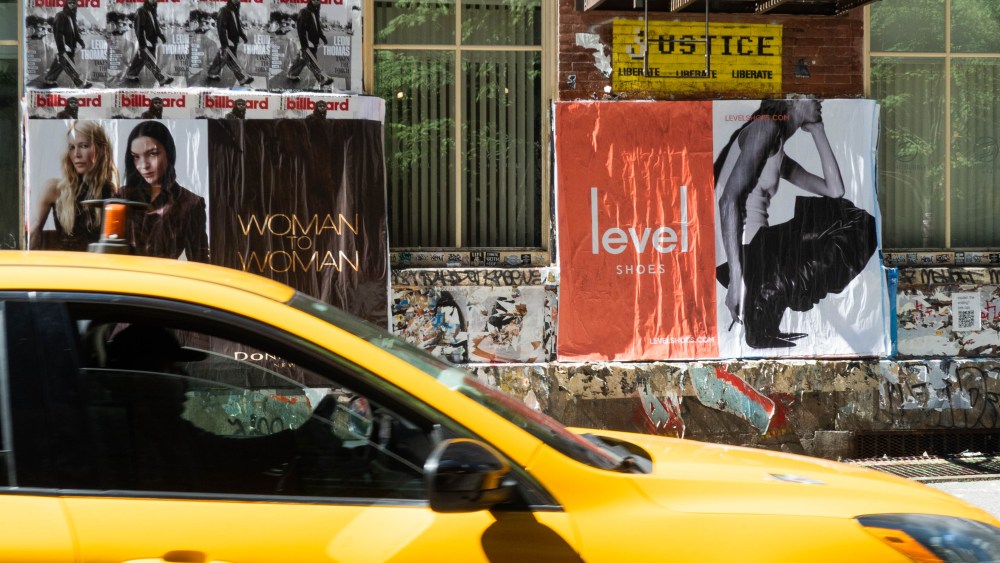
Level Shoes, the group’s homegrown luxury footwear concept that operates a 96,000-square-foot destination in Dubai Mall, has launched a dedicated U.S. e-commerce platform backed by a new Florida logistics center. A flagship is planned for Bal Harbour Shops in Miami by late 2027. The U.S. is already Level Shoes’ fourth-largest market by presence and spend, with five years of double-digit growth and 120 percent revenue growth over the past three years.
The Saudi Opportunity
Closer to home, Saudi Arabia has emerged as a critical growth engine. The Kingdom’s luxury market, currently valued at nearly $3.5 billion, is being transformed by the government’s Vision 2030 plan and a young, digitally connected population.
The group recently inaugurated a regional fulfillment center in Riyadh’s free zone near King Khalid International Airport, designed to enable 90-minute deliveries to major Saudi cities. The April 2025 expansion into Solitaire Mall brought flagships including Louis Vuitton, Dior, Fendi, Sephora, Tiffany & Co. and Chaumet.
“Saudi Arabia grew at a double-digit share last year, and we expect continued healthy single-digit growth across all segments,” the CEO said. “Fashion and beauty remain the strongest performing categories, driven by demand for elevated experiences.”
Sustainability as Strategy
Underpinning Chalhoub’s growth ambitions is a sustainability commitment that predates much of the region and that executive chairman Patrick Chalhoub continues to champion as a core strategic pillar.
The group has pledged to achieve net zero emissions by 2040, a full decade ahead of most industry targets, and is a member of the United Nations Global Compact and signatory of the Women’s Empowerment Principles.
Patrick Chalhoub traces the company’s environmental awakening to a pragmatic realization.
“We started in 2010, 2011 by just watching what is happening on the scene,” he recalled. “But then gradually we felt that the region was totally underdeveloped on sustainability. Waste management — we couldn’t find anyone who would collect for waste management. We had to negotiate with some of the Emirates in order to get the different bins.”
That infrastructure gap transformed Chalhoub from observer to activist. “We felt that we could have a role to play,” the chairman said. “The government at that time was not putting any regulation. The public was not very aware. So we said, ‘perhaps it’s our responsibility as a business to be more activist.’”
The result was “Unity for Change,” a coalition Chalhoub cofounded with major mall developers Majid Al Futtaim and Emaar alongside LVMH. The group established internal industry regulations without waiting for government mandates — covering everything from air conditioning temperatures to store closing times to water treatment protocols.
“We said the aim is net zero by 2050. Why don’t we give the example and try to put it at an earlier stage?” Patrick Chalhoub explained. The company began rigorously measuring its environmental impact and embedding targets into senior management KPIs. “When you measure, you can improve. The engagement was not just from the top people in charge of sustainability — it became much more broad.”
Symphony of the Future
The theme of Chalhoub’s 70th anniversary celebration — “Symphony of the Future” — captures the group’s vision for the next chapter.
“There’s two key words,” Michael Chalhoub explained. “The symphony is a very creative way to say that we’re all working together on something that’s beautiful, on something that people are passionate about. And the future is because today, we’re looking at establishing the foundation for 2033 and beyond.”

With the Gulf Cooperation Council luxury market projected to reach $15 billion by 2027 and strategic moves positioning Chalhoub as both brand creator and global investor, the group is staking its claim not just as the Middle East’s luxury gatekeeper — but as a player shaping the industry’s next chapter.