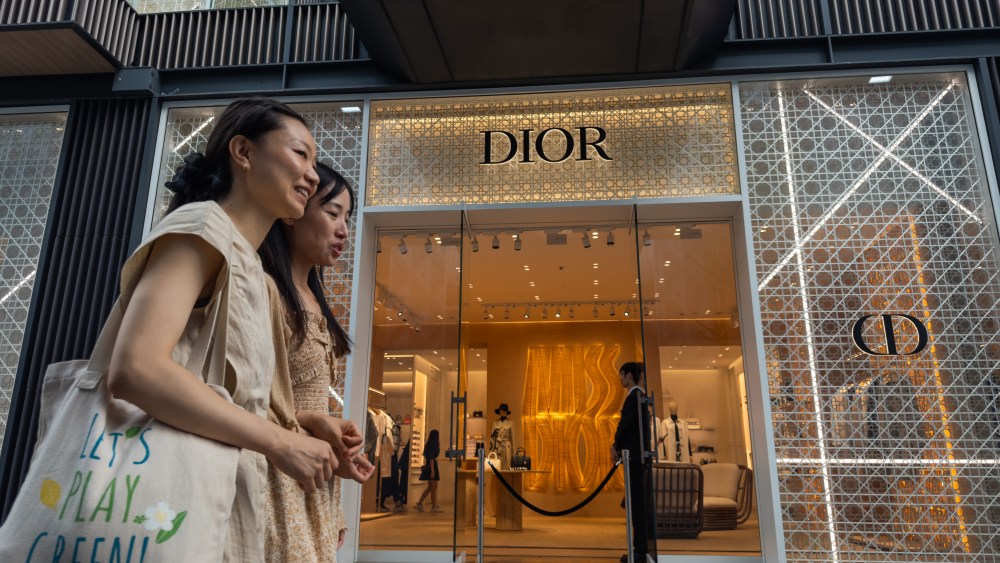
Is luxury seeing the light at the end of the tunnel in China? The country’s seven-day “Golden Week” holiday may have offered some clues.
According to a recent report by Bernstein, which collected store traffic data from 10 luxury malls across four Chinese cities — including two in Hong Kong, two in Shanghai, three in Beijing and three in Chengdu — total traffic increased 55 percent year-over-year and 8 percent versus this February’s Chinese New Year.
The data excludes VIP traffic and does not show how many visitors actually made a purchase or the average consumer spend, Bernstein noted, highlighting the limitations of snapshot data.
You May Also Like
Chengdu was the principal engine of improvement, according to Bernstein, with traffic increasing 116 percent year-over-year; Beijing also improved sequentially by 4 percent, while Hong Kong was broadly stable. Shanghai traffic remained 112 percent above Golden Week 2025, Bernstein said.
As China‘s longest public holiday of the year, overall retail data showed moderate improvement. According to data from the Ministry of Commerce, foot traffic and sales at 78 pedestrian streets and shopping districts rose 2.5 percent and 4.7 percent year-over-year, respectively, from Oct. 1 to Oct. 6.
As Chinese consumers’ appetite shifts toward better perceived value for money and affordability, Bernstein said that “aspirational consumers” continue to engage with brands despite a challenging macro backdrop.
“The lesson is that Chinese consumers remain interested in global luxury brands, but increasingly reward relevance, newness and category leadership,” Bernstein said.
Bernstein noted that Dior led the recovery with “75 percent incremental improvements, likely helped by increased availability of Jonathan Anderson products in store.”
“The impact of Molly Tea incident may have faded, as Louis Vuitton remains the most visited brand during our store check,” Bernstein observed of the brand’s busy stores in Chengdu Taikoo Li and Hong Kong Harbour City.