
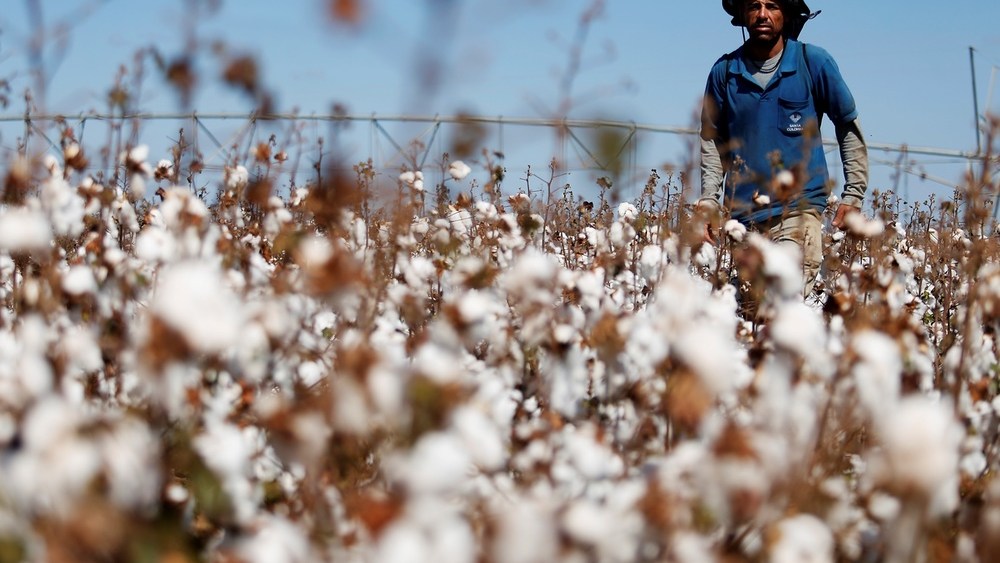
Cotton traceability takes more than high-tech solutions. It also requires something far simpler: talking to the people who grow it.
That’s the case longtime denim professionals Ani Wells and Anne Oudard make in “Step 4,” the latest installment of their five-year #WhoMadeMyCotton investigation into where the cotton in jeans—among the world’s most widely worn garments—comes from.
Published on World Cotton Day, the report draws on field visits and conversations in Brazil, India and Turkey to argue that transaction records alone cannot reveal the conditions in which cotton is grown. To get the full picture, the authors say, brands must engage with farmers and the communities that support them.
“Farmers don’t operate in isolation,” said Oudard, a former designer and lead of sourcing and supply chain at Cotton Diaries, a community and storytelling platform dedicated to making cotton systems more equitable and resilient. Their wider ecosystem includes field workers, seasonal workers, input suppliers, agronomists, university researchers, local traders and ginners.
The problem isn’t necessarily a lack of information, but how it’s recorded and shared, she said. While much of the data needed to trace cotton to farmers is already recorded at the cotton gin, it rarely travels further down the supply chain, particularly after batches of cotton are blended.
Gins, Oudard said, sit at the crucial junction where agricultural output becomes textile industry input. Yet much of the broader textile industry knows little about them or how they operate, leaving brands and designers disconnected from ginners. These facilities hold essential origin data because they pay farmers or intermediaries for the cotton they deliver. But unless a gin operates within a certified cotton system, its records may not follow a standardized format, making that information difficult to retrieve and compare at scale.
“The information doesn’t get passed on, and so when at the end of the supply chain you want to retrieve this information, you have to go through a massive investigation that is unrealistic at scale,” Oudard said.
Oudard experienced this bottleneck firsthand. Even when working with certified cotton backed by transaction certificates, tracing the fiber back through the supply chain took hours of painstaking investigation.
The main problem, she said, is starting with the finished product and working backward to the source. If supply chain data were instead recorded systematically and key origin information carried forward with each transaction, much like financial accounting, companies wouldn’t have to reconstruct that trail later. Neither would they have to wait until it’s too late to intervene if something goes wrong, whether it involves environmental degradation or labor exploitation.
That said, even the most detailed traceability records have their limitations. They can tell you where the cotton moved, Wells said, but not what the season cost the farmers who grew it.
“For that, brands need to know the people and the place,” said Wells, communications director at Transformers Foundation, a nonprofit that bills itself as the “supplier voice” for the denim industry.
The duo argue for a supply chain approach they dub “relational traceability,” pairing digital records with direct, long-term relationships with farming communities.
Connecting with farmers gives companies insight into the environmental challenges and sociopolitical conditions shaping production, Oudard said. When farmers can flag factors affecting prices and yields before harvest, “all of a sudden, your supply chain becomes way more resilient because you know what’s coming at you,” she said. More than a “nice story,” this is field intelligence, Oudard added.
The report also urges brands to move beyond “single-farmer” stories that turn farmers into marketing devices. Cotton farming, it said, is inherently communal, with farmers sharing risks, labor and support. Brands can’t realistically meet every farmer, but regular visits to farming communities can help them understand local conditions and work with those communities to address systemic problems at the source.
The way most companies have evolved over the past decades has, however, “squeezed” relationships “out” of the equation, with travel spending often one of the first expenses to be cut, Oudard said. Yet there’s a difference between a “supplier that you’ve only emailed and a supplier that you’ve met in person,” she said.
“We’re often carried away by tech enthusiasm,” Oudard said. “You don’t pitch relationships to investors.”