German chemical and materials manufacturing company Covestro is addressing the environmental impact of aniline, a substance used in the production of synthetic indigo dye.
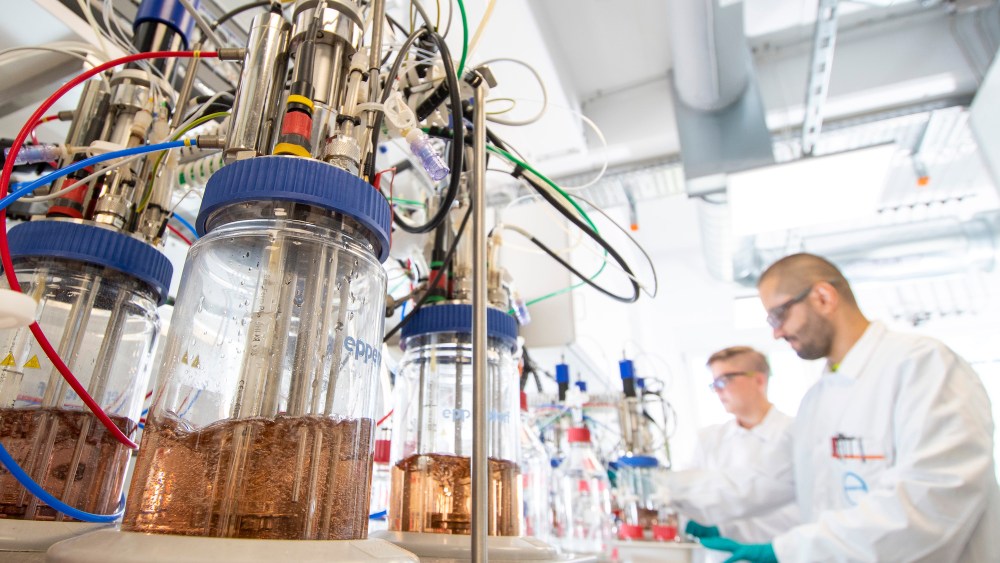
The company announced the launch of Bio4PURConti, an EU-funded project that aims to reduce the carbon footprint of aniline production by developing the world’s first continuous production process for bio-based aniline.
Covestro is one world’s leading aniline producers with a production capacity of over one million tons per year. However, the company reports that fossil fuel-based aniline production generates approximately 20 million tonnes of CO₂ emissions annually worldwide.
To reduce the carbon footprint of aniline production, Covestro said it uses a tailored microorganism that converts industrial sugars from plant-based biomass into an intermediate product through fermentation. In a second step, chemical catalysis converts this intermediate into aniline with 100 percent plant-based carbon.
Bio4PURConti has the potential to push this step further by replacing the fed-batch method used so far, in which raw materials are added and product harvested in stages with plant-based sugars. This move ensures a renewable feedstock pathway, resulting in bio-based aniline that is drop-in compatible with existing polyurethane value chains.
“Bio4PURConti is a landmark project—not just for Covestro or the aniline market, but for the entire field of industrial biotechnology,” said Dr. Markus Dugal, Covestro’s head of process technology. “Demonstrating continuous fermentation at semi-industrial scale for a high-volume raw material like aniline will set a new benchmark for what biotech processes can achieve in the chemical industry. Biology and engineering, when combined at scale, can fundamentally reshape how we produce the materials the world depends on.”
The total budget for Bio4PURConti is 8.4 million euros ($9.7 million), with 7 million euros in EU funding. The project will run for 42 months with the support of the 10 partners spanning seven countries.
While Bio4PURConti’s goal is to reduce aniline’s carbon footprint, the substance has a complex legacy in indigo dyeing production. The U.S. Environmental Protection Agency classifies aniline as a Group B2, or probable human carcinogen, which means there is sufficient evidence that it causes cancer in laboratory animals, but inadequate or no human data to prove it definitively causes cancer in people. It can also pose other health risks like skin allergies, headaches, dizziness and increased heart rate.
In 2018, Archroma introduced aniline-free indigo dye, which has been adopted by Advance Denim and G-Star Raw. In 2021, Bluesign tighter restrictions on the substance, making aniline-reduced indigo is a requirement for Bluesign-approved indigo types.