
The Trump administration promised an American “manufacturing boom” on the back of its protectionist trade agenda, underpinned by hefty tariffs.
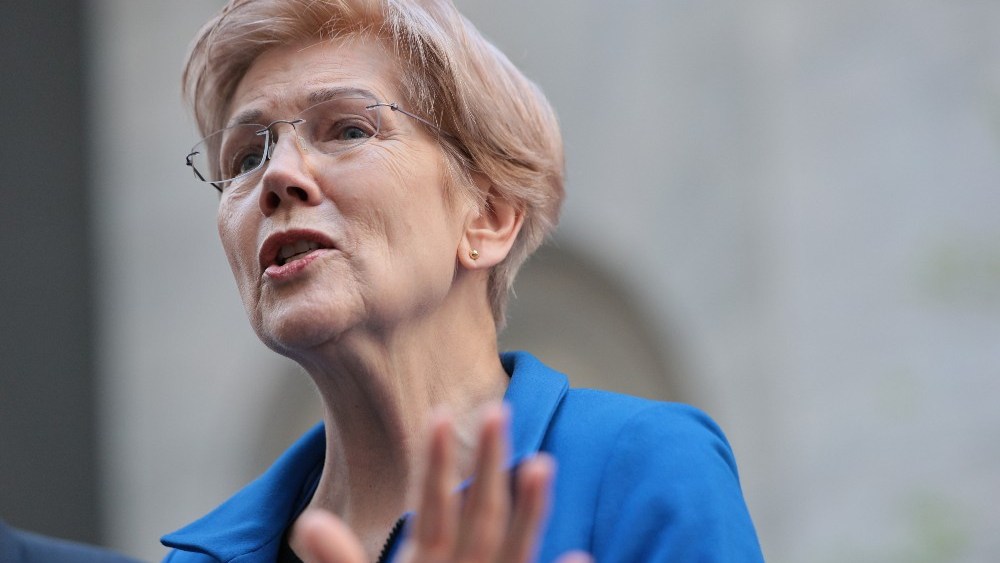
It hasn’t delivered, according to Democratic lawmakers. In fact, since President Donald Trump delivered his “Liberation Day” announcement of double-digit duty increases on dozens of United States trading partners, “manufacturing jobs have disappeared,” according to a letter penned by U.S. Senator Elizabeth Warren (D-Mass.) and Mark Kelly (D-Ariz.).
Nearly 100,000 jobs across production sectors in the U.S. have evaporated over the course of the past year, the lawmakers wrote in a missive to the president, Commerce Secretary Howard Lutnick, Treasury Secretary Scott Bessent and U.S. Trade Representative Ambassador Jamieson Greer on Monday.
“President Trump promised us that his chaotic, across-the-board tariffs—paid for by Americans—would yield a ‘manufacturing boom’…But no ‘boom’ has materialized—in fact, during President Trump’s term, the ‘blue-collar jobs boom’ has been a blue-collar bust,” they wrote in a letter delivered to the Commander in Chief and his cabinet members.
In addition to driving down manufacturing jobs in the U.S., the administration’s tariff policies have led to a steady decline in construction within the sector. The ongoing conflict in the Middle East, which has tied up freight in the Strait of Hormuz and frazzled supply chains globally, has further delayed efforts to build infrastructure that would support the sector’s growth, the senators argued.
“The U.S. manufacturing sector is now spending ten percent less on construction than it was in 2024,” the letter read. It pointed to research from ABC that showed about one-quarter of contractors had a project delayed or canceled because of tariffs, creating a “no-hire environment.”
While the administration marched to a familiar drumbeat throughout 2025, saying repeatedly that foreign companies would “eat” the cost of the duties and that importers would absorb the costs, research has shown that the average American family paid over $1,700 in tariff costs, amounting to $231 billion in total tariff costs between February 2025 and January 2026.
The key tenet of the administration’s trade policy—duties—was also designed to drive down America’s trade deficit with the rest of the world, but that hasn’t happened, either, Sens. Warren and Kelly asserted.
“The U.S. has increased imports of manufactured goods by 4.3 percent over the past year, and despite the tariffs, the trade deficit specifically for manufactured goods was about 4 percent higher in 2025 than it was in 2024,” they wrote. “This set of facts reveals the truth: that President Trump’s disastrous trade and economic policies have hurt American manufacturing, breaking the President’s promises to workers and the public.”
The lawmakers laid out a set of questions for the administration, asking it to explain the ballooning trade deficit and to provide evidence of increased manufacturing investments by July 6.
“President Trump has claimed that he has secured ‘around $18 trillion’ in new investments during this presidency. However, the White House’s tracker of investments shows a total of just $10.5 trillion as of March 18, 2026,” they wrote, asking for an accurate assessment of the estimate and a full list of new investments the administration is counting within that estimate.
Aggressive detractors of Trump’s tariff strategy, the letter penned by Sens. Warren and Kelly may go unanswered. But the questions they raised are ones that more consumers and importers are raising as the administration attempts to rebuild its tariff strategy following the Supreme Court’s strike-down of the International Emergency Economic Powers Act tariffs in February.
The government’s own data from April revealed the marked impacts tariffs have had on consumers. The Federal Reserve wrote in a report that tariff-driven costs were subject to a “full pass-through” to consumers via inflated prices.
“We find strong evidence that tariff changes in 2025 have raised core goods prices. Under our baseline estimates, tariff changes through November 2025 raised core goods PCE prices cumulatively by 3.1 percent through February 2026, explaining the entirety of excess inflation in the core goods category relative to pre-pandemic inflation rates and boosting core PCE prices as a whole by 0.8 percent,” it wrote. “We also estimate that pass-through from the 2025 tariffs is effectively complete.”