PARIS — Menswear in department stores is undergoing a structural reset, as casualwear rises, luxury loses share and retailers turn to experiences, accessories and sports to drive growth.
That is according to data from the International Association of Department Stores, an organization of department stores across 28 countries, representing more than 40.5 billion euros in annual turnover through more than 549 stores worldwide.
Menswear remained resilient in 2024, accounting for an average of 17 percent of total turnover, up from 16 percent a year earlier. Online sales also continued to grow, rising from 17 to 19 percent of menswear turnover. However, the category’s performers are changing rapidly.
The most significant change is the rise of casualwear, which represents around 70 percent of menswear sales on average. On a like-for-like basis, casualwear increased from 58 percent in 2023 to 74 percent in 2024.
You May Also Like
Occasion wear has halved to 10 percent of sales, while workwear has fallen to just 4 percent, down from 9 percent during the same time period. Athleisure, once considered a post-pandemic trend, continued its trajectory, growing from 5 to 7 percent. It’s increasingly viewed by retailers as a durable category in men’s wardrobes.
More formal attire, however, is not disappearing entirely, with several department stores reporting they are reframing tailoring as “smart business attire” rather than everyday officewear.
In the U.S., Bloomingdale’s reported a rebound in tailored clothing linked to increased office attendance. Bespoke suits are also expected to regain traction, notably in Mexico and Germany, indicating a two-tier wardrobe of casual on one end and formal on the other.
The shift is also evidenced by what is moving at various price points. While luxury is slumping overall, the share of luxury brands in menswear declined from 32 to 25 percent, while high-street labels fell from 35 to 30 percent.
At the same time, premium and entry-level segments expanded significantly, rising from 33 to 45 percent, pointing to a growing appetite for “accessible luxury” as global economic headwinds shake consumer confidence.
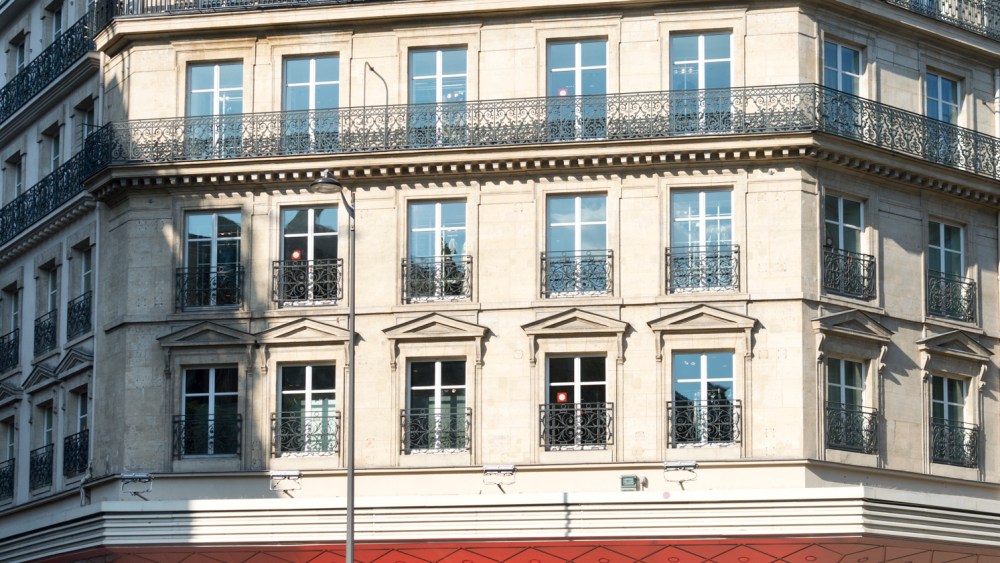
To offset slower sales, department stores are increasingly investing in experiences designed to increase dwell time and customer engagement. In Paris, Galeries Lafayette Haussmann transformed its rooftop into a French Open fan zone in partnership with Lacoste, for example.
Elsewhere, Breuninger experimented with hospitality through an Ami Paris café in Munich, and Magasin du Nord staged off-site activations such as a hosting a basketball court in Copenhagen.
These types of activations meld perfectly with the growing reliance on sports as a key growth category.
Sports and athleisure brands are increasingly spearheading community-led activities such as running clubs and yoga sessions, and have shifted from supporting categories to primary growth engines, reshaping men’s floors as department stores use performance brands to recruit younger customers and drive footfall.