After years of trend reports shaped by dominant silhouettes and headline-making ideas, spring 2027 marked a different kind of season. The trends were still there, but they felt less like definitive declarations and more like adjustments.
Across Pitti Uomo, Milan and Paris, what stood out was a wardrobe responding more directly to heat, movement and how men are actually dressing today. Rather than one defining look, the season was built around a series of shifts taking place that are reshaping the modern men’s wardrobe.

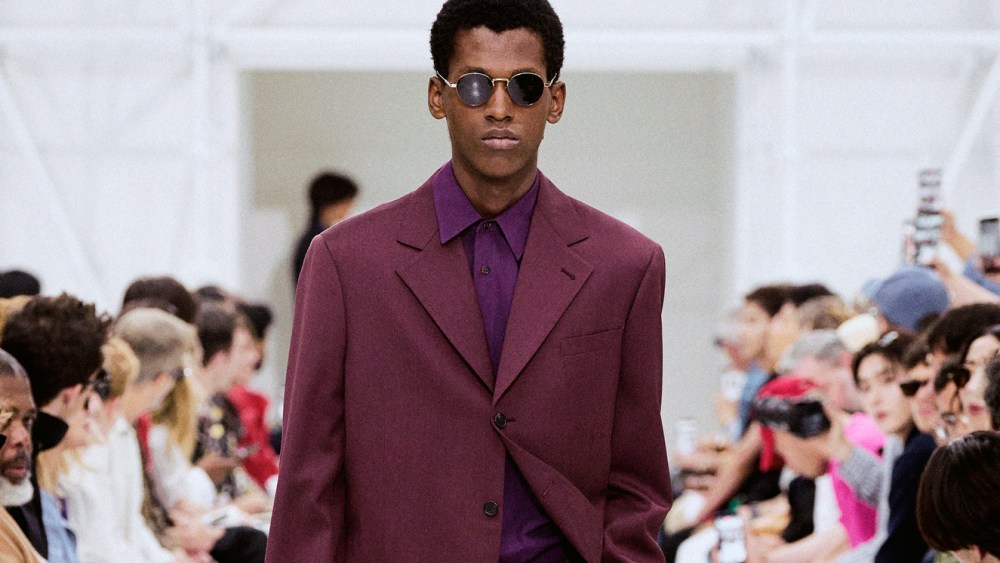
Tailoring was still the reference point, but it has shifted from what was once relaxed to a soft precision. Jackets sit closer to the body but feel lighter and often longer, shoulders are natural. The conversation is now about weight and construction rather than scale. Alongside that came the first real move away from oversized proportions that have dominated recent seasons. A slimmer silhouette is quietly returning, with trousers narrowing and jackets following the body rather than floating around it. At the furthest end of that shift, Prada even reintroduced early 2000s skinny jeans, suggesting fashion may finally be ready to revisit one of the decade’s most divisive silhouettes.
You May Also Like
Fabrics did the heavy lifting. Linen was no longer treated as vacation fabric but is now part of the tailoring conversation. The same goes for open-weave wool and sheer layers that remove heaviness without removing structure. It felt less like formality returning and more like formality being recalibrated.

Color was no longer used as a single seasonal statement. It appeared in combinations rather than as a defining theme. Washed blues sat with black or white. Earth tones were used next to softer sorbet shades, like pale lemon or pistachio. These tones were rarely used to define a look but to change it. What mattered was not the palette itself but how colors sat against each other and changed the reading of a silhouette. Sorbet shades were ubiquitous, but again, the combination was key.
Transparency has moved from detail to language. Sheer shirts, open knits and light technical fabrics were being used less for effect and more for function in the heat. Clothing felt less blocked, more open, even when it is tailored.


Within that, Michael Rider at Celine reinforced how pieces are put together rather than individual silhouettes. The focus was on control without over-styling. A neutral base was often interrupted by one sharper element, usually coming through footwear or sport references. Sneakers sat inside the outfit rather than outside it. The Reebok collaboration reinforced that logic, where athletic and tailored pieces belonged to the same look without needing separation.
From there, athletic dressing expanded into something more normalized. It was no longer a reference point but a core part of the wardrobe. The key change was how it was combined with tailoring. Shorts with shirting. Technical fabrics under structured jackets. Pieces that once belonged to separate categories now sat together without needing justification.

Y2K was part of this, but not in a nostalgic way. It was more specific. Early 2000s off-duty dressing kept resurfacing through social imagery. Paparazzi pictures of Madonna from that period feel current again. Not because of styling tricks, but because of attitude. Nylon, fitted basics, graphic T-shirts, sports socks and sneakers were all combined without hierarchy.
Predictable Riviera dressing continued to sit underneath much of this, especially in Milan and Pitti Uomo. But it felt less thematic than before. It was not costume Mediterranean dressing but everyday ease. Lightweight tailoring, open shirts, soft trousers and leather sandals now operated as part of a broader system rather than a seasonal idea. The Riviera is no longer a place; it’s a temperature.

Dries Van Noten sat naturally within this shift, particularly in the way color and texture were handled. There was a continued sensitivity to tone and fabric where print and softness were used with restraint rather than excess. It reflected a broader move toward menswear that felt expressive and romantic.
Across all of this there was a clearer change in menswear sensibility. Masculinity is not being softened or corrected. It is becoming more fluent. There is less need to define strength through structure or seriousness. It is expressed through ease, through how easily different codes sit together. Tailoring, sportswear and street references are no longer separate categories. They are simply tools used within the same wardrobe.
Fashion’s response to rising temperatures has produced a wardrobe that is more practical, more fluid and arguably more elegant. If there is one unexpected upside to dressing in an era of extreme heat, this may be it: Elegance is back, but a relaxed one. Dress appropriately.