
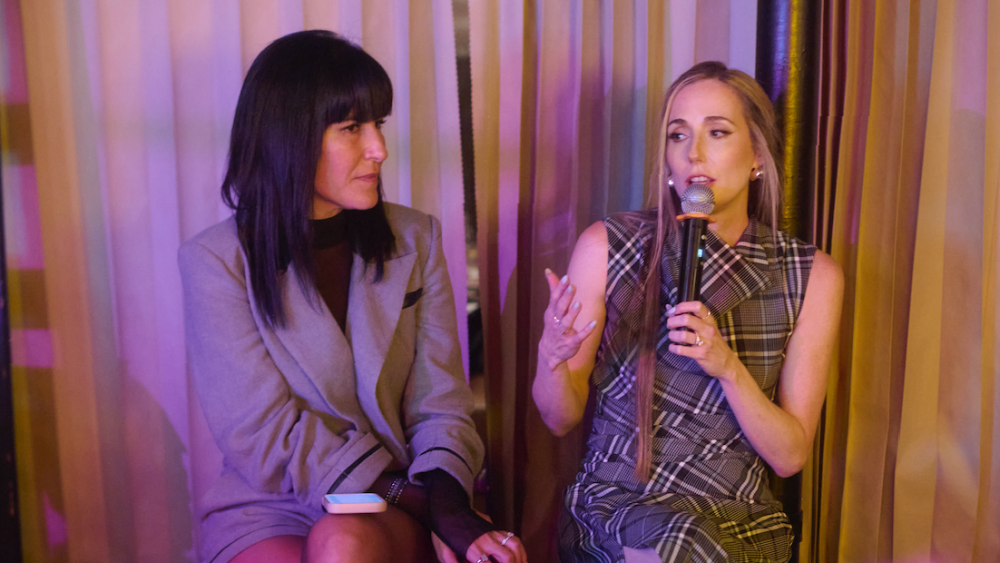
Last Thursday, Fashion Forward gathered an influential cohort of industry pioneers on Manhattan’s Upper West Side for its second intimate New York dinner. The event was co-hosted by Jordana Guimaraes and Christopher Hunt for Fashion Forward, Jennifer Lasko and Timothy Cummings, founders of The Lasko Company, and the Founding Voices of Fashion Forward. The evening provided a private forum for industry leaders across fashion, media, retail and technology to share insights, ideas and solutions relevant to the industry.
Set in the enclosed private patio of Joanne Trattoria, the Upper West Side venue owned by Lady Gaga’s family, the gathering combined warm hospitality and creative heritage with forward-looking industry dialogue.
Departing from standard panel formats, the event fostered an open, candid exchange around the dinner table. Following opening remarks by Hunt, the dialogue began with an intimate interview with Lasko and Guimaraes before expanding to the room. Guests engaged in a multi-faceted exploration of how emerging technology is transforming modern business, debating critical topics such as AI-generated advertising, digital replicas, synthetic models, likeness ownership and the legislative impacts of the Fashion Workers Act.
During the Q&A, Lasko said the company was founded in 2024 to solve critical labor and liability challenges in content creation. Lasko’s firm launched to provide workers’ compensation solutions for independent contractors and W-2 workers alike. Over time, the company expanded its mandate to help brands navigate legal and operational hurdles as regulations evolved alongside technological innovation.
Lasko said modern fashion and advertising brands must balance innovation with worker protection. “Simply put: The Lasko Company helps reduce legal and financial risk for companies that use human and AI-generated talent in advertising and content creation,” she said.
The conversation then shifted to the disruptive impact of artificial intelligence and digital replicas on traditional content creation models. Lasko outlined the complex realities fashion companies face when choosing between human models, digital likenesses and fully synthetic performers. She noted that cost-saving technologies come with significant brand and legal risks.
She pointed to shifting legislation—such as the New York Fashion Worker Act and recent synthetic performer laws—that holds brands accountable for digital consent, disclosure, and third-party vendor actions. Emphasizing the operational risks inherent in this multi-tiered system, Lasko warned that “outsourcing the work does not mean you can outsource your legal obligations.”
Looking toward the future, Lasko urged industry leaders to adapt their operational workflows immediately to maintain consumer trust and ensure strict regulatory adherence. Compliance rules carry long-term financial exposures—including a six-year complaint window under New York law. Companies must establish clear ownership, budget for talent compliance and maintain detailed audit trails across the entire life cycle of their creative assets.
In closing the session, Lasko said regulatory responsibility should be viewed as an opportunity to strengthen the industry rather than a burden, offering a forward-looking vision. “Creativity, innovation and responsibility can go hand in hand,” she said.
The discussion then moved to the dinner tables, underscoring the urgency of commercial strategies keeping pace as artificial intelligence accelerates faster than current regulatory frameworks.
The attendee list featured top executives and creative visionaries from across the global fashion and media ecosystem. Participants included Liz Bacelar, transformation officer at Steve Madden; Matt Kaden, co-CEO of Billionaire Boys Club and IceCream; Luisa Herrera Garcia, senior vice president at Alexander Wang; Justin Newlin, director at PVH; Karin Satrom, creative director at The Metropolitan Opera; and Timo Weiland, investor and co-founder of The Lead. Also present were Laurie Mucciolo of Kirna Zabete, Leonardo Lawson of Bond Creative Mgmt, Bridgett Artise, founder of Sustainable Fashion Week, designer Ron Ramos and Erika de la Cruz of EDLC Media.
Key strategic partnerships made the gathering possible and elevated both the execution and ethos of the evening. Global brand strategy and communications firm Gab Inc., founded by Fashion Forward founding advisor Gabby Gabriel, served as the producing partner, driving the event’s positioning and execution. As hospitality partner, Joanne Trattoria offered its signature blend of intimate dining and artistic legacy.
The evening reinforced Fashion Forward’s ongoing mission: curating trusted, cross-disciplinary spaces where leaders can address the technological, legislative and cultural shifts defining the future of fashion.


