It was a thrilling — and sometimes bruising year — to be a creative director.
Chanel, Dior, Gucci, Balenciaga, Celine, Loewe, Givenchy, Versace, Maison Margiela, Fendi, Tom Ford, Jil Sander, Bottega Veneta, Dries Van Noten, Balmain, Blumarine, Marni, Proenza Schouler, Alberta Ferretti, Carven, Mugler, Jean Paul Gaultier, Lanvin and Fforme were among the brands that recruited new designers over the past year — amid a sluggish market for fashion and luxury.
In addition, Hermès and Christian Louboutin tapped new talents for their men’s universe: Grace Wales Bonner and Jaden Smith respectively.
In some cases the changes were sudden and unexpected, with new Versace recruit Dario Vitale ousted after only one show and only two days after Prada Group finalized its acquisition of the Italian house, and Olivier Rousteing replaced at Balmain after an acclaimed 14-year tenure and amid the brand’s 80th anniversary celebrations that had him often in the spotlight.
You May Also Like
To be sure, the flurry of changes unseated some of the longest-serving creative directors in the industry, first and foremost Véronique Nichanian, who is to present her final collection for Hermès in January after leading its menswear design for 37 years.
Jonathan Anderson moved over from Loewe after an 11-year tenure to Dior, where he succeeded Maria Grazia Chiuri, who spent nine years creating women’s collections and couture at Dior, and Kim Jones, who had logged seven years in the men’s department. Chiuri in turn succeeded Jones at Fendi, where he had stepped down after a four-year collaboration.

Electrifying Shows — but Will Sales Follow?
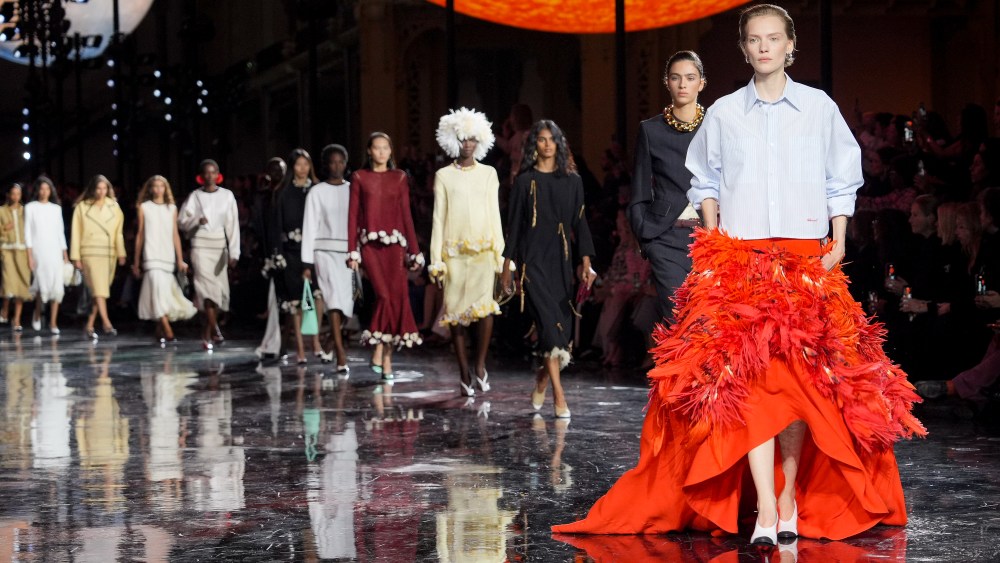
It made for some electrifying fashion weeks, particularly the most recent one in Paris where no fewer than eight brands staged their first runway shows for women’s ready-to-wear collections under new designers. In total, there were 15 designer debuts for spring 2026, drawing more eyeballs than ever to fashion month.
In the court of public opinion, including press and retailers, most of the debuts that have already taken place received largely positive reviews, though the litmus test will be once the new designs land in stores early next year.
“We should expect therefore a Darwinian selection, with winners and losers down the road,” said Luca Solca at Bernstein, among the luxury analysts who are increasingly weighing in on creative changes and their repercussions at luxury brands. “One thing is to change designer. Another thing is to be successful.”
In Solca’s view, Europe’s luxury houses in particular are eager to reignite consumer interest with new designers, new products and new ideas after painting themselves into a corner with high prices.
“This is bound to increase competition among brands, as they are all trying to do the same thing at the same time,” he said.
“Luxury is in a moment of crisis,” agreed Achim Berg, founder of FashionSights, a luxury advisory and think tank in Hamburg. He cited a challenging macroeconomic backdrop, weak consumer sentiment, and “a set of structural, partly self-inflicted industry issues” that have spooked so-called aspirational buyers in particular.
“The industry is confronting its own mistakes, from overpricing to overexpansion. Nearly every major brand now feels the need for creative renewal,” he told WWD. “Streetwear, already losing momentum pre-2020, was artificially prolonged by the pandemic’s appetite for casual dressing. When that subsided, quiet luxury never achieved the same pull, nor could it anchor broad, fashion-forward trends.

“Against this backdrop, creative changes have accelerated,” he explained. “Brands see the downturn as an opportunity, even a necessity, to reposition themselves creatively and strategically — hence the intense game of musical chairs.”
Playing It Safe
Surveying the spring 2026 collections, the debut season for a host of new creative directors, Berg didn’t spy many compelling new directions.
He said most designers opted for “conservative approaches, leaning on archival references, styling concepts, heritage, craft and their house codes. This is understandable, but it will not be sufficient on its own.
“What the industry still lacks is a broader fashion narrative with enough newness and cultural relevance to lift the entire sector,” he argued. “A compelling, directional theme could reignite consumer excitement and bring audiences back to fashion and luxury in a more meaningful way.”
In his estimation, “even the strongest creative shift will struggle without a supportive macroeconomic backdrop….For that reason, I expect the luxury downturn to begin easing no earlier than the second half of 2026.”
To be sure, “creative director appointments dominated fashion conversations in 2025,” according to data firm Launchmetrics, which detected major spikes in media impact value, or MIV, across key luxury houses. Launchmetrics’ proprietary MIV figure tallies the impact of relevant media placements online, on social and in print, inclusive of paid, owned and earned mediums.
Demna’s appointment at Gucci generated $15.1 million in MIV within one week, representing more than a third of all Gucci-related conversations during that period. Similarly, Matthieu Blazy’s announcement at Chanel produced $13.4 million in MIV, followed by Anderson’s appointment at Dior with $13 million, according to Launchmetrics.
Celebrity creative directors also sent the media into a frenzy, with Smith’s appointment generating $5.4 million in MIV within 48 hours. Ditto for A$AP Rocky’s announcement for Ray-Ban, yielding $2.3 million in MIV.
The debut shows for the spring 2026 also garnered high visibility. At Dior, Anderson’s debut drove one-third of the brand’s total MIV, with conversations on Anderson alone generating more impact than 95 percent of shows on the Paris Fashion Week schedule, Launchmetrics said.

Meanwhile, Blazy’s mentions accounted for 46 percent of Chanel’s total MIV.
Fashion search engine Tagwalk registered 27 million page views between Sept. 11 and Oct. 14, representing a 28 percent increase over the fall 2025 season.
Hitting the High Street
The year’s dizzying number of changes at Europe’s big luxury houses fueled an obsession with creative directors on social media, rife with memes about who’s getting hired and fired — or should be.
High-street chains, retailers and specialty fashion brands are also getting swept up in the fray, with many naming their first creative director over the past year in a bid to burnish their style credentials, ramp up storytelling and forge a stronger vision of the brand image and communications.
Mathias Ohrel, founder of m-O, a Paris-based recruitment firm in the luxury sector, said elevating the product and the content is what drives brands to recruit their first creative director.

Among those that have taken the plunge are Iro, Ray-Ban, Seven For All Mankind, Maison Kitsuné, Eddie Bauer, Etam, ThreadBeast, Mithridate, La Martina, Begg x Co, Harvey Nichols, EBIT, John Fleuvog Shoes, Shinola and Russell & Bromley.
Karen Harvey, chief executive officer of Karen Harvey Consulting, is bullish on high-street brands adding creative directors.
“The only way for a high-street brand to evolve, when you have a solid business and good retail and merchandising strategy, is to inject creativity and give brands the important creative DNA and foundation they may be lacking,” she said, noting that the task is “almost the opposite of stepping into a historical house with brand codes.”
“You have to find the brand codes, put them in place and build on them,” she said. “I have a strong personal belief that many well-made high-street brands making great product — if they’re leaning into retail and updating creativity across all platforms — have an opportunity to emerge as bigger global brands. But you have to give them meaning.”