For many who are caught in, recovering from or trying to avoid the next heatwave, their prayers for rain might well be answered.
And then some.
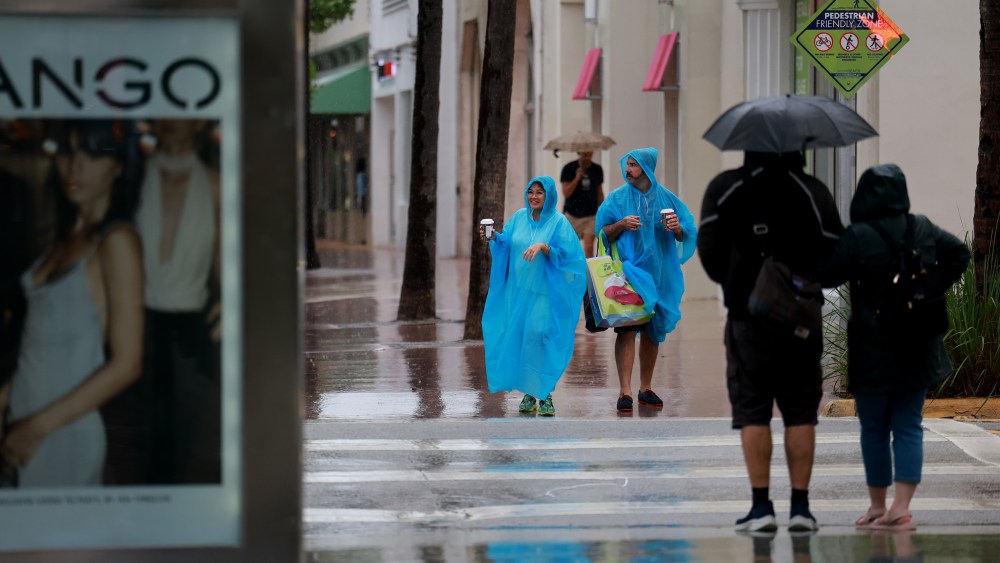
The super hot temperatures in the U.S. and Europe this summer are expected to give way to the strongest El Niño cycle in 149 years, threatening cooler and wetter weather in the southern half of the United States, perhaps in time for back-to-school.
El Niños roll in periodically and last nine to 12 months as Pacific trade winds weaken and push warm water back toward the West Coast, coaxing the jet stream lower.
You May Also Like
TD Cowen analysts hosted Bill Kirk, chief executive officer of Weather Trends International, for a recent weather update, translating what the almanac says for retail sales.
“Back-to-school should be less favorable in August and better mid-September to mid-October,” the Cowen analysts said in a research note, seeing a “mixed” outlook for apparel. “The El Niño will result in a wet, but not snowy, fall and winter. It is expected to peak around December and last until next fall.”
While the weather pattern suggests fewer major hurricanes in the Atlantic — one this year versus four last year — the overall impact will depend on the region.
“WTI is forecasting for Black Friday to be warmer and drier for middle America, but the East Coast is still expected to be stormy,” Cowen said. “Also, WTI forecasts cooler weather leading up to Black Friday, which should benefit seasonal sales at higher margin.
“Warmer conditions in Q3 are a slight headwind for seasonal sales. Precipitation is expected to be 31 percent wetter year-over-year, a tailwind for consumables … Based on a warmer August, but cooler September-October, we expect a delay in back-to-school apparel spend into the fall season vs. August. A colder fall season, however, should bode well for the winter season, especially on sweaters and outerwear.”
But the weather, of course, is fickle.
And while it’s easy enough for people to deal with the uncertainty by wearing a rain jacket or bringing an umbrella, it’s harder to handle with a global supply chain and a fleet of stores to be stocked.
Evan Gold, executive vice president of global partnerships and alliances at the weather-oriented Planalytics, said no two El Niño weather systems are the same.
“The influence is very uneven,” Gold said. “There’s very inconsistent regional patterns. This is really supposed to peak up in the fall and the winter.”
Gold forecast the northern half of the U.S. would be drier and warmer, while it will be wetter and colder than usual down south.
However, some consumers are more sensitive to changes in the mercury.
“Smaller changes in weather have larger changes in demand,” he said. “We see that in the Southeast. When you get into September, October, November, December, the Southeast is anywhere from 25 percent to 50 percent more weather sensitive than the national average. That means smaller changes in weather are going to drive larger changes in demand. It doesn’t mean that it’s going to be colder in Orlando than it will be in Chicago. It just means for somebody to go buy fleece, it doesn’t have to get that cold.”
Some retailers will have to order accordingly or, if they have the logistics system to do it, warehouse goods and be ready to send them where they’re needed most as the rain clouds gather.
“You get these inconsistent, highly changeable weather patterns,” Gold said. “So you get less predictable bursts in demand and really choppier performance.”
Must-haves, like gloves during an early freeze, will get snatched up.
“It definitely does depend on the product, but in general, we see it every time you get the extremes — people will go out and buy it whether they’re replacing something they already have or they’re buying for somebody new in their family,” Gold said.