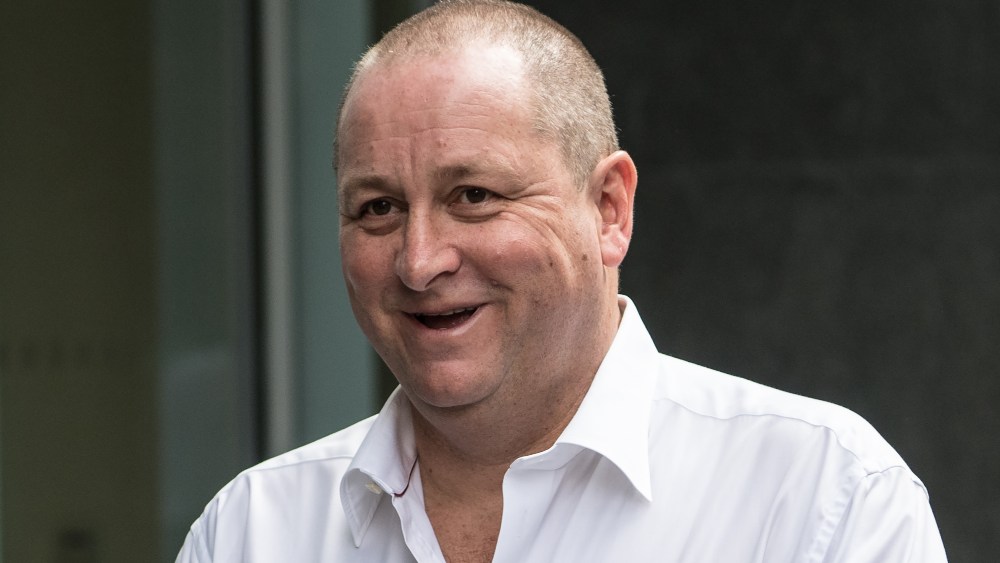
LONDON — Frasers Group on Thursday officially acquired the loss-making Harvey Nichols out of administration, gaining control of the 193‑year‑old luxury department store chain from Hong Kong businessman Dickson Poon.
The sale was facilitated by FTI Consulting LLP as administrator to Harvey Nichols. Financial terms were not disclosed, but Ashley had told The Financial Times that he wouldn’t pay more than 40 million pounds for an asset that he believes is in a “death spiral.”
The deal includes the Knightsbridge flagship, stores in Manchester, Birmingham, Bristol, Leeds and Edinburgh, together with the group’s online operation, existing inventory and international franchise agreements.
You May Also Like
Franchise stores in markets including Hong Kong, Dubai, Riyadh, Kuwait and Doha will continue trading under existing licensing arrangements.
Certain assets of the Dublin store, such as stock and fixtures, have also been acquired. Frasers said discussions over the future of that business are ongoing, and that it will continue to support trading at the site for now.
Frasers and Harvey Nichols said all of the U.K. stores acquired will continue to trade “until further notice.”
Frasers acknowledged that Harvey Nichols has faced “sustained trading and operational challenges” in recent years, and signaled that a significant shake‑up is coming.
“Significant restructuring and integration of Harvey Nichols into the Frasers Group ecosystem will be required to create a sustainable business for the future, including a review and rationalization of the store portfolio, organizational structure, operating model and cost base,” the company said.
Michael Murray, chief executive officer of Frasers Group, described Harvey Nichols as “an iconic British institution with significant potential,” but said “meaningful change is needed.”
“The turnaround will require tough choices, and we are prepared to make those decisions, even if that means a smaller business in the near term, to create a stronger and more sustainable Harvey Nichols for the long term,” he said.
“By integrating Harvey Nichols into our existing luxury ecosystem, we believe Frasers Group can deliver the expertise, infrastructure and commitment needed to give the business the best chance of long‑term success,” Murray added.
Harvey Nichols CEO Julia Goddard called the sale “an important milestone” as it provides a platform for the next phase of the business’s evolution under the ownership of Frasers Group.
“Over the past year, we have made significant progress in repositioning this iconic business, investing in our flagship store, broadening our customer proposition and strengthening the brand DNA,” she said, adding that she looks forward to working with Frasers to drive “sustainable growth through greater operational efficiency and enhanced infrastructure.”

The companies did not give specific numbers on job cuts or store closures, beyond confirming that more than 1,000 employees are transferring as part of the deal. It has been reported that all the jobs in Harvey Nichols’ London head office will be kept for at least another year.
Both sides stressed that they are “committed to supporting their brand partners and maintaining these strong relationships throughout this transition,” and will work together “to reshape the business and create a more commercially sustainable future.”
One big uncertainty of the deal lies in the future of the Knightsbridge flagship, the lease of which is understood to have just five years left to run. The freehold is owned by Cadogan, the major landlord in Chelsea and Knightsbridge.
Cadogan has declined to comment on its plans for the building, leaving prospective buyers with limited visibility over whether they can secure a lease extension, pursue a redevelopment partnership, or potentially relocate the flagship in the medium term.
Ashley has already indicated that he wants to keep the London and Edinburgh sites intact and will review options for repositioning some of the other U.K. stores into House of Fraser or Flannels, which he also owns.

The Harvey Nichols deal deepens Frasers’ push into the premium and luxury space, with businesses such as Flannels, The Webster and Hulcan’s Mile, which operates the relaunch of Matchesfashion, and its stakes in Hugo Boss, Mulberry and Burberry.
How Frasers handles Harvey Nichols will be closely watched by landlords, creditors and luxury brands alike. Ashley has a long track record of buying distressed retailers through processes that allow him to shed debt and unwanted leases, then cutting costs and consolidating assets into the group.
Industry observers say Harvey Nichols may need a more delicate approach. The Knightsbridge flagship is seen as a trophy asset and the Harvey Nichols name carries weight with global luxury houses, the very partners Frasers is eager to court. Treating the business as just another distressed acquisition could undermine that effort.
People close to the situation told WWD earlier that unlike how it handled Matchesfashion, the group sees Harvey Nichols as a chance to demonstrate it can be a responsible, long‑term steward of a luxury name.

Poon paid 53 million pounds for Harvey Nichols in 1991 through his company Dickson Concepts International, and quickly began rolling out stores across the U.K. A few years later, he floated the retailer on the London Stock Exchange only to take it back into private hands in 2003, citing macroeconomic pressures.
In the first decade of his ownership, he invested heavily in updating the London flagship with new departments, such as restaurants and a food hall, and services and tapped into the growing British demand for fashion, beauty and fine foods. The store — known affectionately as “Harvey Nicks” — became a household name on both sides of the Atlantic following the success of the BBC TV comedy series “Absolutely Fabulous.”
The show starred Jennifer Saunders and Joanna Lumley as two hard-partying fashionistas, one a PR, the other a glossy magazine editor, who chugged Bollinger Champagne, known as “Bolly,” and regularly nipped to Harvey Nicks to buy their high-end designer duds.
Over the years the store built a reputation as a beauty powerhouse under Daniela Rinaldi, who rose to become co-chief operating officer before leaving the company in 2019.
But like most fashion retailers, Harvey Nichols has had its ups and downs, and was most recently hit hard by the cancellation of tax-free shopping in the U.K., flagging demand for luxury goods and competition from Harrods and Selfridges which, until now, have invested far more aggressively in their store estates.
According to the most recent filings on Companies House for the 52 weeks ended March 29, 2025, the group reported a 10 percent drop in sales to 184.8 million pounds from 204.9 million pounds, and a loss after tax of 48.7 million pounds, widening from 34.1 million pounds a year earlier.

Despite the financial strain, Goddard has been trying to engineer a turnaround at Harvey Nichols. She has overseen a three‑year, multimillion‑pound refurbishment of the Knightsbridge store aimed squarely at well‑heeled local customers, rather than relying on the international tourist trade that has been dented by the end of tax‑free shopping.
Phase one of the transformation, the “125” ground‑floor concept space named after the store’s Knightsbridge address, opened last fall with floor‑to‑ceiling windows onto Sloane Street, curated jewelry, homeware and gifts, and room for pop‑ups and a Kuro Coffee outpost.
The fourth floor has been recast as a wellness hub with a Pilates studio, aesthetics clinic, Healf’s first physical space and an athleisure offer, while the fifth floor is being reworked to house a new restaurant and hospitality spaces.
Goddard told WWD earlier this year that her ambition is to bring back the “glory days” of the 1990s and 2000s.