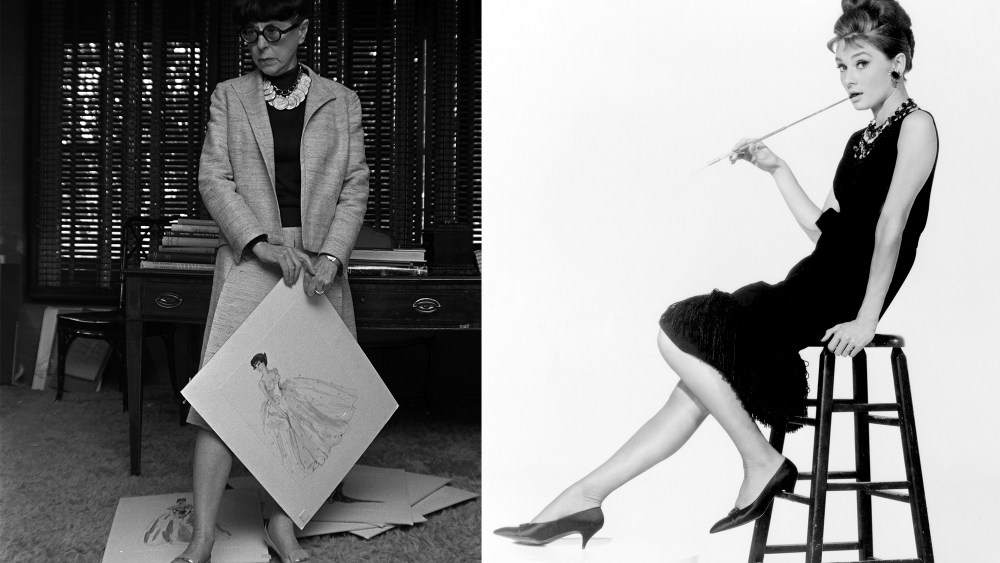
When legendary costume designer Edith Head shared her thoughts on fashion’s enduring impact on film with Women’s Wear Daily in 1975, she emphasized the critical role of costume design in storytelling. By then, Head had witnessed it all; except, as she noted, a naked male star. “We’re [costume designers] often merely reflecting the climate and the mood of the world around us,” she told WWD.
Every year, award season reignites conversations about the magic of cinema and fashion and this year is no different. It’s impossible to ignore the power of the partnership and cultural influence fashion has on and off the screen. Here a look back at moments of fashion’s enduring connection to film.
1920-1930s
You May Also Like
By the mid-1920s WWD was already “on the set,” documenting how cinema shaped fashion. In an interview with costume designer Clare West, she recalled director Cecil B. DeMille’s vivid instructions for his 1920s comedy-drama “Why Change Your Wife.”
“Make me a gown…which would set a man to caress the wearer one moment and make him want to kill her the next!” DeMille exclaimed. West delivered with a striking, black negligee worn by Gloria Swanson, creating one of fashion’s earliest “revenge” dress.
Going to the movie theater soon became a cultural cornerstone, bringing rapid fashion evolution to mainstream audiences. Designers Rene Huller and Howard Greer wardrobed starlets Clara Bow, Sandra Bernhardt, Josephine Baker, Poli Negri and Louise Brooks. Brooks’ iconic bob and Jean Patou-designed costumes in “Pandora’s Box” would be synonymous with 1920s chic, solidifying Brooks as the style icon of the era.

There were also fashion and costume designer Adrian’s groundbreaking creations for “The Wizard of Oz” and Travis Benton’s glamorous designs for stars Marlene Dietrich, Joan Crawford and Claudette Colbert that are iconic. In 1927, the first futuristic costumes magnified the visual storytelling of German sci-fi classic “Metropolis.” The costumes inspired generations of fashion designers, most notably Thierry Mugler, who recreated the films’ Robot character — as only he could — for his fall 1995 collection. Zendaya honored the designer by wearing the suit during her 2024 “Dune: Part Two” press tour.
1940-1950s
The Golden Age of Hollywood solidified celebrity style as a cultural force. Costume designer Edith Head, the most honored in film history, became a household name in this enduring era of film and fashion. Head assisted in shaping personas for stars Mae West, Dorothy Lamour and Ginger Rogers. Her creations from Audrey Hepburn’s iconic bateau neckline in “Sabrina” to Grace Kelly’s sophisticated looks in “To Catch a Thief” and later decades wardrobing Robert Redford and Paul Newman redefined classic elegance.

There was also Australian-American designer Orry-Kelly who elevated the glamour of Marilyn Monroe and Rosalind Russell’s fashion follies in “Auntie Mame,” and proved style is timeless when wardrobing Ingrid Bergman and Humphrey Bogart in “Casablanca.” Designer Helen Rose also created fashion moments on and off screen, designing Grace Kelly’s wedding gown, Elizabeth Taylor’s wardrobe in “Cat on a Hot Tin Roof” and Lena Horne’s looks in “Stormy Weather.”

Men’s style also shifted dramatically, with Marlon Brando, James Dean and Steve McQueen turning basics like T-shirt’s, jeans, khaki pants and bomber jackets into staple pieces that remain iconic across generations. The look recycled through the years, recently appearing on the runway at the Sacai spring 2025 show.
1960-1970s
The latter half of the 20th century reflected growing cultural and social diversity, with fashion in film leading the way in self-expression. WWD highlighted in its coverage films such as “Cabaret,” “Mahogany,” “Annie Hall” and “Barbarella,” where fashion and storytelling reflected the rich complexity of the times. Audrey Hepburn continued her reign, cementing her style legacy in “Breakfast at Tiffany’s.” Overseen by Head and designed by Hubert de Givenchy, her little black dress remains a testament to the collaboration between couture and cinema.

WWD’s “on the set” coverage inclusive of “Taxi Driver,” “Rosemary’s Baby,” and “Saturday Night Fever” captured inspiration across film genres, while Ralph Lauren’s wardrobe for Robert Redford in “The Great Gatsby” set new style benchmarks. And Anthea Sylbert’s costumes for 1974’s “Chinatown” starring Faye Dunaway and Jack Nicholson reflected era-defining moments in cinematic history.
1980-1990s
In the Gen-X era, fashion on film mirrored the socio-economic and political climate of the times, with ensembles reflecting fashion’s changing landscape. Beyond Scorsese’s impeccably tailored mafia suits, films addressed teen angst in “Risky Business,” “St. Elmo’s Fire,” “Heathers” and “Clueless” to the cultural expressions of “Poetic Justice” and “Boyz n the Hood.” Grunge, hip-hop and punk ushered in individual beauty and wearable styles — baggy jeans, cropped tops and flannel shirts — emerging from the streets that captivated iconic movie storylines, providing a rich tapestry of voices and perspectives.

In the same timeline, period dramas celebrated centuries-old elegance from “Interview With the Vampire” to “A Room With a View” and the 1988 classic “Dangerous Liaisons” paving the way for Sofia Coppola’s “Marie Antoinette” in 2006, which famously transformed the historical figure into a modern pop culture style icon.
2000s to now
The 2000s’ Y2K aesthetic saw the rise of past film-fashion influences. With nostalgia as an entry point, Wes Anderson’s “The Royal Tenenbaums” used fashion as a narrative tool. Gwyneth Paltrow’s fur coat and Ben Stiller’s Adidas tracksuit were no accident. Similarly, Tom Ford’s venture into filmmaking, “A Single Man,” infused fashion’s sublime chic minimalism, a reflection of the decade’s early sensibilities.

Now, more than ever, movies are attached to promoting fashion and product. The marketing of films “Barbie”, “Champions,” “Wicked” and “Marty Supreme” and them going viral months before their official release dates influence fashion trends and runway moments. A look back at the decades is proof that collaborations between directors, actors and costume designers synthesize the unbreakable bond between fashion and cinema. After all, even Superman has graced the runway more than once.