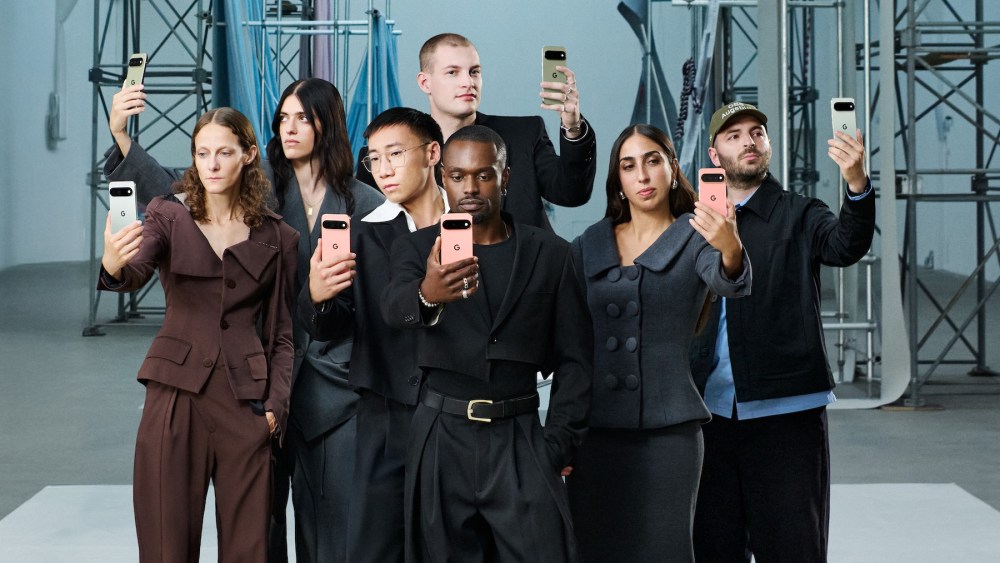
A cotton-canvas bag, a new mesh print and a dress inspired by a single flower are among the projects Google Pixel and Highsnobiety will present in Berlin as they close the first edition of their fashion and technology program.
The Nov. 12 showcase will feature work developed through the Pixel Institute of Fashion and Technology, or PIFT, which launched during Milan Design Week in April. The partners are planning a second edition in 2027 with a new cohort of designers.
PIFT gives independent designers access to Google Pixel phones and Google’s AI tools alongside mentorship and opportunities to present their work through Highsnobiety’s events. The first edition’s mentors included Girls in Blue Studio, photographer Campbell Addy and photographer and director Hugo Comte.
“We didn’t launch PIFT just to showcase what our technology can do; we built it to discover what happens when true creatives get their hands on it,” said Anne-Katrin Huebel, Google’s senior director of marketing for Germany, Austria and Switzerland. “Seeing this cohort turn Pixel and Gemini into daily collaborators sets an inspiring benchmark for how we continue supporting the future of fashion and design.”
The designers’ assignments are also the focus of a promotional campaign developed with Media Futures Group, part of WPP Media. The projects cover product development, collection research and marketing imagery, with participants using the technology at different stages of their existing practices.

At OBS, co-founder and managing director Matthias Schweizer developed a bag in heavy cotton canvas, using Gemini to move between digital sketches and physical samples, according to the organizers. Highsnobiety describes the project as the label’s first cotton-canvas bag, following a focus on leather bags.
Ottolinger co-founders Christa Bösch and Cosima Gadient designed a print for a mesh T-shirt using Gemini on their phones.
“We thought it would be faster or more random, but it turned into a real back-and-forth, almost like working with another designer in the studio,” Bösch and Gadient said.
Chet Lo started with shadows cast by blinds and the colors of 1980s anime. He used Gemini’s Deep Research to explore both for a capsule collection, according to Highsnobiety.
Lou de Bètoly used Pixel to create animated mannequin imagery for e-commerce and social media.
“It’s so nice to work with a small tool that is professional and fits in your pocket,” she said.
For Lukas Krob, founder of Krobos, the starting point was a single flower. He used its shape to develop a dress, testing different silhouettes digitally before deciding which prototype to pursue.
Krob said he was initially hesitant to introduce AI into a practice built around hands-on design. The project gave him a use for the technology in communicating work still in development.
“I still want to design myself, but using AI to visualize my ideas for my clients is super helpful,” he said.