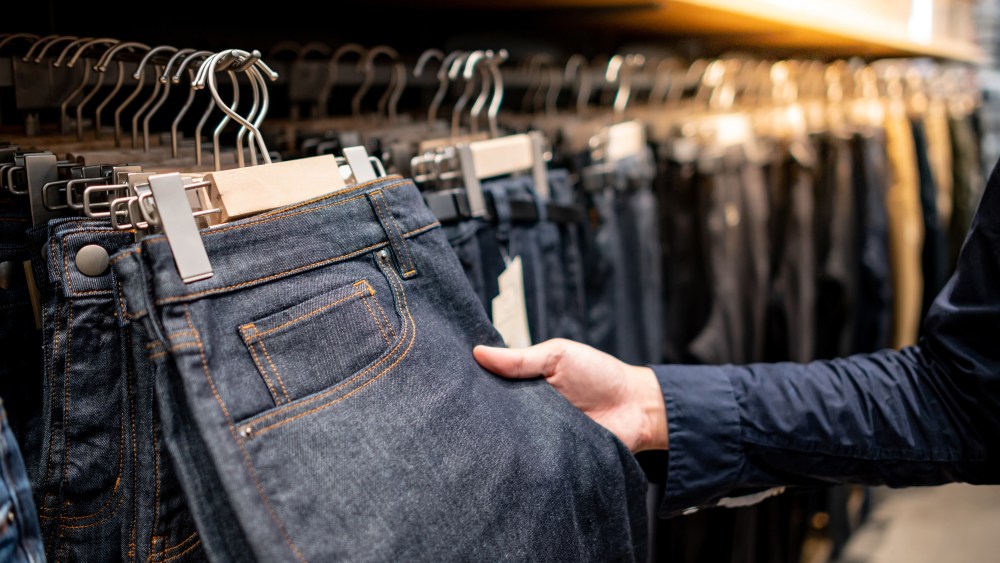
The Plastic Free Foundation has an initiative every July urging people to reduce plastic waste through simple, everyday choices. As it pertains to fashion, the action could be choosing plastic-free clothing, meaning apparel made without petroleum-based synthetics like polyester, which are actually a form of plastic. For denim wearers, the choice could be 100 percent cotton denim, which is now also available in plastic-free stretch.
Triarchy’s Adam Taubenfligel, co-founder, creative director and responsibility lead of the LA-based fashion brand, said creating plastic-free stretch denim “came down to one simple question: Why are we making products that are destined to outlive us by centuries?” So, he and his siblings, Mark and Ania Taubenfligel, created something different.
“In 2022, in partnership with Candiani, Triarchy introduced the world’s first plastic-free stretch denim, and it’s now the only stretch denim we use,” Taubenfligel told the Lifestyle Monitor™ in an interview. “Our plastic-free stretch replaces petroleum-based elastane with natural rubber, allowing the fabric to return to the earth at the end of its life. To demonstrate that, we shredded our plastic-free stretch jeans and used the shredded denim as compost in a pilot project with Quintosapore Farm in Italy. The compost grew tomatoes, which were then turned into tomato sauce and served at the Green Carpet Fashion Awards.
“For us, sustainability isn’t just about reducing impact while a product is being worn,” Taubenfligel said. “It’s about taking responsibility for what happens after.”
This stance meshes with the majority of U.S. denim consumers, as 68 percent say 100 percent cotton jeans are the healthiest to wear, and the most sustainable or environmentally friendly (64 percent) when compared to those made with a cotton/spandex blend or a blend of cotton and manmade fibers like polyester or rayon, according to Cotton Incorporated’s 2026 Lifestyle Monitor™ Survey of 470 respondents.

Just 24 percent of U.S. consumers who own denim say they feel positively about brands and retailers adding polyester to their jeans, compared to 40 percent who say they do not feel very positive about it, according to the Monitor™ research.
That’s one of the reasons Wrangler created its Toughlite line of denim: lightweight, durable jeans made with 100 percent cotton or 98 to 99 percent cotton that reduces a reliance on synthetic stretch.
“Wrangler’s recent launch of Toughlite reflects the brand’s long-standing spirit of innovation—challenging conventional denim design to create products that deliver comfort, durability and performance while advancing more responsible material choices,” said Dhruv Agarwal, vice president innovation, sustainability and development at Kontoor Brands, Wrangler’s parent company. “As material science evolves, Wrangler is actively exploring next-generation fibers, fabric constructions and technologies that can further reduce the use of synthetic materials without compromising the fit, comfort, durability and performance consumers expect from Wrangler denim.”
Cotton Incorporated can assist brands seeking to employ plastic-free denim with its NATURAL STRETCH technology. This mechanical stretch construction enhances woven cotton fabrics with flexible ease and recovery, without using synthetic fibers. It is created through precise control of cotton’s natural structure. During weaving, warp yarns are spaced approximately 25 percent wider than normal and then allowed to shrink in a controlled way during slack mercerization. This process sets a gentle spring-like configuration into the weft yarns, providing built-in flexibility and resilient movement that is permanently locked into the cotton fiber.
Besides offering typical fill stretch of 10 to 18 percent, depending on fabric weight and weave, NATURAL STRETCH technology is low maintenance and requires no special care or heat setting. And because the stretch is mechanical rather than synthetic, this construction maintains its comfort and flexibility over time. Any relaxation that occurs during wear is restored after laundering, ensuring consistent performance and appearance throughout the life of the garment. Bangkok-based Luckytex Public Company Limited is a licensed supplier of NATURAL STRETCH denim.
Plastic-free denim would be a welcome addition to store shelves, as the majority of U.S. consumers (70 percent) say they are likely to look for jeans made of natural fibers (70 percent), that are plastic-free (59 percent) and can be recycled (48 percent), according to the Monitor™ research.
These consumer preferences also reflect Wrangler’s sustainability goals, while trying to meet consumer price sensitivities.
“While many consumers express a desire for denim with stretch and comfort, they also increasingly prefer products with higher cotton content and more sustainable material choices,” Agarwal said. “At the same time, consumers generally do not want to pay a premium for these alternatives, making affordability a critical consideration alongside performance and sustainability. The brand is actively evaluating next-generation bio-based materials and other emerging innovations that have the potential to provide stretch, comfort and durability comparable to existing solutions. In parallel, Wrangler is exploring alternative fabric constructions and technologies that can enhance comfort and mobility while minimizing or reducing the need for synthetic stretch fibers altogether.”
Triarchy, meanwhile, is continuing its mission to reshape the denim industry by creating responsible denim.
“A conventional stretch jean made with petroleum-based fibers can take more than 200 years to break down,” Taubenfligel said. “Ironically, the stretch fibers themselves are often the first part of the garment to fail, while the plastic they’re made from remains in the environment for centuries.
“We’ve become remarkably comfortable making products that are designed to have a short life on our bodies and an extraordinarily long life everywhere else,” Taubenfligel told the Lifestyle Monitor™. “To me, that’s the definition of future garbage, and I refuse to make future garbage. Fashion has become very good at talking about sustainability during a product’s life. The next frontier is taking responsibility for what happens after. Designing products that can eventually return safely to the earth shouldn’t be the exception. It should be the expectation.”
Cotton Incorporated supports the apparel and textile industry with ongoing consumer research and product innovation. To learn more about NATURAL STRETCH™ technology and access supplier resources, visit CottonWorks™.
The Cotton Incorporated Lifestyle Monitor™ Survey is an ongoing research program that measures consumer attitudes and behaviors relating to apparel, shopping, fashion, sustainability, and more.
For more information about the Lifestyle Monitor™ Survey, please visit https://lifestylemonitor.cottoninc.com.