
How are shoe brands and retailers using their tariff refunds? It depends on the company.
Companies connected to the footwear industry over the last few months have steadily received their tariff refunds, and some have disclosed how they plan to use the funds.
The tariff refunds are for reciprocal duties imposed last year under the International Emergency Economic Powers Act (IEEPA) that shoe firms paid.
You May Also Like
This past February, the U.S. Supreme Court ruled that those duties are illegal. Companies then had to apply for refunds, which the U.S. Customs and Border Protection (CBP) has steadily paid out. Because shoe retailers and brands generally don’t know what each customer bought and when, the refunds they receive typically do not filter back to the consumer. And not every firm has disclosed how they are using the refunds, although some have acknowledged that quarterly results have been positively impacted, whether in connection with diluted earnings per share (EPS) or merchandise margins.
Here’s what some top firms have said about their IEEPA refunds.
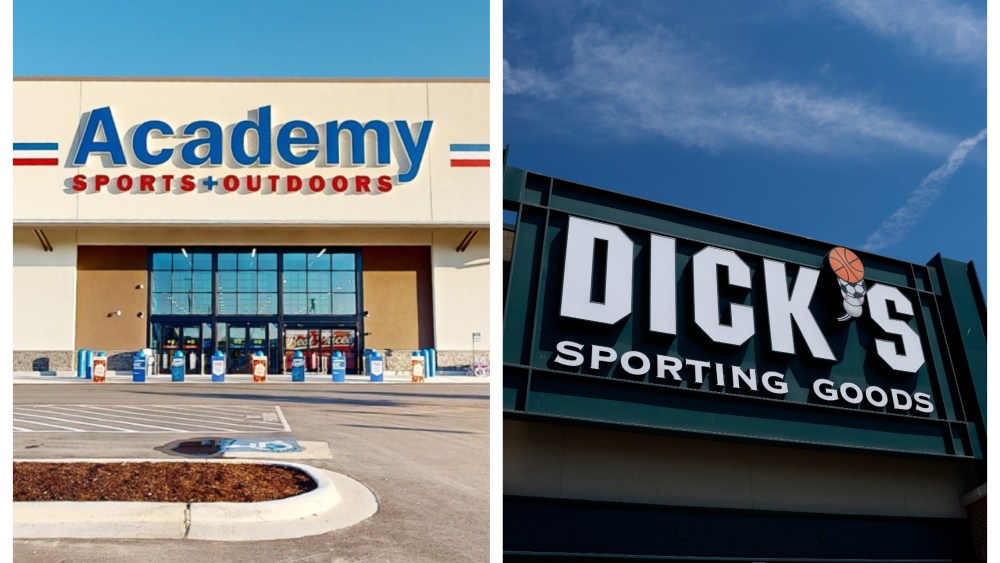
Academy Sports & Outdoors: The company received $83.7 million in the second quarter ended Aug. 1, which helped gross margin — at 40.4 percent, up from 36.0 percent a year ago —and ultimately profitability with adjusted EPS of $2.31 versus Wall Street’s consensus estimate of $2.08. Carl Ford, executive vice president and CFO said the refund positively increased EPS by 6 cents during the reporting period. Ford also said that the outdoor retailer has “received substantially all tariff refunds.”
The company said it was using the funds partly to reinvest in pricing and customer experience. Steven Lawrence, CEO, told investors during a conference call that the company completed a “thorough review and have adjusted pricing across many of our private brand products,” giving customers pre-tariff pricing, which he said has “already stimulated demand, driven traffic and delivered value to our customers.”
Boot Barn: The retailer said it received a refund of $2.2 million in the second quarter ended Sept. 26 that was recognized in cost of goods sold. John Hazen, chief executive officer, said continued revenue growth and merchandise margin expansion contributed to a 26 percent increase in diluted EPS. The company in the first quarter received a tariff refund of $14.7 million.
James Watkins, Boot Barn’s chief financial officer and secretary, told investors on the company’s conference call: “Merchandise margin rate is now expected to be approximately 52.3 percent of sales, representing a 140 basis point increase year-over-year, including 70 basis points from tariff refunds.”
In the first quarter conference call, Watkins said the company’s diluted EPS benefited by 38 cents due to tariff refunds of $14.7 million. At the time, he said that the company was expecting tariff refunds in the second quarter to benefit merchandise margin by $2.4 million. And for the third quarter, “we expect tariff refunds to benefit merchandise margin by $700,000 or 2 cents per diluted share.” For the full year, tariff refunds are expected to benefit merchandise margin by $17.8 million.
Callers: The parent of retailer Famous Footwear and shoe brand Stuart Weitzman said it received $57.4 million in tariff refunds for the second quarter ended Aug. 1.
Daniel L. Karpet, senior vice president and CFO, said allocation of the IEEPA refunds was in two parts, with $55.6 million recorded as a reduction in cost of sales and $1.8 million of related interest income that was reflected in other income.
Crocs Inc: The company didn’t disclose how they would use the refund received in the third quarter ended Sept. 30, but Patraic Reagan, executive vice president and CFO, said that adjusted gross margin expansion was 60.3 percent for the quarter, which excluded the nearly $64.1 million of tariff refunds. This was done to show true gross margin performance for the quarter. The addition of the refunds likely raised diluted EPS for the third quarter, which was reported as $4.52 a diluted share. Adjusted diluted EPS was $3.69, versus Wall Street’s consensus expectation of $3.31.
Deckers Brands: The parent of the Hoka and Ugg brands on Oct. 22 posted second quarter diluted earnings per share of $2.31 for the three months ended Sept 30. That bested Wall Street’s expected range of $1.76 to $1.83. But the earnings beat was most likely due to the tariff refunds it received, which totaled $46.0 million plus interest of $3.0 million. The funds were recognized as a reduction of cost of sales and an increase to total other income.
Steven J. Fasching, Deckers CFO, said diluted EPS of $2.31 was 49 cents above last year’s diluted EPS of $1.82, representing EPS growth of 27 percent. But excluding the net impact of the IEEPA tariff refunds and related interest, diluted earnings per share was $2.03, representing growth of 11.5 percent versus last year.
Dick’s Sporting Goods: The outdoor retailer said in its second quarter earnings report on Aug. 25 that it received $59 million tariff refunds plus $2.1 million interest for the three months ended Aug. 1. The company noted that is has received all of its eligible tariff refunds.
Navdeep Gupta, executive vice president and CFO said during the second quarter earnings conference call that the refunds included $57 million related to the Dick’s business and $2 million related to the Foot Locker business. “We have reinvested these benefits into the business to remain competitively priced and help offset ongoing fuel, supply chain and other inflationary cost pressures,” she said. Competitive pricing should be read as investments in promotions.
Genesco: The Journeys parent received $22.5 million in tariff refunds — $21.8 million for the refund plus $700,000 of interest income — in the second quarter ended Aug. 1. It doesn’t appear that the company is expecting any additional tariff refunds as none were included in Genesco’s guidance for the full year.
Jonathan M. Collins, senior vice president of finance and CFO said during a company conference call: “We view these proceeds as non-operating in nature and intend to deploy them consistently with our capital allocation priorities, including growth investments and returns to shareholders.”
Genesco posted positive operating income of $3.6 million on a GAAP basis, versus a $14.4 million operating loss in the year ago quarter. On a non-GAAP basis, the adjusted operating loss — including the tariff refunds and other one-time items — for the quarter narrowed to $8.3 million.
Nike Inc.: The sportswear and footwear giant said it received $302 million during its fiscal fourth quarter ended May 31, and expected $684 million in mid-July. That $986 million was booked in fiscal 2026. The refund was booked as an accounts receivable and earnings benefit. That boosted the company’s fourth quarter earnings report for the period ended June 30, and helped it best Wall Street’s expectations. The company said that the jump in earnings was attributed to a 52 cents per share benefit connected to the IEEPA tariff refund.
On Holding AG: The company on Tuesday said gross profit margin reached 72.6 percent, or 66.9 percent when excluding 52.6 million Swiss francs, or $63.7 million, of U.S. tariff refunds.
The company raised its full-year 2026 outlook with sales growth in the low-20 percent range on a constant currency basis. And including U.S. tariff refunds, it expects a gross profit margin of around 67.5 pecent and and adjusted EBITDA (earnings before interest, taxes, depreciation and amortization) in the range of 21.0 percent to 21.5 percent, the company said.
Shoe Station Group: The parent of Shoe Carnival and Shoe Station said it expects the total IEEPA recovery to be $1.2 million in refunds to be collected in the second half.
W. Kerry Jackson, CFO and executive vice president, said during the firm’s second quarter earnings conference call in September that it “submitted initial tariff refund claims in July and expect to file additional claims in the second half of fiscal 2026. We expect these claims to total approximately $1.2 million, and we will record refunds when collected.”
Steven Madden Ltd: The shoe firm said it received $92.1 million in tariff refunds for the second quarter ended July 30.
Zine Mazouz, CFO and executive vice president of operations, said the refund included $3.1 million in interest. “We only have approximately $1 million in potential refunds still outstanding,” he said, adding that the refunds was used “to pay down debt.”
Weyco Group Inc.: The parent of the Florsheim, Nunn Bush, Bogs and Stacey Adams brands said it received a partial refund of $1.8 million in the second quarter ended June 30. The balance of $17.5 million was received in July, which was reflected as a receivable on the firm’s Condensed Consolidated Balance Sheets as of June 30, bringing the total received thus far in tariff refunds to $18.6 million.
Weyco’s refund claims total $19.3 million. The timing for the balance of $1.2 million — the claim was submitted in October — is subject to determination by the CBP, the company said, adding that it is not yet “recognized” because of uncertainties over the final approved amount and timing of receipt.


