
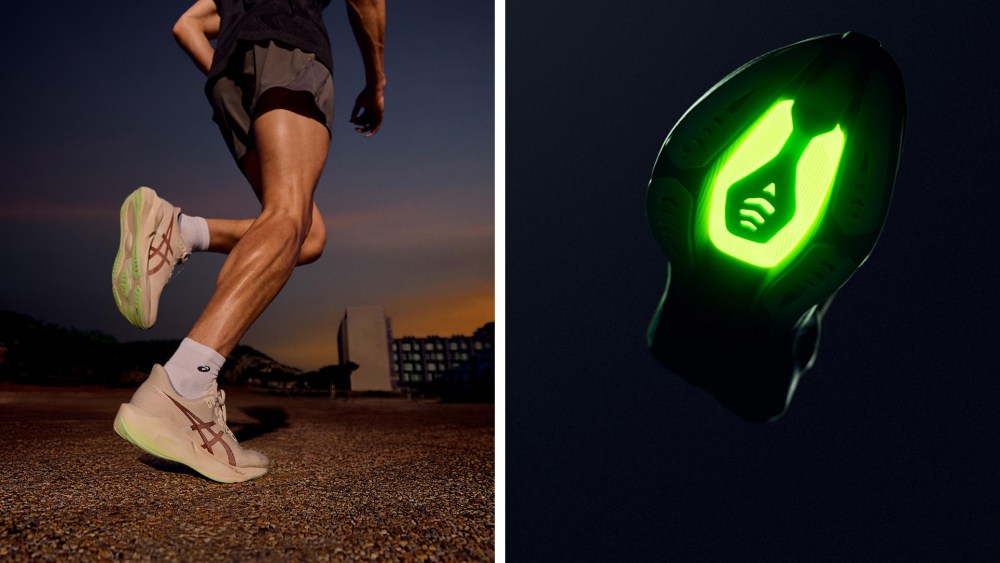
Gel cushioning is still a hallmark of many Asics running shoes, but when the first Novablast was introduced in 2020 the tech was being used in all footwear catering to the sport. A new Gel-less wave was ushered in by the max-cushioned daily trainer with a forefoot pod designed to work like a trampoline, and the series grew to become Asics’ bestselling in the sport and the most popular choice for runners on Strava in 2025.
The concept remains much the same for the Asics Novablast 6, which the Japanese brand has unveiled Friday, but with more significant technical upgrades than have been seen in several iterations.
Leading the charge is a new approach to dual-density cushioning, as the forefoot Trampoline Pod alone is rendered in FF Turbo Squared foam. The supercritical foam delivers higher energy return than the FF Blast Max formulation used for the rest of the midsole, which will translate to a greater sense of pep for forefoot strikers or in the toe period of the heel-to-toe transition.
You May Also Like
Asics has brought over the Trampoline Pod to other running silhouettes before, including the acclaimed Superblast 3 that launched earlier this year, but never before has it been rendered in a different foam than what it surrounds it.
“We were the brand that set the lead for this energetic silo, so we wanted to keep pushing forward,” Paul Lang, Asics Global Performance Run Product senior manager, told Footwear News. “When runners talk about bouncy cushioning, quite often they’re referring to the forefoot of the shoe. We honed in on that.”

Asics’ design team played with different ideas, prioritizing energy at the front of the midsole, including a midsole split vertically with a softer foam at the forefoot sitting in front of one that’s more firm. Transitions through steps wasn’t cohesive in that arrangement, but the right balance was found with the current setup originating with a human and optimized by a computer in a process called parametric design.
Another material switch comes via the upper, which replaces the jacquard mesh of the Novablast 5 with a more breathable engineered weave also used on the Superblast 3. But because the Novablast 6 isn’t as speed-focused as the Superblast 3, more padding is added to the interior, and a wing construction locks down the tongue.
In direct response to complaints about preceding models, AsicsGrip rubber comes over from the trail department with superior traction targeted at the forefoot of the outsole.
Specs remain largely the same, with the Novablasts 5 and 6 having an identical 41.5mm heel stack with a 8mm drop. A slight weight reduction drops from 255 to 253 grams for a men’s size 9.
The Asics Novablast 6 will release July 6 through Asics’ website and select third-party retailers. Pricing is set at $155.