Evolution is innate in Kartell, the Luti family-run Italian contemporary design firm.
“It’s a matter of innovation, risk-taking, seeking new aesthetic solutions, new molds, continually discovering materials that can fit into an industrial design process, and with all that, becoming more competitive,” Federico Luti, Kartell’s global commercial director, told WWD.
“Every year, we reinforce each category of the company, from the decorative objects to the lamps to the furniture. We now also do carpets, bathrooms and bookshelves, in effect building, year after year, this incredible lifestyle that really has a strong identity.”

At a recent breakfast meeting at Al Fiori on Manhattan’s Fifth Avenue, Luti explained how Kartell is evolving. He discussed efforts to open franchise stores around the world in addition to the 75 currently operating; innovating with fresh materials, products and marketing, all the while retaining Kartell’s values and core DNA, focused on sustainability, timeliness and creative freedom. The company is known for its collaborations with world-class designers, including Philippe Starck, Piero Lissoni, Ferruccio Laviani, Patricia Urquiola, Ludovica Serafini, Roberto Palombo and Edward Barber and generates more than 100 million euros in volume annually.
You May Also Like
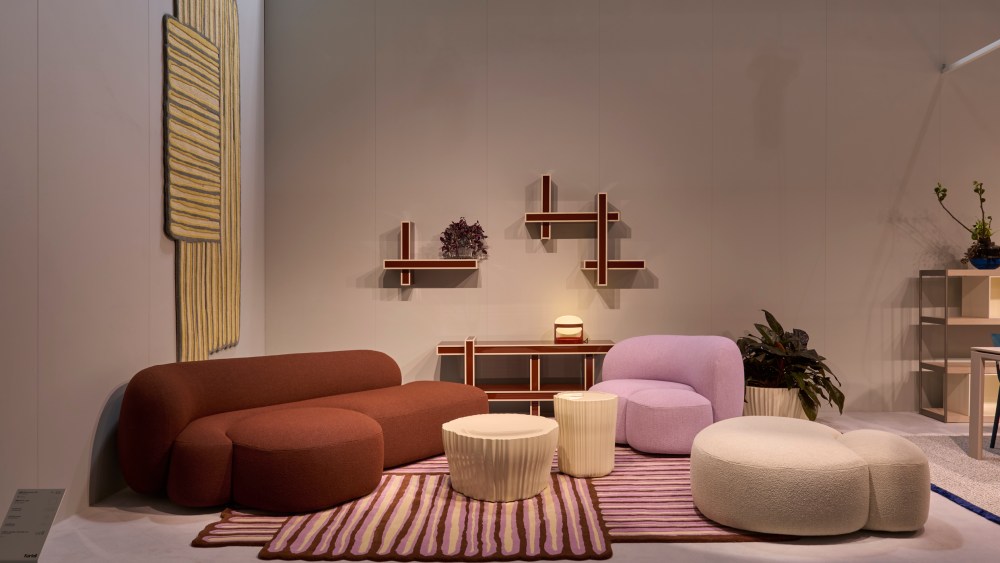
Historically, the public has associated Kartell with its most iconic pieces, yet in the last eight years or so, there’s been a shift that has Kartell highlighting how one can integrate pieces from its collection to create an entire arrangement for any room. “We continue to aim at fantastic icons in design, but we can also give our clients the possibility to refurnish their whole apartment or their whole house,” Luti said.
The shift is evident in Kartell’s flagships and in its catalogue. “Before the stores felt very minimal and cold,” he said. “Now if you come inside our stores, it’s warm and welcoming as you would want in your home.”
In 1959, Kartell started growing beyond furniture into lighting — among the brand’s best-performing divisions. The bathroom division with Laufen started in 2014 and includes ceramics, faucets and accessories.
“In most of our new stores, we do layouts where you can imagine your living area or your dining area, and we are updating all of our stores. We have a huge collection, so it’s just a matter of how to expose it. It’s about presentation. It’s quite magical, I can not really explain how, but products by Lissoni, Starck, Palombo and others really fit together and create an ambience. We have these great relationships with these designers, but in the end, the selection, the taste, the mood, the soul — it’s our family that keeps it all together.
“We’re not changing. We’re evolving,” said Luti. “Even if your company is in a very positive situation, you need to continue to evolve.”
Eight years ago at Milan Design Week, Kartell spotlighted the use of different materials, adding to the repertoire the “Smart Wood” in collaboration with Starck. Luti said Smart Wood brings “elegant curves and maximum comfort” to the furniture. “The idea was really to capture a sense of motion through curves using the wood as we would use plastic material.”
The Milan-based Kartell, founded in 1949, has its origins in plastics. Luti’s grandfather studied chemistry under Giulio Natta, a Nobel Prize winner in chemistry who developed catalysts enabling the industrial production of plastics, and determined that these plastics could be used in furniture. “This was really the great, new and innovative vision,” one that set the standard for the company, Luti said.
“The Smart Wood collection is an important part of our offering, and an example of how we research new materials, but it’s compatible to our heritage and our spirit. We use thin, thin layers. Then we put them in this mold that curves and bends the wood, and we finish the process manually to make it even more beautiful.”
Kartell’s headquarters, located in Noviglio, 15 minutes south of Milan, has a museum providing a retrospective of its designs and innovations, including the brand’s earliest prototypes, and depictions of the design process, from the initial drawings to the final products. The Kartell Museo not only preserves the work of the brand, but also serves to promote its rich history, artistry and cultural heritage. “If you come into our museum, our store, or our booth at the Salon del Mobile, you feel something different. You see this spirit for innovating, the values of our company, and the contemporary style,” said Luti.

Working with renowned designers such as Lissoni, who is known for precision, minimalism and meticulous attention for details, and Starck, who is known for high-quality, beautiful designs across a broad scope from furniture, vehicles, architecture, and boats, Kartell “presents a lifestyle that can really integrate different types of designs,” said Luti. “Our clients can choose their own way, how it can look at their home. It’s become really flexible, and this is also why we can work in 140 different countries because Kartell can fit into the style and culture of our clients.
“With these designers, we have very close relationships,” Luti added. “We see them every week, every month, depending on the type of designer, but they really know our values, what we are, our vision, and we share ideas and innovations.” He said Kartell gives its cadre of designers creative freedom, and enhance their creations with Kartell’s investments in technologies and material innovation.
“You buy a Kartell piece and you keep it for 20, 30 years,” Luti said. “The most lasting, sustainable products are the most beautiful and don’t create problems for the earth.” Moreover, Kartell uses sustainable materials to produce items in its collection. “Most of our production is recycled material, especially from the furniture market, but also the car industry,” Luti said.
For example, the Masters chair by Philippe Starck is molded from 100 percent recycled thermoplastic technopolymer, an eco-friendly option that maintains a sturdy, comfortable structure. Antonio Citterio has designed chairs for Kartell using recycled coffee capsules — hundreds per chair — from the Illy coffee brand.
Kartell provides certifications describing the percentage of recycled material used to create the finished product, and the origins of the materials, including certifications that its wood is obtained from areas where trees are being planted to sustain the forest. The bestselling Kartell storage unit, the Componibili Bio, for example, is made of a 100 percent biodegradable biopolymer derived from a non-GMO agricultural waste that doesn’t compete with the food chain. Kartell also offers the Componibili Recycled chair, which is made from recycled industrial thermoplastic technopolymers sourced from the furniture and automotive industries. In addition, all of Kartell’s packaging is 100 percent recyclable cardboard and plastic material.
As far as using recycled materials to help sustain the planet, “It’s not something we need to think about. It’s something we need to do,” even when the costs are higher, Luti stressed.
Of the 75 Kartell stores, 10 are directly managed by Kartell; others are franchised. Luti has been opening 15 franchises annually for the past few years and sees that expansion pace continuing. Several locations in the U.S. are being eyed. A company-owned store is on Madison Avenue. Kartell returned to Brussels in June with a new, 3,200-square-foot flagship with floor-to-ceiling windows. Kartell also has shops-in-shops in about 300 multibrand stores around the world including La Rinascente, Globus, El Corte Inglés, Harrods, Selfridges, Galeries Lafayette and the MoMA Design Store.
Unlike other design firms, AI is not a major tool for Kartell, but might be one day, to speed communications and efficiencies with clients. “I like the idea of how AI could, in a short period of time, provide solutions for our clients,” said Luti. “We have such a vast range of products, I’m trying to find a way to ask the most appropriate questions depending on the client, to really get a feel for what they are looking for, maybe connecting their budget to the creative, to the mood, to the type of material.”
He’s thinking ahead on how Kartell can sustain its legacy for innovation.