When 2025 began, all the water cooler talk in fashion centered on, “What’s going to happen at Saks Global?”
It turns out that, after a financial rollercoaster year, everybody is still asking that same question.
But instead of wondering when Saks Global would start making good on its past-due bills and how the integration of Neiman Marcus Group would play out, people are now wondering if and how the company can shore up its business.
Saks Global took advantage of a suddenly heady market after the election of President Donald Trump and raised $2.2 billion in bonds to buy NMG for $2.7 billion just before Christmas last year.
You May Also Like
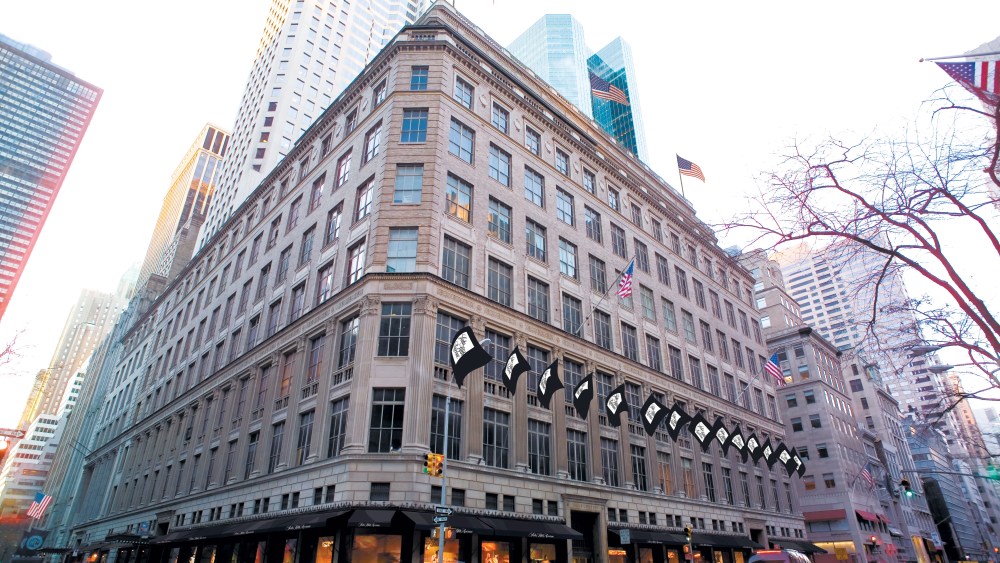
That deal created a luxury giant made up of Saks Fifth Avenue, Neiman Marcus and the luxe crown jewel, Bergdorf Goodman.
But problems began almost immediately.
Brands that were anxiously waiting on the payment of past-due bills were disappointed when the company said they would be paid off in installments over a year and that payment terms for future orders were being extended to 90 days as opposed to the standard 30 days.
That grumbling probably would have subsided if the business turned.
But the retailer also found itself fighting a bond market backlash. With the market cooling and investors sobering up as hopes of a pro-business regulatory free-for-all subsided, investors started taking a closer look at what they invested in. Somehow, high-yield bond investors leaped without looking and bought debt that, it turned out, was not directly secured by the company’s famed Fifth Avenue flagship.
With Saks Global’s debt suddenly selling for less than half its face value, vendors in an uproar, sales trending down still, and brands becoming wary of the previously stable Neiman’s, something had to give.
Relief came in the form of a debt exchange that included $600 million in new money from lenders and amended terms for bondholders.
The financing was still seen as not enough by some.
Debt watchdog Standard & Poor’s, which has an ultra low CCC rating on the bonds, said, “While the new capital structure provides a much-needed infusion of cash, we expect liquidity will be rapidly depleted by the investments required to stabilize the business amid a challenging macroeconomic environment.”
S&P said the company had to make $400 million in interest payments in the year ahead. That came on top of past-due payments to vendors, payments for new shipments and just keeping the lights on.
The strain became more apparent this month when Hilldun Corp., a fashion financing company that stood by Saks Global when others backed away, said it had, at least temporarily, stopped approving shipments to the retailer after it missed a couple weeks of payments.
While Hilldun said it could start signing off on orders again as soon as this week, observers saw more trouble ahead as Christmas is the season when cash balances typically rise for retailers.
What comes next is unclear. Richard Baker, the architect behind the luxury retailer, is known as an ultra creative and savvy dealmaker, so anything could happen (and has happened in the past, witness the deal for Neiman’s, which many said would never happen). But if there is no next bit of financing magic and Saks Global were to somehow collapse or go bankrupt, the repercussions would be, well, global.
Thousands would lose their jobs. Thousands of vendors shipping Saks Global would be financially damaged. Smaller-volume brands with heavy exposure could go out of business. Shopping centers housing Saks Fifth Avenue, Neiman Marcus and Saks Off 5th would be disrupted with closures. And creditors would lose billions.
The luxury sector would never be the same.
Still, a bankruptcy would enable Saks Global to put forth a plan to reorganize its debt so creditors get some level of recovery, and cancel contracts including leases and issue new ones. It’s a court-supervised process allowing a company to continue operating.
Many brands have discontinued shipping to Saks Global this year, and are scrambling to find alternative channels to distribute their merchandise. Nordstrom, Macy’s and Bloomingdale’s are said to be capitalizing on Saks’ woes, by either taking on the brands they didn’t sell before, or widening the distribution of brands currently sold. Saks Global disclosed last spring that it was reducing its vendor matrix by 500 to 600 brands, putting the current count at about 2,000.
How did Saks Global get into this mess?
It’s a classic case of retail history repeating itself. Merging two retailers has proven risky, and even fatal when both parties are not performing at their best. The merger of Sears and Kmart in 2005, when the chains were both ailing, eventually led to the liquidation of both. The Men’s Wearhouse acquisition of Jos. A. Bank in 2014 led to the combined entity, called Tailored Brands, filing for bankruptcy. And Saks Global acquired the Neiman Marcus Group just as 2024 came to a close, at a time when business at the two luxury nameplates was impacted by the slumping luxury sector worldwide.
The track record of real estate executives taking over retail companies to support their properties isn’t good either. After Canada’s Robert Campeau took over Allied Stores and Federated Department Stores, the combined business went bankrupt. Australia’s George Herscu’s retail buildup which included B.Altman and Bonwit Teller, led to a collapse of the entity. The Saks Global purchase of Neiman’s was led by Baker, who is the company’s executive chairman and a prominent real estate player turned retailer. His past retail holdings — Lord & Taylor, Fortunoff’s and Hudson’s Bay — were all underperforming but efforts to revive them never succeeded and they all eventually shuttered.
Mergers of all kinds are complicated. They involve integrating systems, reorganizing management, blending disparate corporate cultures, and assuming debt, while also orchestrating consolidations and finding synergies to reduce costs. In the case of Saks Global, the integration of NMG led to the formation of centralized merchandising and marketing teams. Inventory sharing between Neiman’s and Saks is being phased in. In 2025 alone, over 1,000 layoffs have occurred. The company is seeking to save $600 million in annual expenses, and Saks executives say they’re ahead of schedule on meeting that goal.
Still, negative sales trends have continued, which some retail experts attributed to a lack of curation and not enough talented merchants in the leadership. Saks Fifth Avenue needs to better spotlight and home in on the bestselling products and trends, and sharpen its identity. The situation is complicated by the retailer’s extended delays on vendor payments, causing inventory shortages and a loss of industry credibility, though some vendors tell WWD that Saks Global has started catching up on overdue payments.
And some key departures came in October, including Emily Essner, who briefly served as president and chief commercial officer of Saks Global until being forced out, and Yumi Shin, who had been chief merchandising officer of Bergdorf Goodman, but was recruited by Nordstrom. Shin is being sued by Saks for allegedly violating non-compete restrictions on her contract and downloading proprietary data before she left.
However, Saks Global did gain some top talent by acquiring Neiman’s, including Paolo Riva who serves as chief of brand partnerships and buying officer for Saks Fifth Avenue and Neiman’s. Bill Bine, NMG’s former chief supply chain officer, became chief transformation officer of Saks Global.
When the Neiman’s deal was completed, Baker said in a statement: “This milestone transaction marks a transformative moment for Saks Global and the luxury retail industry. By uniting Neiman Marcus, Bergdorf Goodman and Saks Fifth Avenue, we have created an unparalleled multibrand luxury portfolio with tremendous growth potential. With data and innovation at our core and a portfolio of prime real estate, we aim to redefine the luxury shopping experience.”
But the question remains: What becomes of Saks Global and the roughly $9 billion in gross merchandise value it represents?